How can artificial intelligence be used not only to respond to health emergencies, but to actively listen, support, and restore emotional wellbeing in some of the most vulnerable populations?
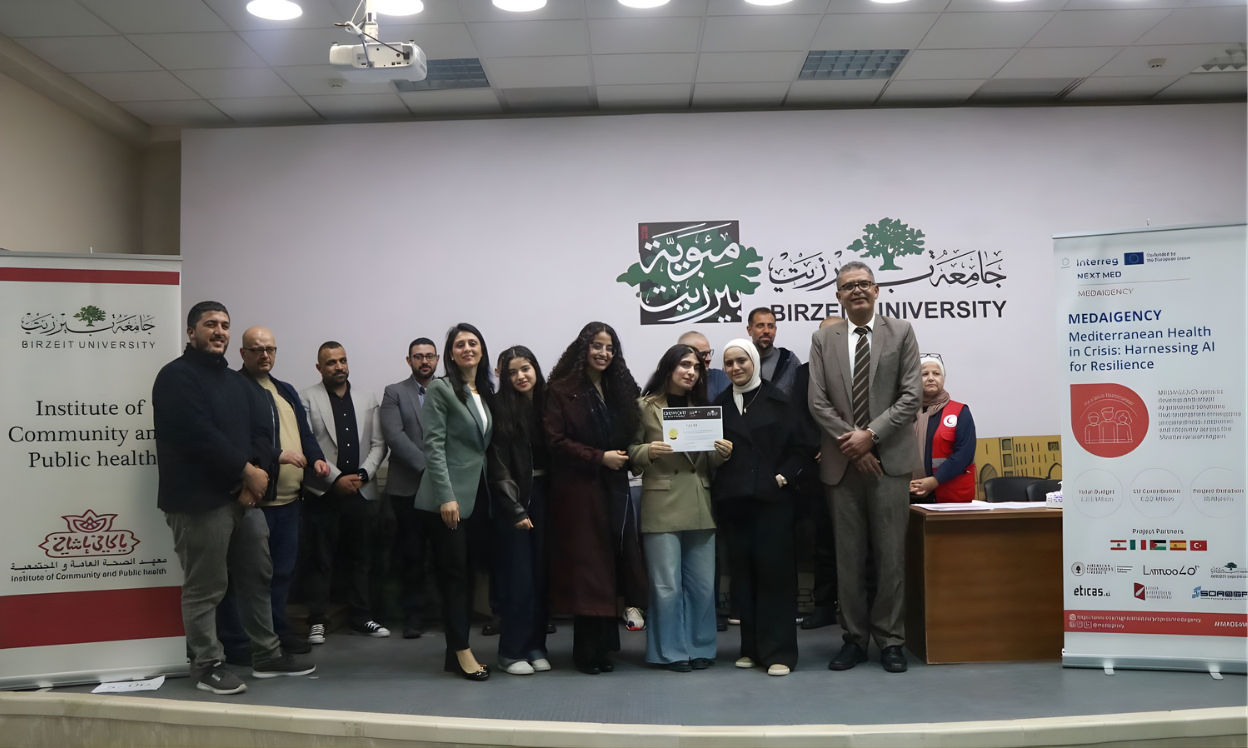
In this interview, we hear from Team SENSE, a multidisciplinary group of computer engineering students from Birzeit University and Al-Quds University, who share their experience building SENSE, an AI-powered dual-interface platform for pediatric mental health triage designed for children living through crisis, during the AI4Purpose National Hackathons organized under the MEDAIGENCY project.
About you
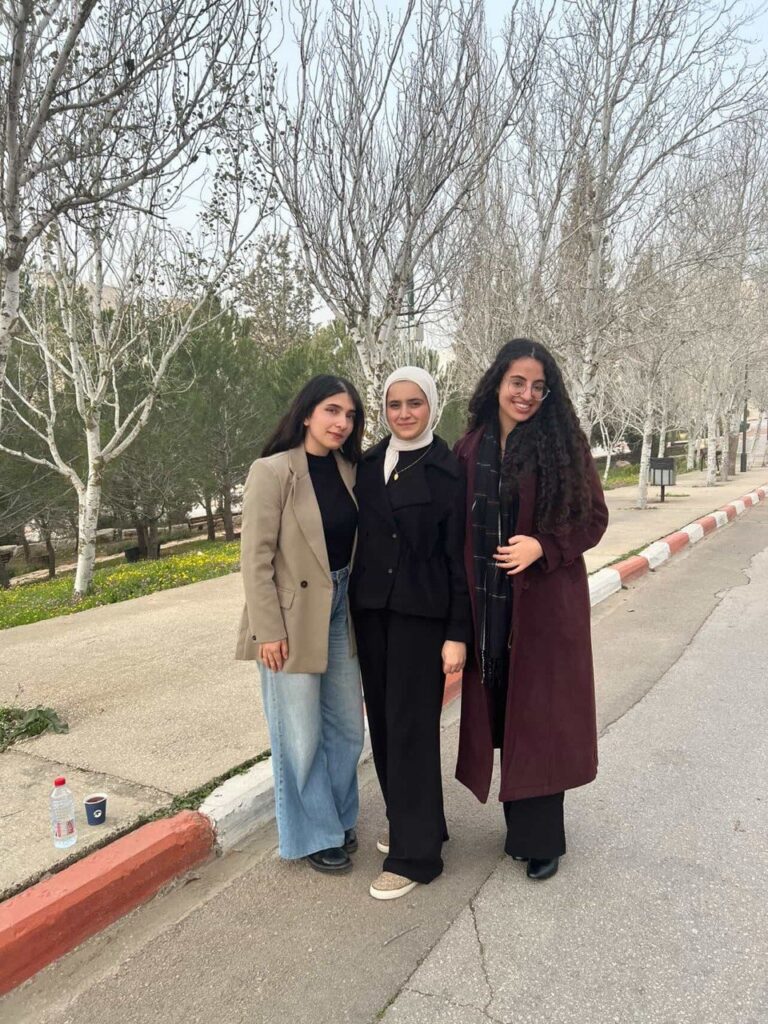
We are Team SENSE, a group of computer engineering students and AI engineers from Birzeit University and Al-Quds University.
• Ruba Aldaghamin: AI Engineer (4th-year Computer Engineering student at Birzeit University)
• Sadeil Yassein: Frontend Developer & AI Engineer (5th-year Computer Engineering student at Al-Quds University)
• Aya Abdelrahman Fares: Full-Stack Developer & AI Engineer (4th-year Computer Engineering student at Birzeit University)
• Mentors: Eng. Raneem Alqadi, Eng. Huthayfa Mutan, and Dr. Rula Ghandour.
• Field of expertise: Artificial Intelligence, Machine Learning, Computer Vision, Natural Language Processing, Computer Engineering, and Full-Stack Web Development, supported by clinical mental health consultation to ensure trauma-informed and ethically grounded design.
Your motivation to participate
We first learned about the AI4Purpose Hackathon through our academic network at Birzeit University. But learning about it and deciding to join were two completely different moments.
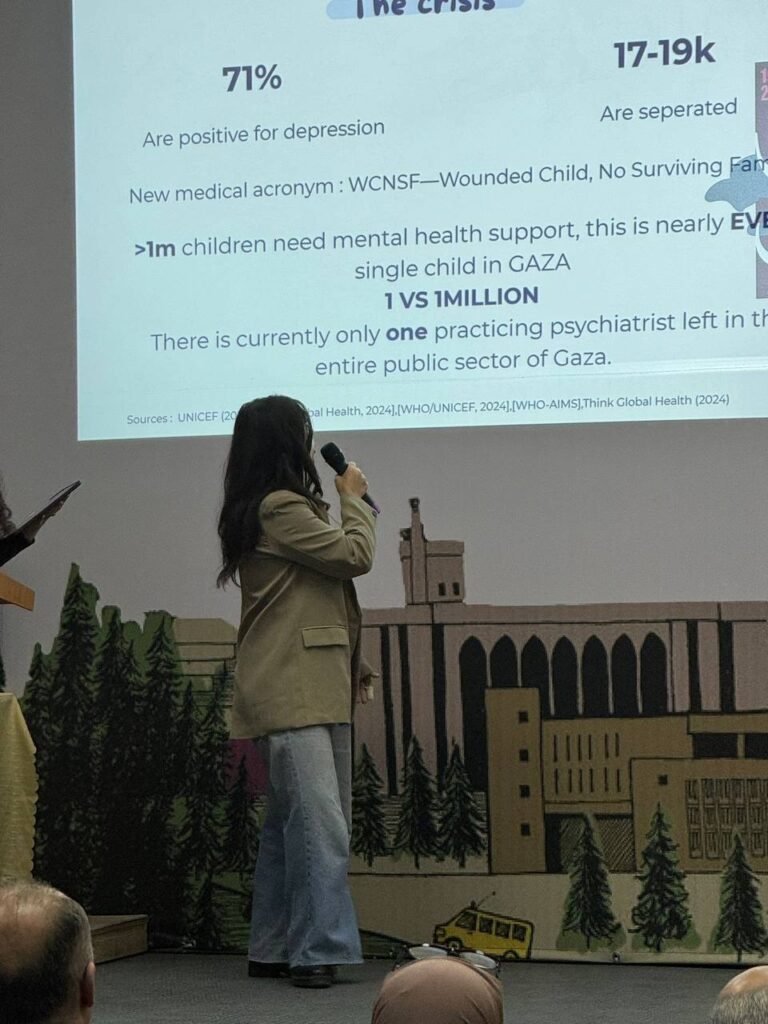
As a Palestinian students. The crisis this hackathon was asking us to address is not a case study for us – it is the reality we live in. Over a million children in Gaza urgently need mental health support. There is one psychiatrist left in the entire public sector. One. That number devastated us. And when this hackathon that focused on AI for health emergencies presented the opportunity, we saw it for what it was: a chance to turn our skills into something that actually matters. We did not hesitate for a second, and SENSE was developed as our answer – a scalable tool for crisis response.
We are deeply passionate about turning technical skill into real-world impact. This hackathon was not an opportunity to compete. It was an opportunity to build something that should exist and doesn’t yet. That is what drove us – and that is what kept us going through building this entire platform .
Your AI solution
Children are the future. That is not a slogan – it is the truth that shaped every single decision we made building SENSE.
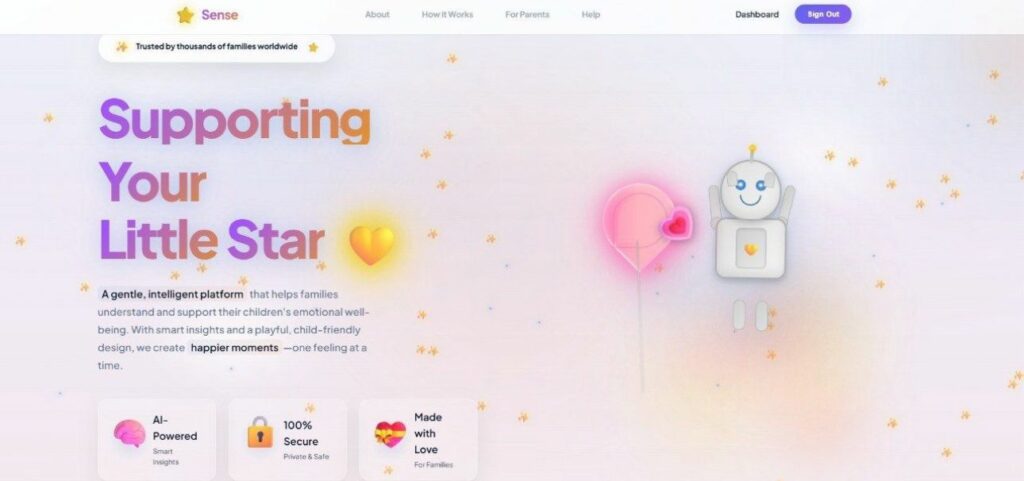
SENSE is a dual-interface AI platform for pediatric mental health triage, built for children living through crisis. It operates on two levels at once. For children aged 6 to 15, SENSE is a warm, safe digital space a “Brave Space” where they can draw their feelings onto a Magic Ball analyzed by AI for emotional indicators, journal their emotions, scratch away the thoughts that weigh them down, and watch an AI transform those dark words into something warm and full of hope, log what they are grateful for, and practice guided breathing exercises, and earn points with every activity redeemable for online rewards that make showing up feel worth it. Every interaction is quietly and ethically analyzed by AI in the background – not to diagnose, but to listen.
For parents and caregivers, those insights surface on a private dashboard giving them a window into their child’s emotional world. When their child may need professional support, parents can choose from a network of verified, affordable therapists and book low-cost online sessions directly through the platform. For therapists, a clinical Triage Dashboard displays the data they need to understand and support each child effectively.
The AI powering SENSE is built for this region specifically: Teta our voice AI analyzes vocal nuances in the Levantine dialect to detect emotional flatness, and transforms whatever sadness or pain a child expresses into something hopeful and beautiful through the art of storytelling. Alongside Teta, real-time video analysis detects emotional states through the child’s facial expressions and movements, and transfer learning is applied to identify trauma indicators in children’s drawings. All of this happens with zero-knowledge privacy, no identifiable biometric data ever leaves the device. Vulnerable children are fully protected. Therapists get what they need. That balance is what makes SENSE not just innovative, but responsible.
Future development of the idea
SENSE does not end here. It starts here.
Our first technical priority is making SENSE fully offline-capable, ensuring it reaches children in areas with limited or no internet access – because a tool built for crisis zones cannot depend on stable connectivity.
Our immediate next step is securing a partnership with an NGO and gaining supervised access to 100 children for real-world testing. From there, our milestone is deploying SENSE in three refugee camps – validating our AI risk-scoring accuracy and producing our first clinical impact report.
The longer-term vision is a platform that sustains itself and scales. Annual licenses to NGOs deploying in refugee camps. A subscription model for private clinics across the MENA region monitoring patients remotely. Low operational costs because our AI inference runs on the client’s device – not expensive cloud infrastructure – making SENSE viable even in the most under-resourced settings.
We are also looking to the MEDAIGENCY network as a critical bridge – connecting us to institutions, policymakers, and health organizations across the Mediterranean who can open doors, provide clinical validation, and help us reach every child still waiting for something like this to exist.
Mediterranean perspective
Participating in this competition at a Mediterranean level did something important: it forced us to think beyond our own borders – even as everything we were building was rooted in them.
The experience reinforced that effective technology must be deeply localized. Our AI models are trained on Arabic natural audio datasets, calibrated for Levantine dialect nuances, and built to recognize the specific emotional markers that emerge in children shaped by this region’s particular form of trauma. That is not a technical detail. it is what makes SENSE actually work for the children it was built for.
But engaging with the broader Mediterranean context also showed us something bigger: the urgency we feel in Palestine is shared. Across the region, children are living through conflict, displacement, and collective trauma – and the digital health infrastructure to support them is either absent or insufficient. SENSE was built for Palestinian children first. But the need it addresses belongs to the entire region. That realization didn’t change what we built – it reminded us why it matters.
Special thanks to Mr. Ayman Rahmeh from the American University of Beirut for facilitating this series.
 Next Med