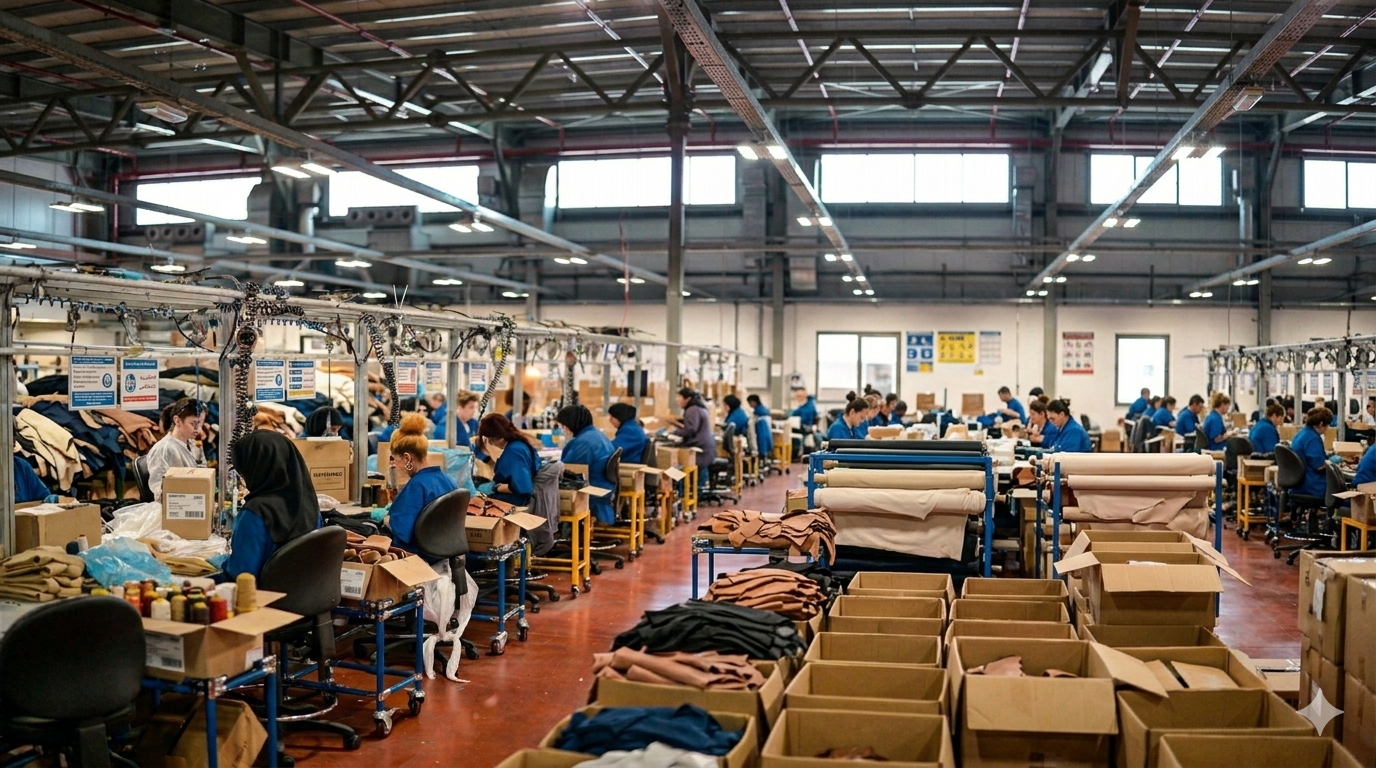
Across regions, TCLF SMEs operate in a highly competitive and rapidly evolving environment. Several common challenges stand out: like competitiveness and market access, also globalization has intensified competition, especially from large-scale producers and low-cost manufacturing hubs.
Many SMEs struggle to access international markets due to limited marketing capabilities, lack of market intelligence, and difficulty complying with technical and sustainability standards required by global buyers.
Besides that, the sector is undergoing profound transformation driven by digitalization, automation, and changing consumer preferences. SMEs often face gaps in technical, managerial, and digital skills, limiting their ability to innovate, optimize production processes, or move up the value chain.
While innovation is crucial to remain competitive, SMEs often lack the financial resources or technical capacity to invest in new technologies, smart manufacturing, eco-design, or digital tools such as ERP systems and e-commerce platforms.
Moreover, environmental and social compliance is no longer optional. SMEs are increasingly expected to reduce their environmental footprint, improve working conditions, and ensure traceability across supply chains. However, translating these requirements into practical actions remains a major challenge due to limited awareness, expertise, and access to tailored support.
Tunisia focus: structural constraints and transformation pressures
In Tunisia, the Textile, Clothing, Leather and Footwear sector is a key pillar of the economy, particularly in terms of employment and exports. Nevertheless, Tunisian SMEs face additional constraints, such as dependence on Subcontracting Models. Many Tunisian TCLF SMEs remain dependent on low value-added subcontracting activities, especially in garment manufacturing. This limits profit margins, innovation capacity, and resilience to external shocks, including fluctuations in European demand.
Another specific constraint is that despite Tunisia’s geographic proximity to Europe and the Mediterranean, SMEs often struggle to integrate strategically into regional value chains, collaborate with foreign partners, or benefit from cross-border business opportunities. “For decades, Tunisia was known for its speed and proximity to Europe. However, in the current market, speed is no longer enough. FTTH has identified that the future lies in Value-Added Manufacturing.” (kohantextilejournal.com)
As well as the financial constraints which remain a major obstacle, particularly for investments in modernization, green transition, and digital solutions. In addition, support services are sometimes fragmented or not sufficiently adapted to the specific needs of TCLF SMEs. Mr Ben Hadj Hassine in his article published in researchgate.net talked about the challenges of the digital transformation in the Tunisian textile industry being technical, economic, human or ethics and social responsibility issues.
Then there’s the increasing regulatory requirements related to sustainability, quality, and social standards that pose significant challenges. SMEs need guidance to understand, adopt, and comply with evolving frameworks such as circular economy principles and responsible production.
 Next Med