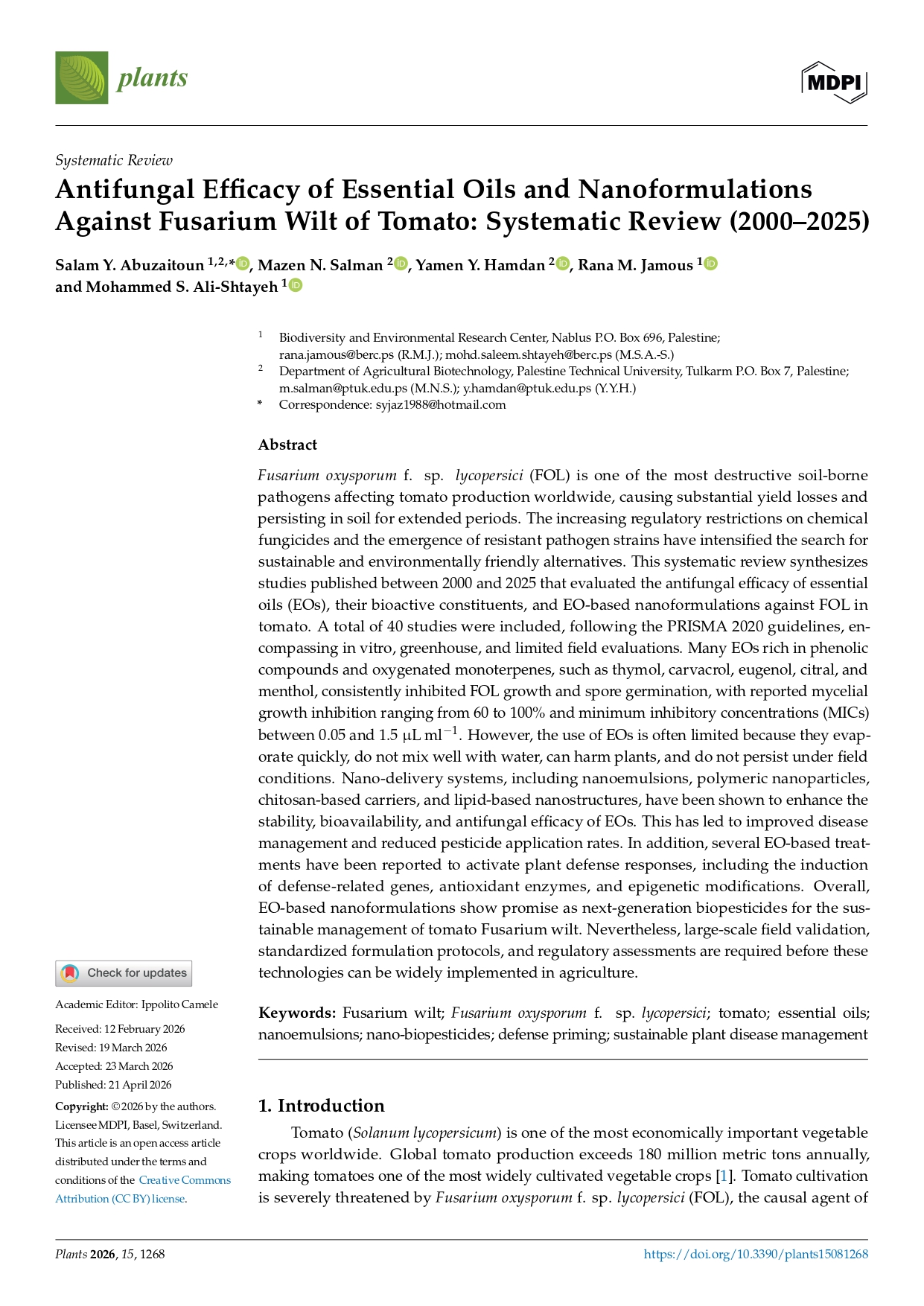
The Biodiversity and Environmental Research Center (BERC), Lead Partner of the EONANOBIOPS project, in collaboration with Palestine Technical University – Kadoorie, contributed to a new scientific study published in the journal Plants (MDPI). The study brings together findings from 40 scientific papers published between 2000 and 2025, exploring how plant-based solutions can address one of the most pressing challenges in agriculture.
Fusarium wilt of tomato is a major challenge for agricultural production worldwide. With increasing restrictions on chemical pesticides and the emergence of resistant strains, the need for safer and more sustainable solutions is becoming more urgent. The study shows that essential oils extracted from plants can effectively inhibit fungal growth and limit its spread. In some cases, these natural solutions achieved very high levels of effectiveness, highlighting their strong potential as alternatives to chemical pesticides.
However, the use of essential oils in agriculture faces several challenges, including rapid evaporation, poor water solubility, and reduced effectiveness under field conditions. To address these limitations, researchers are combining essential oils with nanotechnology.
Through the EONANOBIOPS project, advanced nano-based formulations are enhancing essential oils, making them more stable and effective. These innovations improve disease management, reduce reliance on chemical pesticides, and strengthen plant defense mechanisms, helping crops better resist infections.
This work contributes to the objectives of the Interreg NEXT MED Programme, promoting innovative and sustainable agricultural practices across the Mediterranean.
Explore the full scientific publication here: click here
 Next Med