How can cultural heritage become a driver of sustainable development rather than a sector focused solely on conservation?
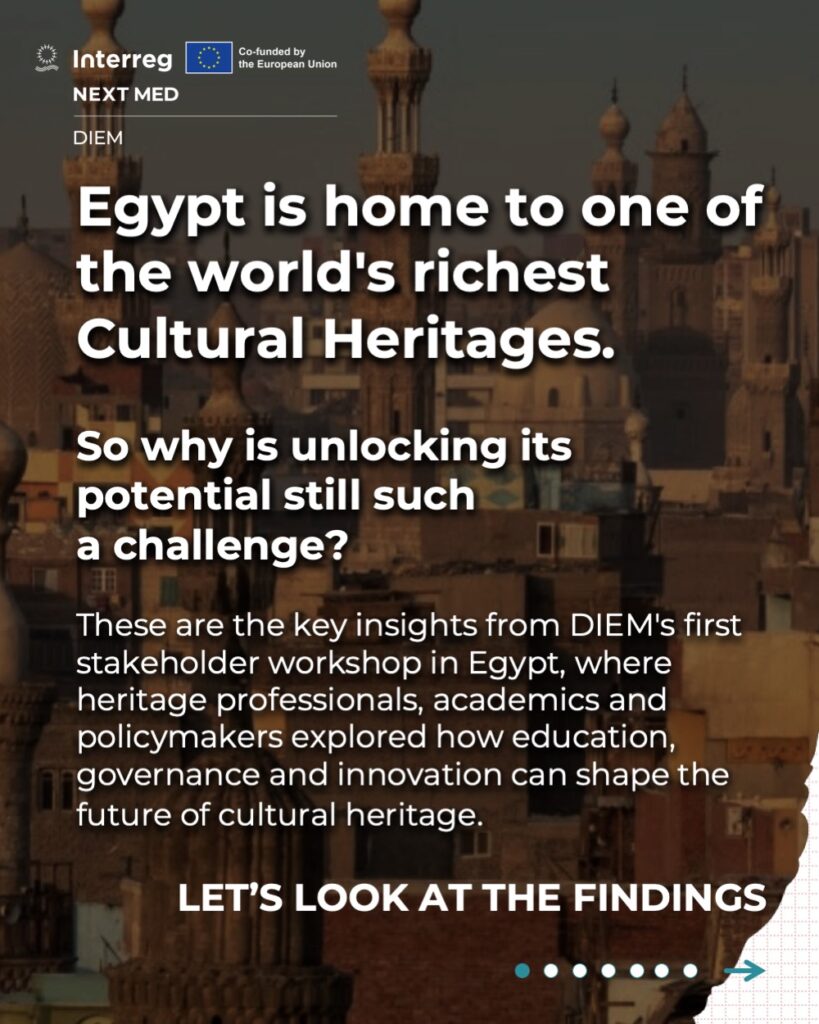
This was one of the central questions discussed during DIEM’s first stakeholder workshop in Egypt, organised by the Faculty of Engineering at Ain Shams University on 1-2 February 2026. Bringing together heritage professionals, academics and policymakers, the workshop explored how education, governance and innovation can contribute to strengthening the cultural heritage sector while creating new social and economic opportunities. The discussion provided valuable insights that will inform the development of DIEM’s future learning activities and pilot actions across the Mediterranean.
From preserving heritage to creating value
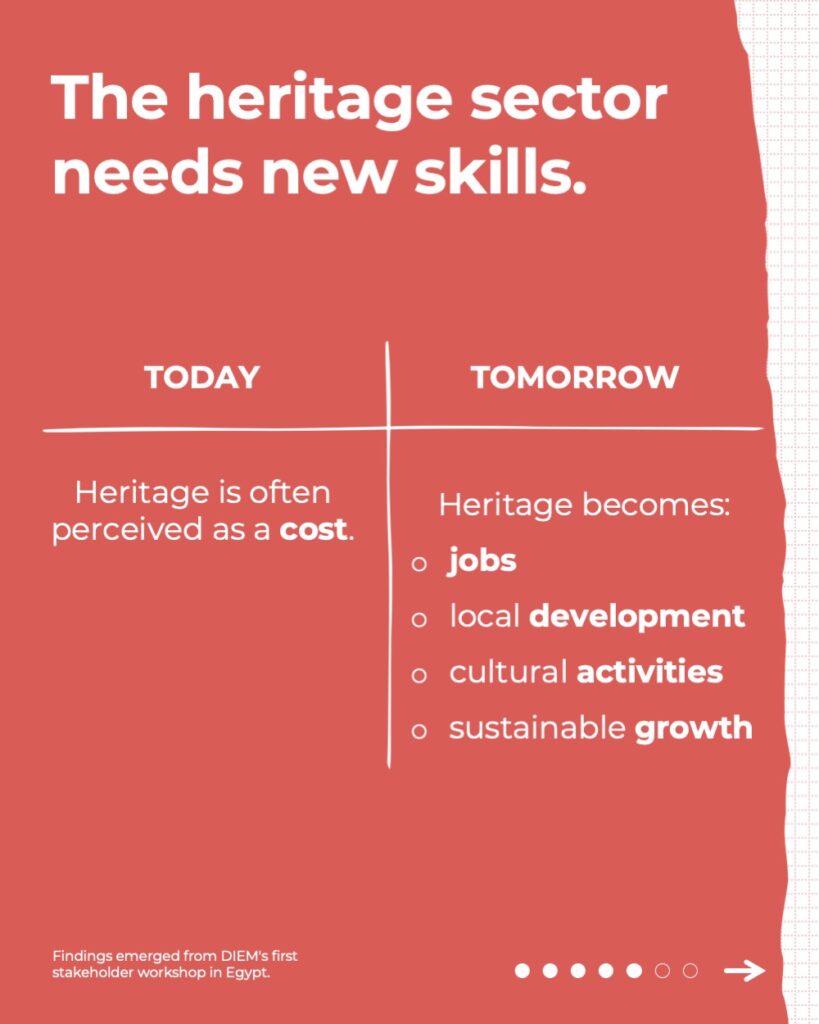
One of the strongest messages emerging from the workshop is that cultural heritage should no longer be viewed only as an asset to protect, but also as a resource capable of generating sustainable development. Participants highlighted how heritage conservation can contribute to local economies through adaptive reuse, cultural activities, tourism and community development. However, achieving this vision requires more effective governance, financial incentives and stronger collaboration between public institutions, private stakeholders and local communities. The discussion also stressed the importance of recognising heritage as a long-term investment that creates cultural, social and economic value.
Rethinking education for a changing profession
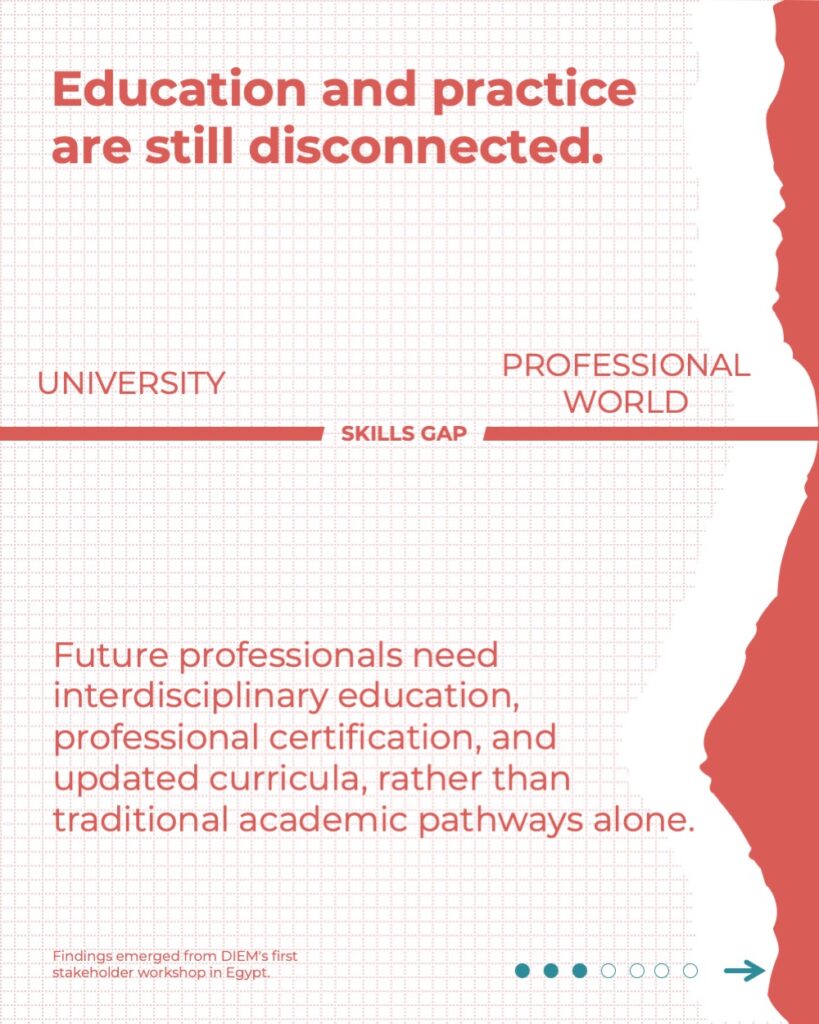
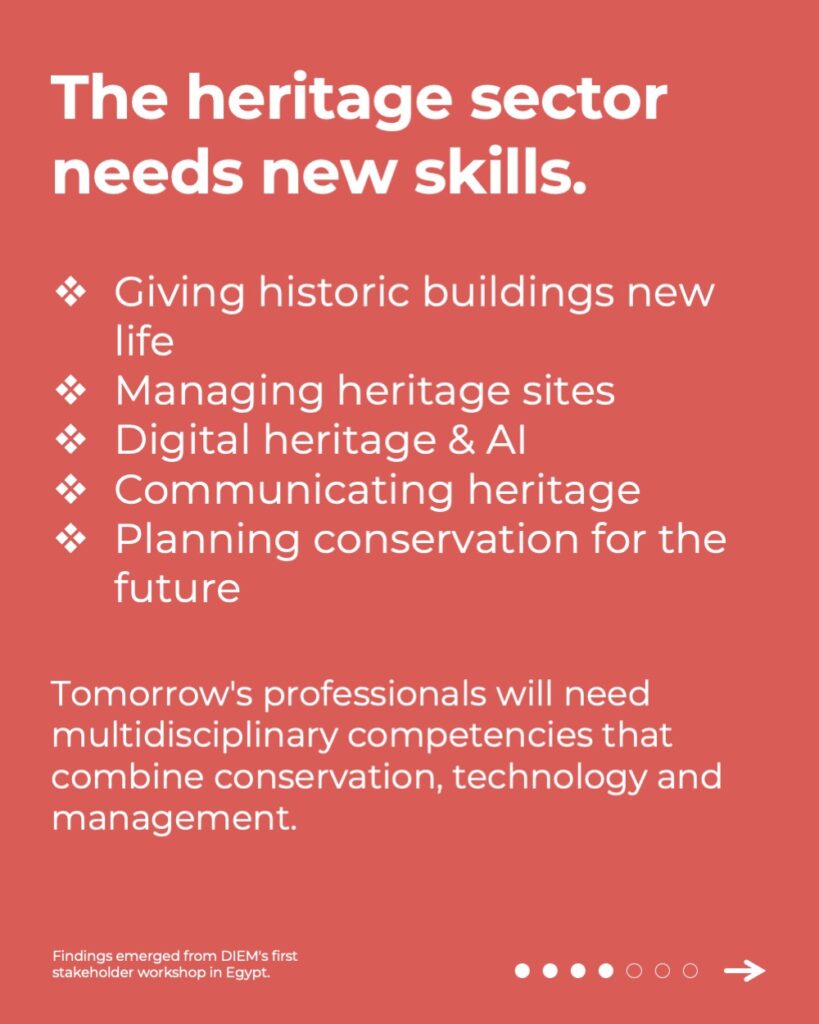
The workshop also highlighted the growing gap between university education and the competencies required in today’s heritage sector.
Participants observed that many graduates enter the profession with strong theoretical knowledge but limited preparation for the interdisciplinary challenges they will encounter in practice. Discussions therefore focused on updating curricula to include technical disciplines, heritage management, digital technologies and artificial intelligence, while providing students with greater exposure to real conservation projects and professional practice.
Rather than preparing specialists in isolated disciplines, future education should encourage collaboration between architects, engineers, archaeologists, planners and heritage managers, reflecting the increasingly integrated nature of heritage conservation.
Governance as a key enabler
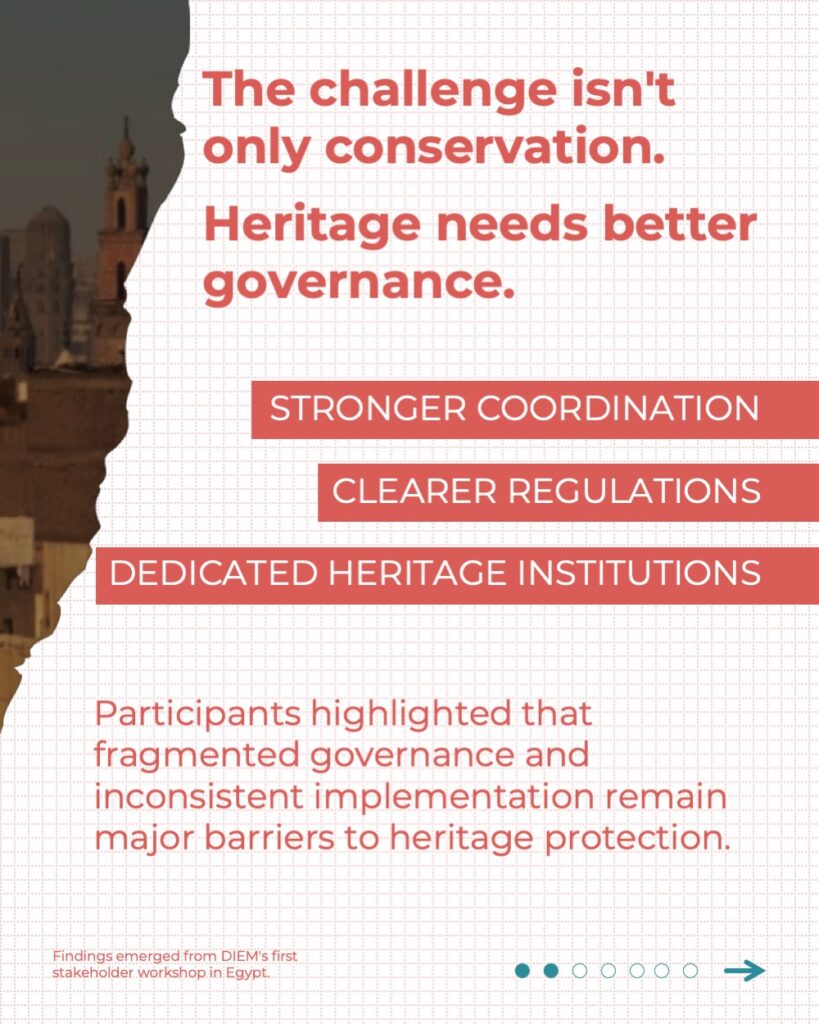
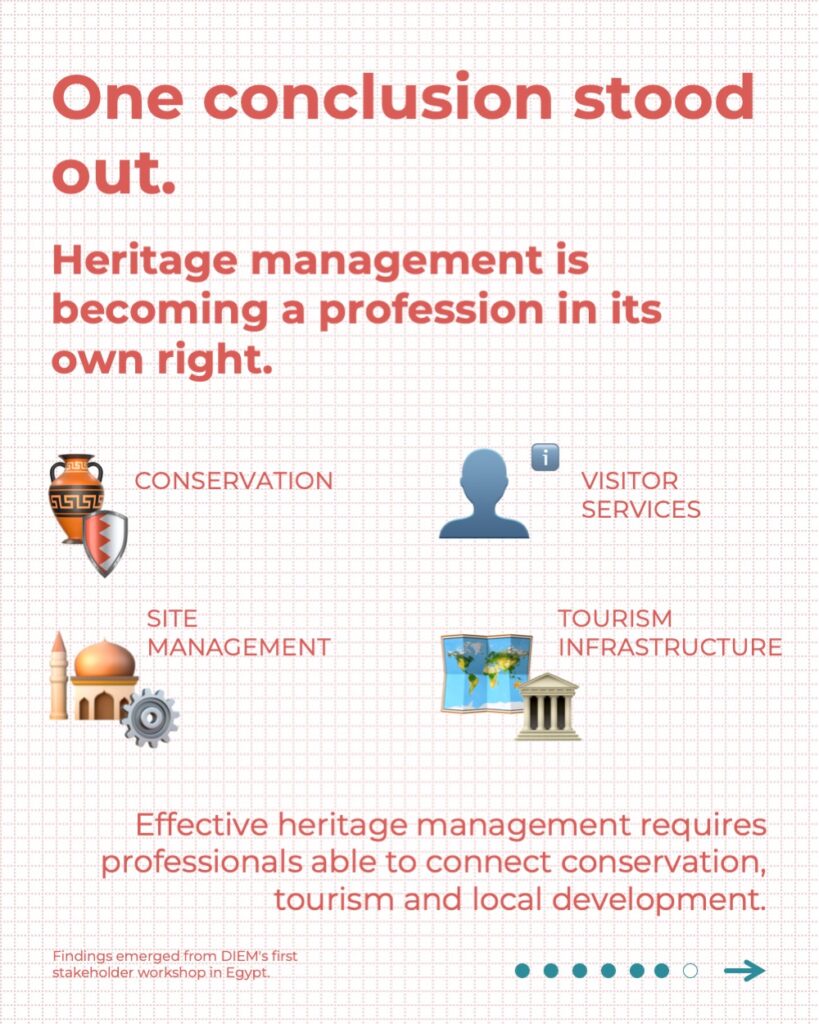
Beyond education, participants recognised governance as one of the main challenges affecting heritage management in Egypt. The workshop explored the need for more coordinated institutional frameworks, dedicated heritage bodies and clearer regulatory mechanisms capable of supporting conservation while facilitating sustainable investment. Participants also discussed the importance of integrated heritage management, bringing together conservation, tourism, visitor services and operational management within a shared strategic vision.
Looking ahead
The workshop findings do not aim to provide a comprehensive assessment of Egypt’s cultural heritage sector. Rather, they reflect the perspectives shared by participating stakeholders and provide valuable evidence for the next stages of the DIEM project.
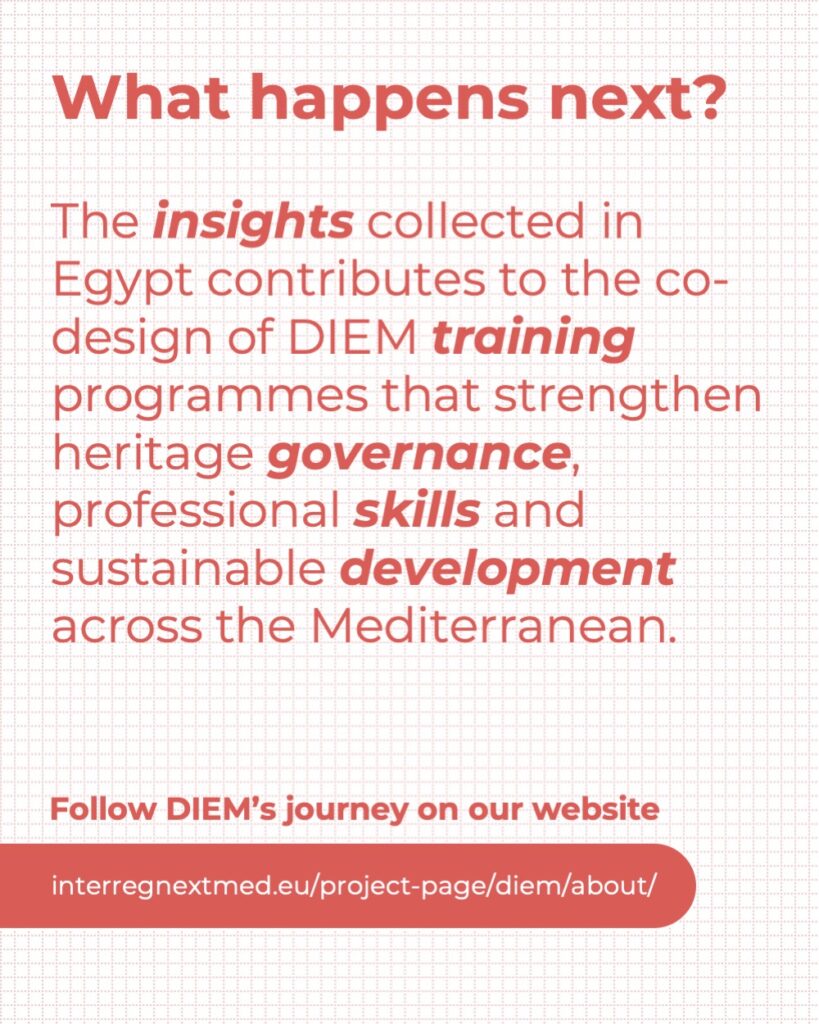
Together with the results emerging from the other partner countries, these insights will contribute to the co-design of DIEM’s future learning pathways, pilot activities and capacity-building initiatives. They reinforce a shared vision in which heritage education is not only about preserving the past, but also about equipping professionals with the knowledge, management skills and collaborative approaches needed to support sustainable development across the Mediterranean.
Download the workshop findings
Explore the full DIEM Egypt Workshop Results, including key recommendations and stakeholder insights.
 Next Med