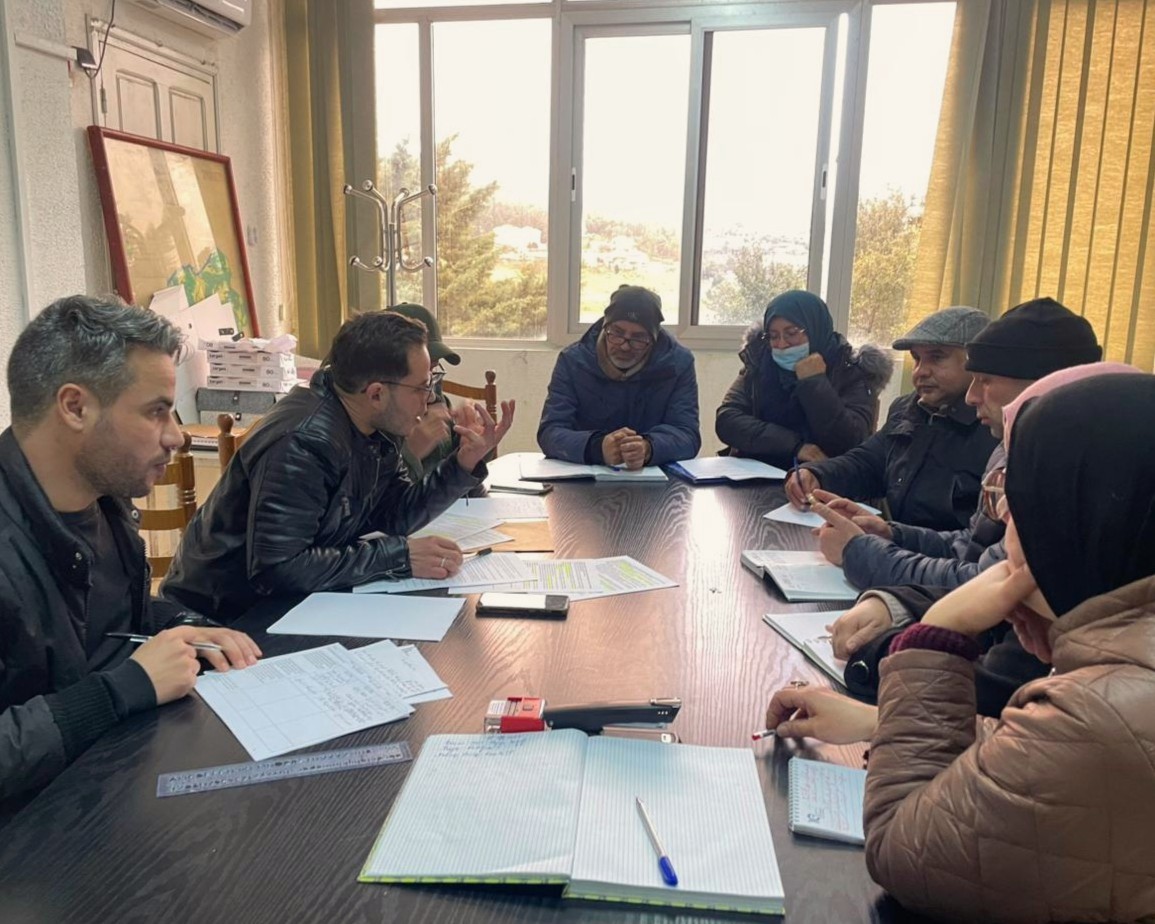
In Ain Draham, north-western Tunisia, the MedFireWise project set out to explore that question by bringing local voices directly into the conversation.
In February 2026, the National Institute for Research in Rural Engineering, Water and Forestry (INRGREF), in collaboration with the Forest District of Ain Draham, organised a focus group to discuss the acceptability of Nature-based Solutions (NbS) for wildfire risk management.
Rather than presenting ready-made solutions, the meeting focused on listening. Farmers, local stakeholders and authorities exchanged views on how different prevention strategies could work in practice — discussing their feasibility, benefits, and the conditions needed for successful implementation in the Tunisian context.
The discussion built on the momentum of the regional MedFireWise workshop held in Ain Draham in December 2025, moving the conversation a step further: from identifying potential solutions to understanding how communities perceive them.
One message clearly emerged: wildfire prevention strategies must also make sense socially and economically.
Among the approaches discussed, silvopastoralism — combining grazing with forest management — was widely seen as a promising solution. By reducing combustible vegetation while supporting rural livelihoods, it offers a preventive approach that aligns environmental protection with local economic realities.
Other solutions, such as prescribed burning, raised more complex questions. Participants highlighted legislative constraints and concerns regarding social acceptance, pointing to the need for careful adaptation of prevention strategies to national contexts.
More than a technical exchange, the focus group highlighted the importance of aligning scientific solutions with local realities. By bringing together institutional perspectives and local experience, the discussion helped clarify which prevention approaches could realistically be implemented in Tunisia.
Through initiatives like this, MedFireWise continues to connect research, policy, and community knowledge, helping shape wildfire prevention strategies that are both practical and locally supported across the Mediterranean.
A warm thank you to all participants who shared their perspectives and contributed to this important dialogue.
 Next Med