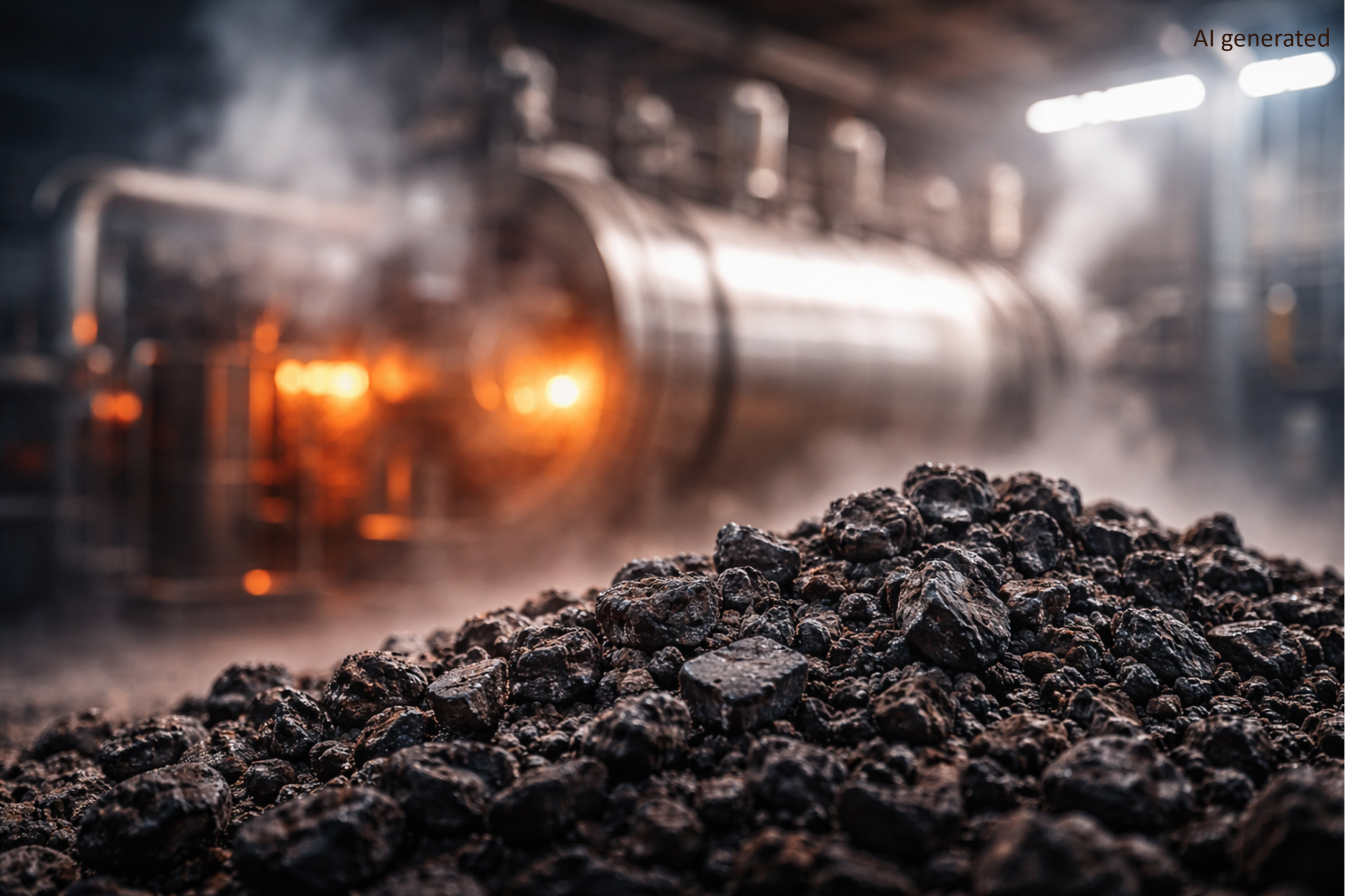
Pyrolysis is a thermochemical conversion process. In simple terms, it heats an organic material at high temperature in the absence (or strong limitation) of oxygen. Because oxygen is limited, the material does not “burn” as in combustion—instead, it breaks down into different fractions.
Why sludge needs to be dried first
Sewage sludge typically contains a high amount of water. Drying reduces moisture, making the feedstock more stable and consistent and helping the conversion process run more efficiently. This is why pyrolysis in Sludge2Energy is linked to the project’s pre-treatment steps (such as solar drying).
What does pyrolysis produce?
When dried sludge undergoes pyrolysis, it can generate:
- Energy carriers (typically a gas fraction that can be used for energy recovery, depending on the system design)
- Biochar, a carbon-rich solid material that can potentially be valorised in circular applications, depending on quality and safety requirements
Why pyrolysis is central to Sludge2Energy
Pyrolysis supports the project’s ambition to move from “waste management” to resource recovery. By converting sludge into useful outputs, it can contribute to:
- Reducing the amount of residual material requiring disposal
- Improving the overall sustainability profile of sludge treatment pathways
- Generating evidence on technical performance and operational requirements through pilot-scale testing
From concept to real-world validation
In Sludge2Energy, pyrolysis is not only described in theory: it is tested, monitored, and optimised through demonstration activities, generating practical knowledge for water utilities and local stakeholders interested in replicable solutions.
 Next Med