YOUthCARE4planet: Young People in south of Italy Mobilise for Clean Soil and Safe Food in a Region Impacted by Illegal Waste

In Casapesenna, decades of illegal waste dumping have contaminated soil and threatened agriculture. YOUthCARE4planet highlights how young people are pushing for transparency, environmental justice, and safer futures.

Publication Date
22/12/2025
Reading Time
2 minutes

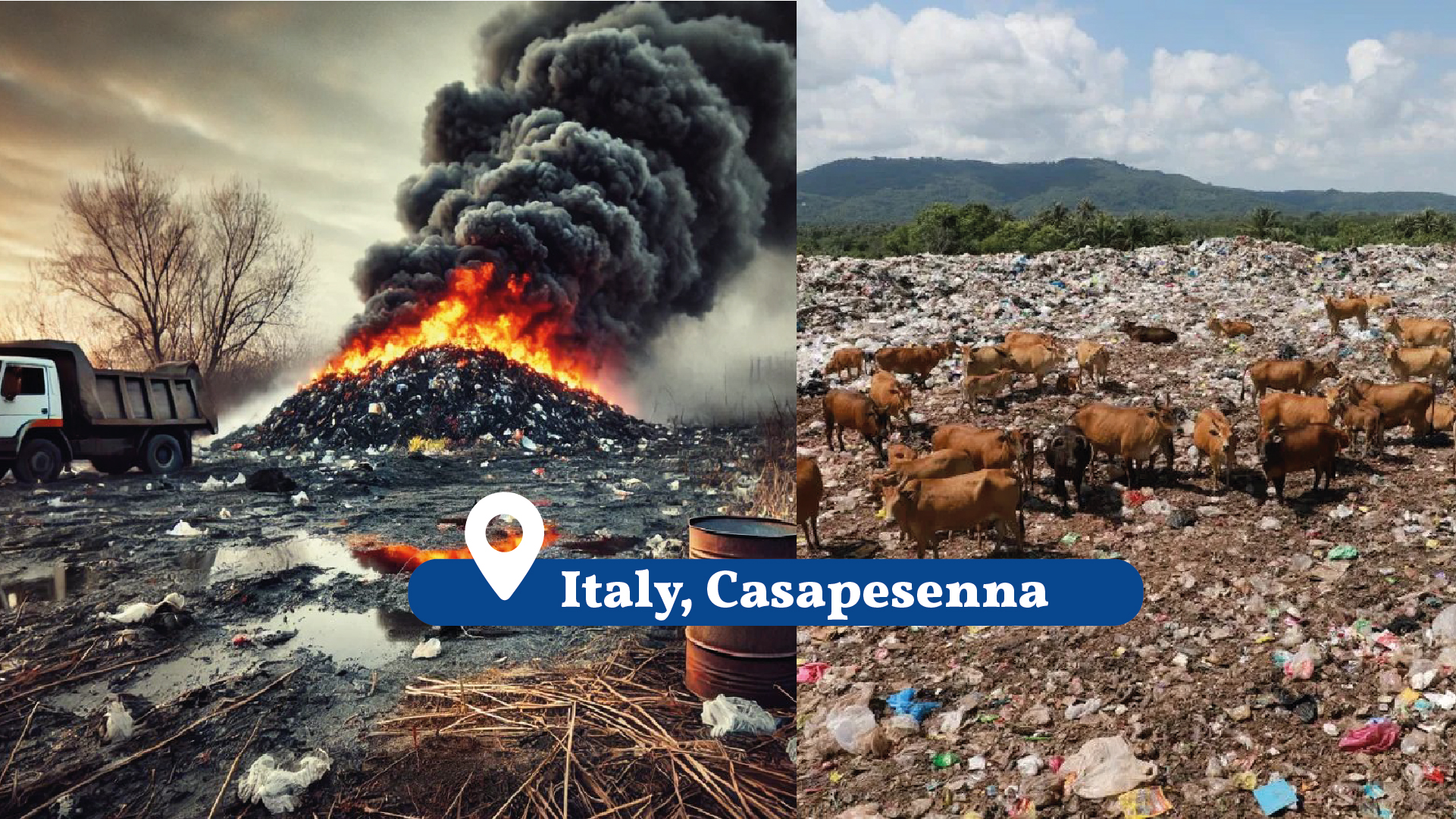
Casapesenna located in region of Campania, south of Italy, is part of a territory that has carried the weight of environmental crime for decades. The illegal dumping and burial of industrial waste—often associated with the “Terra dei Fuochi”—has contaminated agricultural land, polluted aquifers, and undermined trust in local food.
Reports from the Italian National Health Institute (ISS) and parliamentary inquiries confirm the presence of  heavy metals and toxic substances in several areas of the region. These findings have contributed to widespread concern about long-term health effects and the safety of local produce.

Climate stress making contamination worse

Climate change is now adding pressure to an already fragile situation. Rising temperatures accelerate chemical dispersion in soil and groundwater. Irregular rainfall increases runoff, spreading contaminants further. Periods of drought weaken soil structure, concentrating pollutants and making it harder for farmland to recover.

Local farmers often feel the impact first: reduced harvests, soil fatigue, and markets sceptical about the safety of local products. Many families live with uncertainty, torn between their connection to the land and fears about environmental health.

A generation refusing silence

Despite this difficult legacy, young people in Casapesenna are stepping forward. Youth groups and civic associations work together to gather information, raise awareness, and support transparency. Their activities range from mapping abandoned plots to reporting new instances of illegal dumping.
These efforts complement institutional monitoring, helping to build a culture of vigilance and collective responsibility.

Schools and youth centres have become important spaces for discussing environmental justice. Workshops encourage students to understand scientific data, ask informed questions, and recognise how pollution affects not only the environment but also social equity and public health.

Environmental justice as a driving force

For many young people, the motivation is deeply personal. Growing up in a region marked by distrust and environmental harm, they want to contribute to a different future—one where soil and water are protected, institutions are accountable, and communities are strengthened.

Confiscated assets, now used as community centres and social projects, play a symbolic and practical role. These spaces host discussions, exhibitions, and youth-led initiatives that reclaim damaged narratives and create new forms of civic engagement.

Digital communication also matters. Through social-media storytelling, young people give visibility to invisible pollution, share testimonies from residents, and promote scientific literacy by simplifying complex information.

Building safer futures

The challenge in Casapesenna remains significant, but a new movement is emerging—one grounded in knowledge, collaboration, and a sense of justice. YOUthCARE4planet recognises that youth must be central actors in rebuilding trust, protecting soil, and reshaping environmental futures.

By educating, monitoring, and mobilising, young people are proving that even in territories marked by environmental injustice, change can start from below.

Last Update

22/12/2025