Health concerns dominate everyday conversations in Gabes. The European Union study highlights that exposure to the Chemical Group’s pollutants can cause asthma, osteoporosis and rare cancers found nowhere else in Tunisia. According to residents in Gabes, nearly every household has at least one member suffering from cancer. While activists demand transparent studies on disease rates in the region, many say the lack of clear, accessible data has fuelled mistrust toward authorities.
Economic dependence complicates resistance. For thousands of families, the chemical industry remains a primary source of employment. This creates a painful dilemma: protest the pollution that threatens your health, or defend the jobs that keep food on the table.
Years of unfulfilled promises, ranging from the relocation of industrial units to pollution controls and environmental remediation, have deepened public scepticism. What were once calls for reform have hardened into demands for immediate action, with residents now openly calling for the dismantling of the chemical group they hold responsible for decades of environmental harm.
Youth at the center of resistance
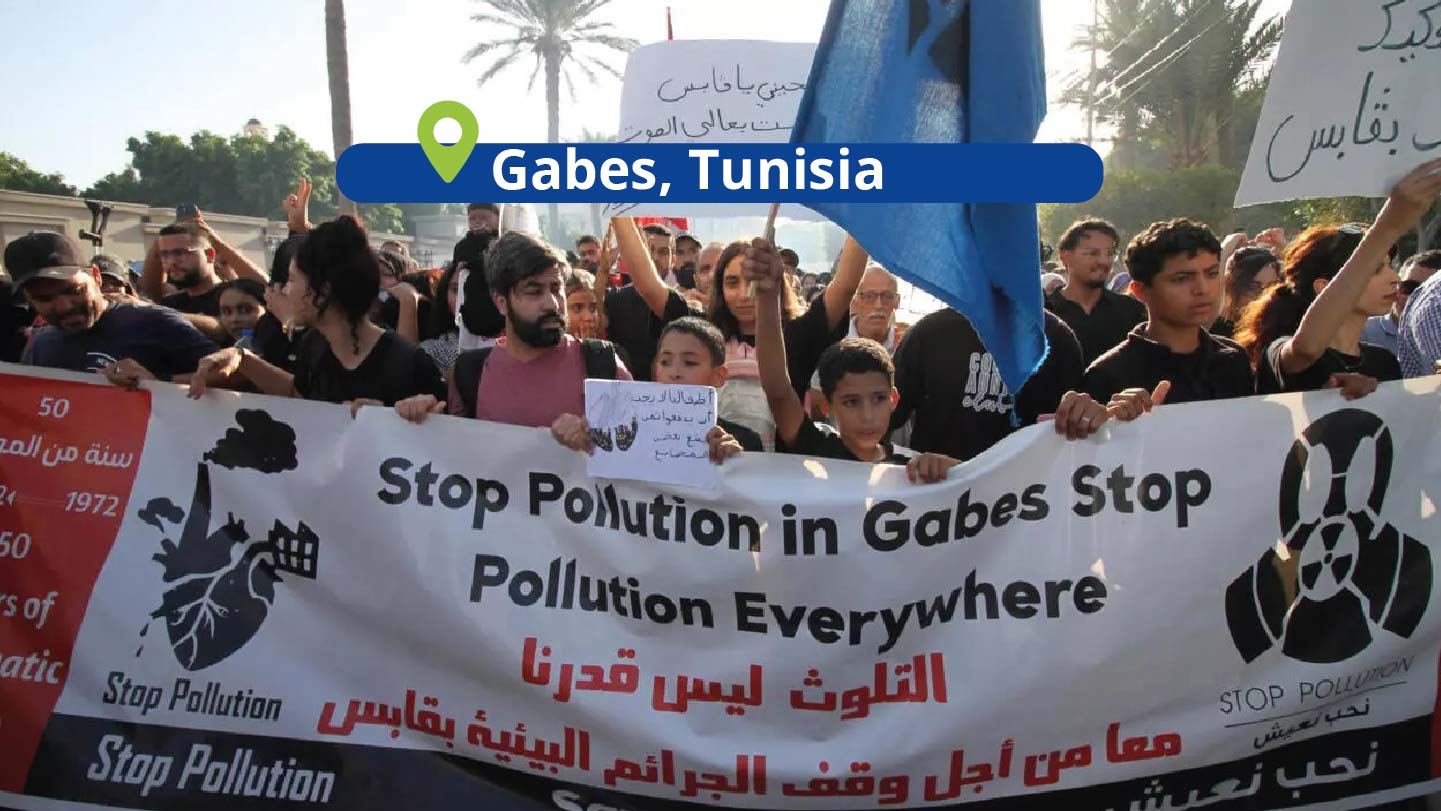
In 2025, youth emerged as the backbone of Gabes’ renewed mobilization, transforming long-standing grievances into sustained collective action.These community-led movements have organized protests, coordinated strike actions, and documented pollution through videos, testimonies, and citizen reporting shared widely online.
Alongside them, football ultras, youth groups traditionally associated with local clubs and stadium culture, have played an unexpected but decisive role. Drawing on their experience with street mobilization, chants, and visual symbolism, ultras helped energize demonstrations, enforce strike participation, and turn protests into powerful spectacles of collective defiance. Their presence blurred the line between sports culture and political activism, channelling frustration over unemployment, marginalization, and environmental harm into organized resistance.
Through documentation, online campaigning, and coordinated protests, youth activists helped raise awareness, collect community evidence, and build new partnerships across civil society.
 Next Med