This article is part of a series of stories that explore environmental challenges and youth initiatives in each country and region participating in YouthCARE4planet project in the Mediterranean.
Located in northwestern Tunisia, the Jendouba region is a true natural treasure. Its varied landscapes combine wooded mountains, deep valleys, crystalline rivers, and sparkling waterfalls, creating a spectacular setting where nature and picturesque villages, such as Aïn Draham and Tabarka, meet harmoniously. These lush hills attract hikers, nature lovers, and tourists, while remaining central to the daily lives of local communities.
The forests of Jendouba, rich in oaks, pines, and cedars, host exceptional biodiversity and play a vital role in climate regulation, soil protection, and water management. They are also a pillar of the cultural and economic identity of residents, who have lived in close harmony with these spaces for generations.
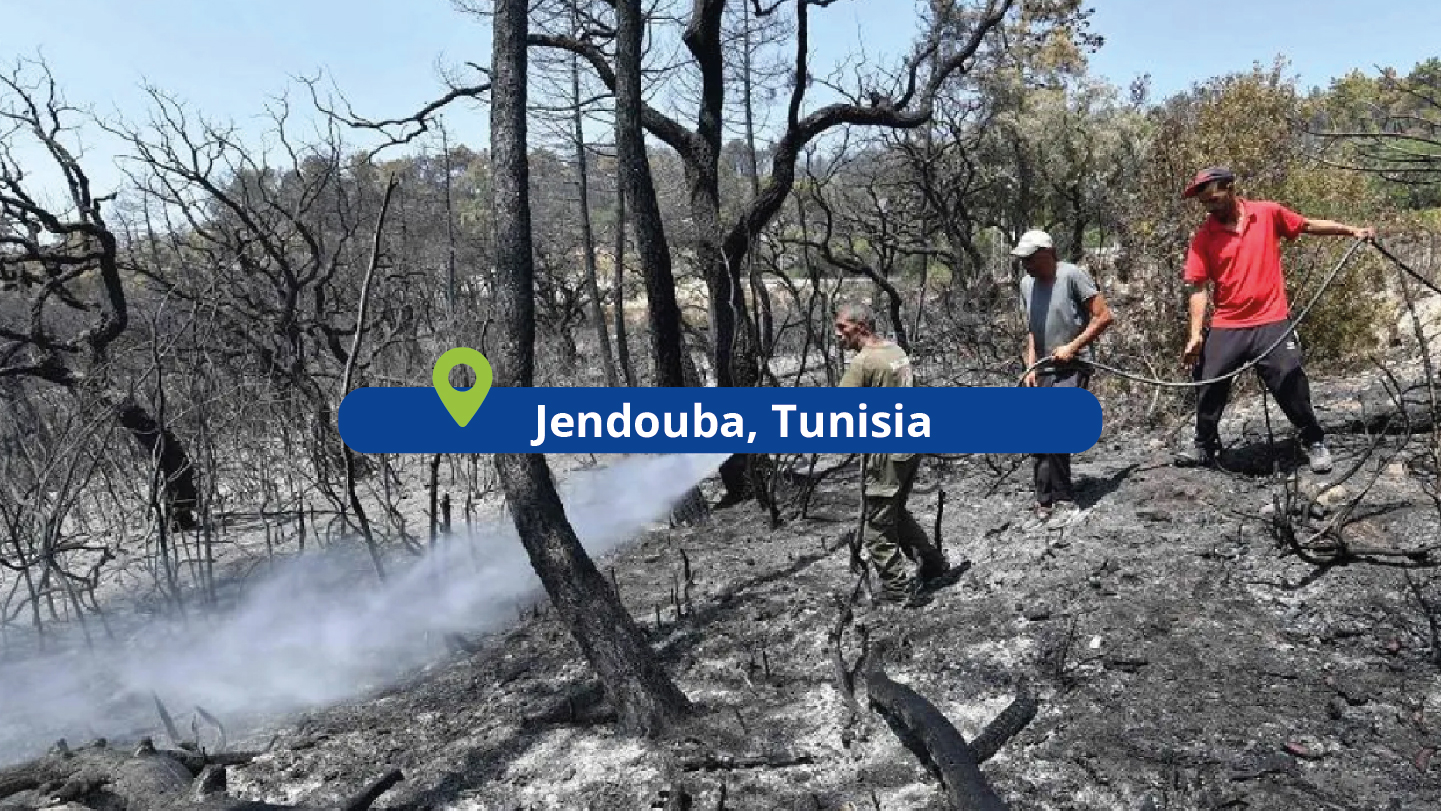
Yet behind this beauty lies a growing threat. The forests of Jendouba are weakened by recurring wildfires, illegal logging, deforestation, and agricultural pressures. This situation represents an ecological crisis with direct human consequences, affecting the daily life of communities and the future of younger generations.
Ecological Crisis and Forest Loss
Satellite data and international statistics show that Tunisia has lost significant areas of tree cover over the past two decades, a clear indicator of forest decline in several regions, especially in the northwest.
According to Global Forest Watch, between 2001 and 2024, Tunisia lost approximately:
- 27,200 hectares of tree cover due to wildfires,
- 10,900 hectares more from other causes such as deforestation and degradation.
These figures represent a significant portion of the country’s forest heritage and reflect a global trend of declining forest cover as observed in forestry monitoring data (webmanagercenter.com).
The gradual disappearance of forests directly impacts daily life. Soil erosion accelerates, water regulation becomes less effective, and agricultural and pastoral systems are more vulnerable to droughts and floods. Fragmented and dry landscapes also increase the risk of forest fires. For young people, witnessing the disappearance of these spaces generates feelings of loss and injustice, but also a sense of awareness and responsibility: they are called upon to act to protect their natural and cultural heritage.*
Youth at the Center of Local Initiatives
In response to this crisis, the youth of Jendouba are becoming agents of change. Their engagement takes shape through concrete actions on the ground: raising awareness, ecological restoration, documenting forest loss, and mobilizing communities.
Several local initiatives highlight this central role:
Envirofest in Dar Fatma, organized in October 2025 with support from WWF North Africa, brought together young people, families, and associations around workshops, debates, and participatory activities. The event allowed adolescents and children to express themselves and propose ideas to protect natural areas.
The Dar Fatma peatlands, located in the Kroumirie mountains, represent a unique ecosystem classified as a Ramsar site since 2007. Facing degradation, an ecological restoration project funded by WWF and the Swiss Audemars‑Watkins Foundation aims to restore 13 hectares, protect biodiversity, and raise local awareness (lapresse.tn).
Finally, the El Feija National Park, covering over 2,600 hectares, offers young people the opportunity to become citizen reporters, educational guides, and field activity facilitators, contributing to the documentation and promotion of biodiversity.
 Next Med