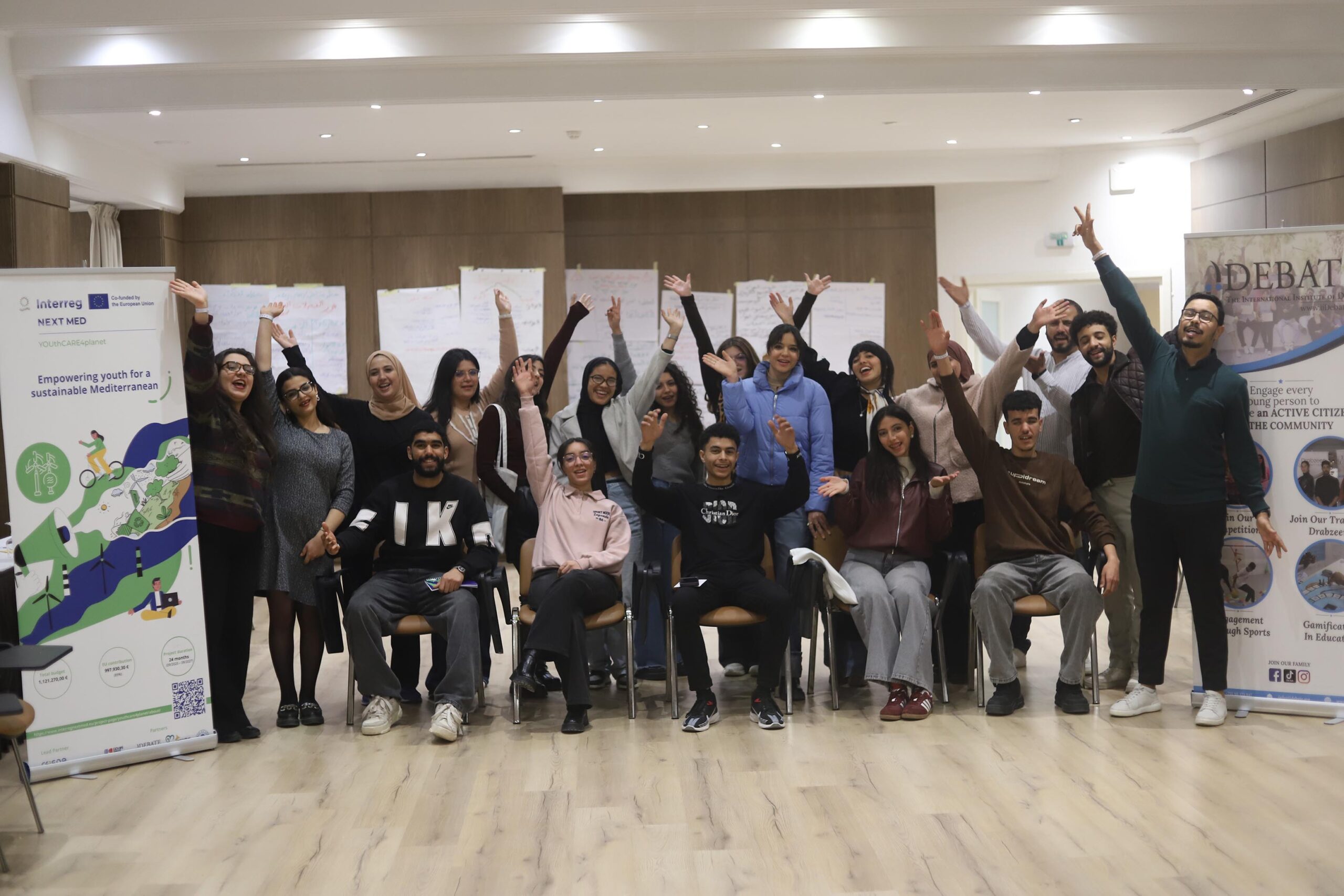
Launching the Journey in Tunisia
The YOU(th)CARE4planet project brings together young people from across the Mediterranean to reflect, learn, and act collectively on environmental and climate challenges. Its ambition is clear: to equip youth with the knowledge, confidence, and practical tools to become active agents of change, turning ideas into concrete initiatives that benefit their communities and protect the planet.
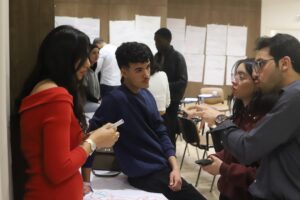
From February 11 to 15, 2026, young participants gathered in Hammamet, Tunisia, at the Sol Azur Beach & Congress Hotel, a central venue accessible from the project’s intervention areas in Tunis, Sousse, Gabès, and Jendouba. Across five intensive days, the training combined interactive workshops, practical exercises, simulations, and group discussions focused on climate change, environmental challenges, facilitation, youth-led campaigning, and Local Adaptation Plans (LAPs). From the outset, participants worked through the CARE methodology—Care with, Care for, and Care about—using it as a framework to understand local realities, strengthen collaboration, and translate knowledge into action.
Speakers and Knowledge Sharing
The training was shaped by the guidance of experienced speakers who combined technical * expertise with practical field insight.
- Foued Bayar : Climate change specialist in Tunisia and president of the Salakta Nature Association, leading initiatives against pollution and raising environmental awareness among youth.He highlighted the importance of cooperation between civil society, youth, experts, and public institutions to strengthen local climate action.
- Youssef Omri, Soft Skills and Project Management Expert, delivered sessions on the concepts and forms of group discussions, facilitation and reporting skills, data collection and analysis from group discussions, and campaigning and campaign design. Through his sessions, participants strengthened their understanding of formats such as table ronde, focus group, community dialogue, and café talk, while also building skills in moderation, time management, participatory discussion, and reporting.
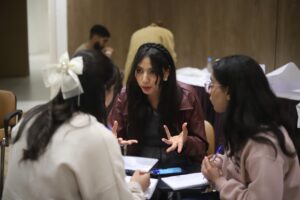
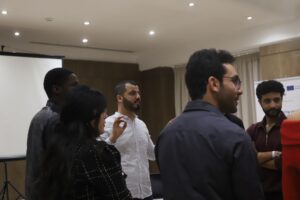
Tunisian Youth in Action
By the middle of the training, participants were already stepping into leadership roles: Facilitating discussions, analyzing local challenges, and shaping ideas into practical plans. They were not passive learners; they were also bringing forward firsthand observations from their territories. Across the post-training survey, participants pointed to alarming issues such as irregular rainfall, drought, forest fires, coastal erosion and growing water scarcity as the most visible climate impacts affecting their communities.
These discussions also helped identify the main vulnerabilities facing different territories: pressure on agriculture and fisheries, weak infrastructure, poor drainage in flood-prone areas, pollution, and low levels of preparedness and awareness. Participants consistently noted that the groups most affected are farmers, rural populations, women, youth, and, in some coastal areas, tourism workers and residents exposed to flooding and shoreline degradation.
The training translated these realities into practical learning. Survey responses showed strong confidence in participants’ ability to explain and implement the CARE methodology, understand climate change basics and organize and facilitate group discussions. Many also said the training gave them a clearer step-by-step understanding of how to structure a LAP by identifying climate risks, assessing vulnerable groups, setting priorities, and proposing realistic local solutions.
Participants also emphasized what was new for them: the distinction between different discussion and campaigning formats; methods for collecting local data; and the importance of linking climate impacts to community realities. Some had already led environmental awareness, tree-planting, water-saving, or campus-based initiatives. Others described the training as their first deeper exposure to climate adaptation, advocacy, and participatory planning.
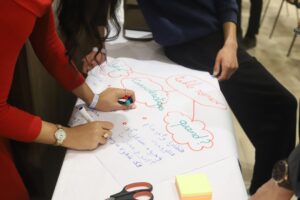
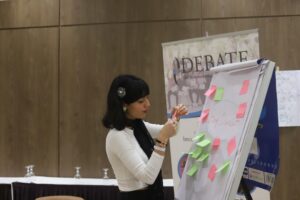
From Tunisia to the Mediterranean
On the final day, participants presented draft green campaigns and LAP ideas developed through collective work, local research, and facilitation exercises. Their proposals reflected both urgency and ambition: cleaner and less polluted communities, better water management and greater public awareness. Many expressed the intention to mobilize their communities through awareness sessions, café talks, focus groups, advocacy campaigns, social media, and collaboration with associations, local actors, and public officials.
The Tunisia training also marked the beginning of a wider regional dynamic. The same workshops and learning resources were later made available online on February 16, 17, and 18 for young people in other countries and intervention areas, creating space for Mediterranean exchange and coordinated climate action. These online sessions were led by two expert speakers:
- Islem Zrelli : Climate consultant, entrepreneur, and advocate for climate education and youth empowerment in the MENA region. Founder of Green Gate: the first-ever green opportunities platform in the Arab world, that actively promotes sustainable initiatives and opportunities and organizer of GreenX,a regional initiative that gathers young people, experts, and policymakers to exchange ideas and co-create solutions for climate challenges. She brought her expertise on climate policy, circular economy, and youth engagement in the MENA region.
- Abir Ben Abdallah : Law graduate and legal researcher specializing in contracts and civil liability, actively engaged in human rights and climate justice initiatives. She contributes to renewable energy and environmental rights projects in partnership with civil society organizations and UNICEF Tunisia.
Looking Ahead
Participants across the Mediterranean envision communities that are resilient, informed, and engaged, where natural resources are protected, everyone—including youth, women and minorities—is empowered to act, and local solutions are tailored to real needs. They call on decision-makers to support local adaptation initiatives, invest in preventive solutions, and involve young people actively in shaping a sustainable future.
With YOU(th)CARE4planet, Mediterranean youth are not just learning—they are leading the change, inspiring their communities, and building a future where every action counts.
 Next Med