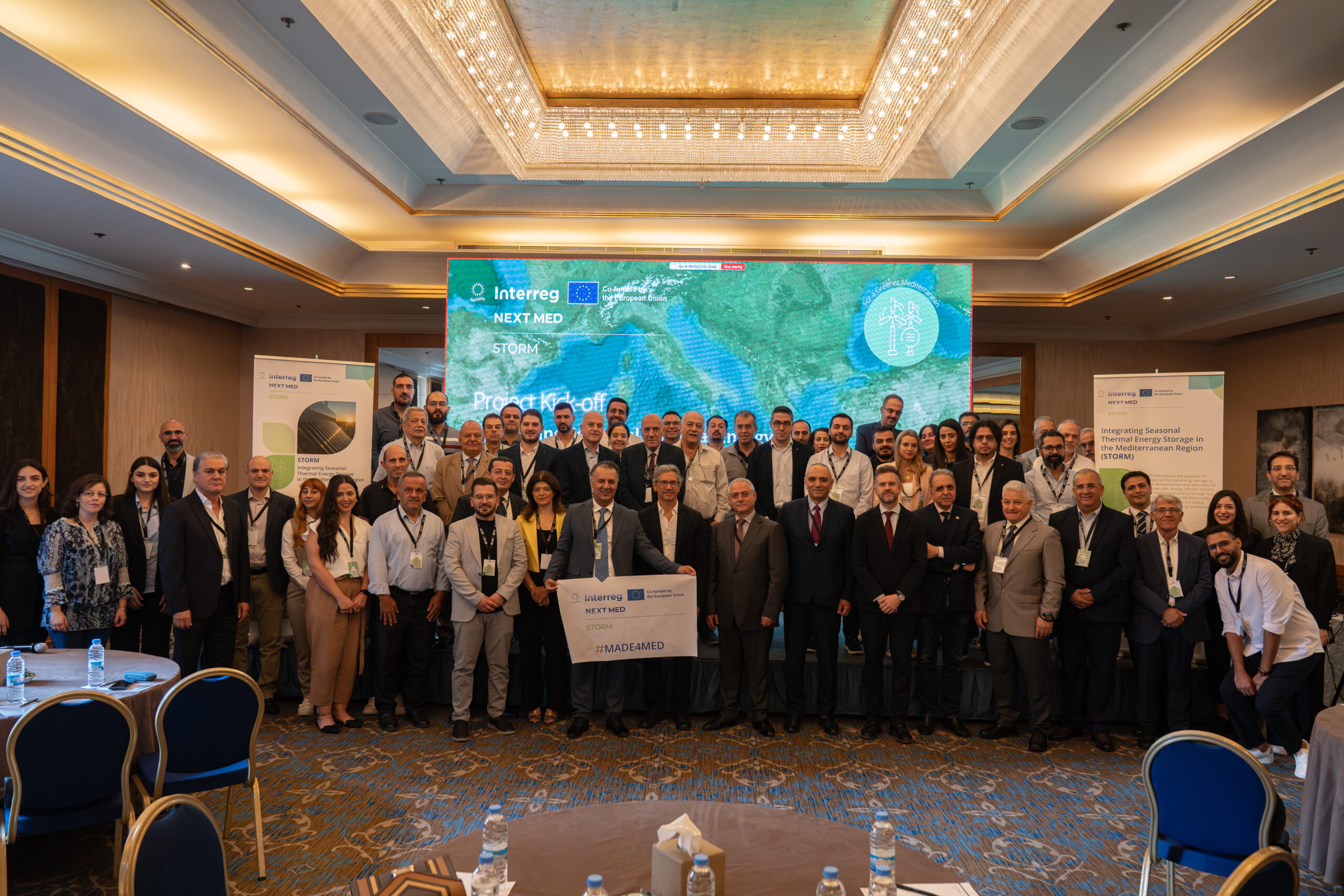
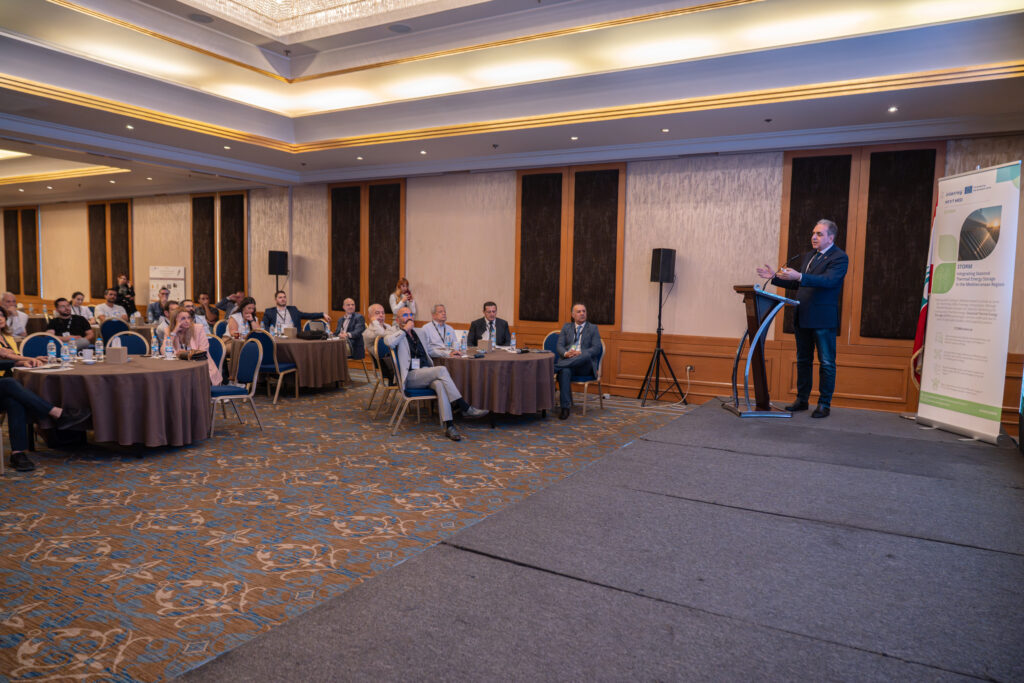
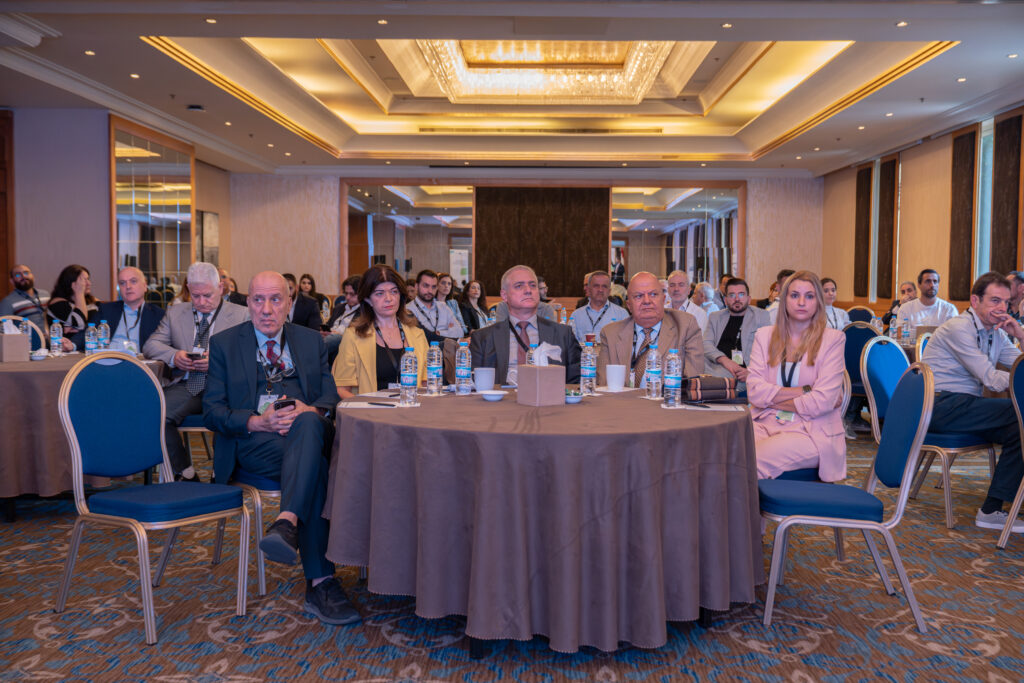
On November 6th, 2025, STORM – Integrating Seasonal Thermal Energy Storage in the Mediterranean Region project has officially launched under the Interreg NEXT MED Programme, marking a major step toward cleaner, more efficient heating and cooling systems across the Mediterranean.
With a total budget of €2.7 million, of which €2.4 million (89%) is funded by the European Union, STORM brings together seven partners from Lebanon, Cyprus, Jordan, Italy, and Spain to demonstrate how Seasonal Thermal Energy Storage (STES) can reduce energy reliance on fossil fuels, cut emissions, and enhance climate resilience.
A Mediterranean challenge with a Mediterranean solution
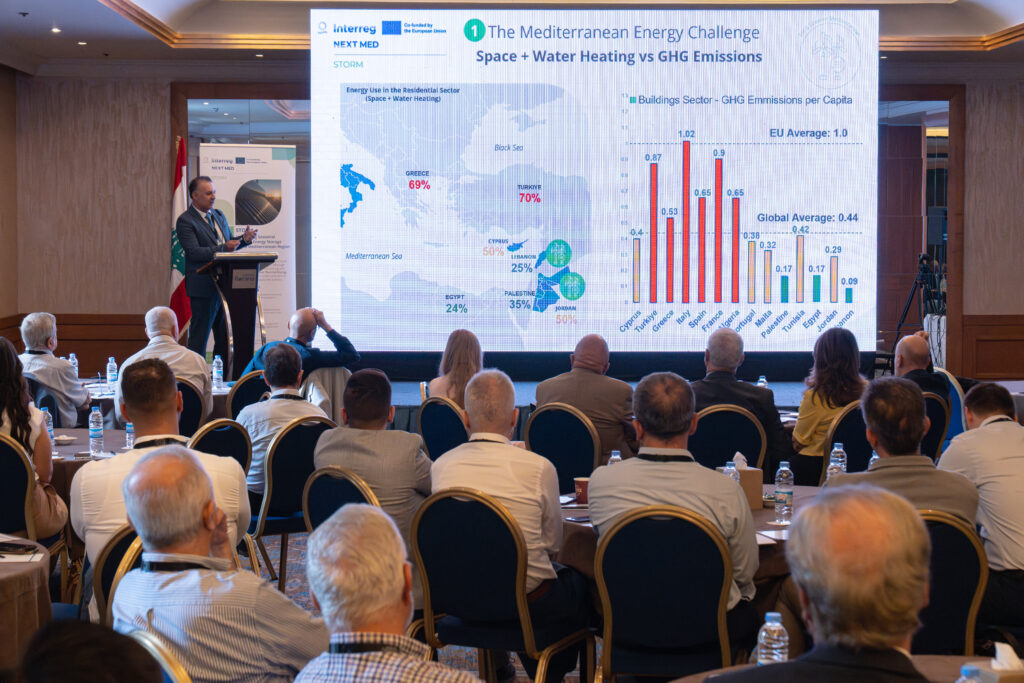
Heating and cooling account for more than half of the region’s total energy use in buildings, much of it still relying on expensive and polluting fossil fuels. At the same time, the Mediterranean enjoys one of the world’s richest solar resources—an opportunity that remains largely untapped.
STORM aims to change this by testing and scaling solar-based seasonal energy storage, a technology that captures excess thermal energy during the summer and stores it underground or in insulated tanks for use during winter. This approach can drastically reduce fossil fuel dependency and energy bills for households, universities, public buildings, and eco-tourism facilities.
Four pilots across four countries
To prove real-world applicability, STORM is implementing three full-scale pilots and one demonstration site, each representing different climates, geological conditions, and building types:
- Beirut, Lebanon (American University of Beirut – Bliss Hall): Borehole Thermal Energy Storage (BTES) supplying up to 40% of the annual space heating needs for a 2,500 m² historic building.
- Palermo, Italy (University of Palermo): Solar-based BTES coupled with an innovative thermal–electric hybrid cogeneration system.
- Ajloun, Jordan (Forest Reserve): Tank Thermal Energy Storage (TTES) combined with solar power and heat pumps to meet the heating demand of 38 eco-cabins.
- Barcelona, Spain (KIMbcn): Ice-storage tanks integrated into the Tànger Power Plant as a demonstration of urban district cooling.
These pilots will generate valuable technical, environmental, and financial data—supporting replication across the region.
Tools, knowledge, and policies for long-term impact
Beyond infrastructure, STORM will deliver:
- A Digital Platform hosting case studies, simulation tools, and technical guidelines.
- A Mediterranean STES Design Toolkit to support engineers, renewable energy providers, and developers.
- A long-term strategy to embed STES into national energy policies in Mediterranean countries.
- Awareness and capacity-building activities for citizens, students, engineers, and policymakers.
STORM is not only installing innovative pilots — it is building the knowledge, tools, and policies needed to make seasonal thermal storage a cornerstone of the Mediterranean’s sustainable energy future.
A shared Mediterranean effort
The project is led by the American University of Beirut (Lebanon), in partnership with Lebanese Center for Energy Conservation (Lebanon), Royal Scientific Society (Jordan), American University of Beirut – Mediterraneo (Cyprus), University of Campania Luigi Vanvitelli (Italy), University of Palermo (Italy), and Knowledge Innovation Market Foundation BCN (Spain).
Together, we aim to accelerate the region’s green energy transition, reduce greenhouse gas emissions, and support healthier, more resilient communities.
#MADE4MED
 Next Med