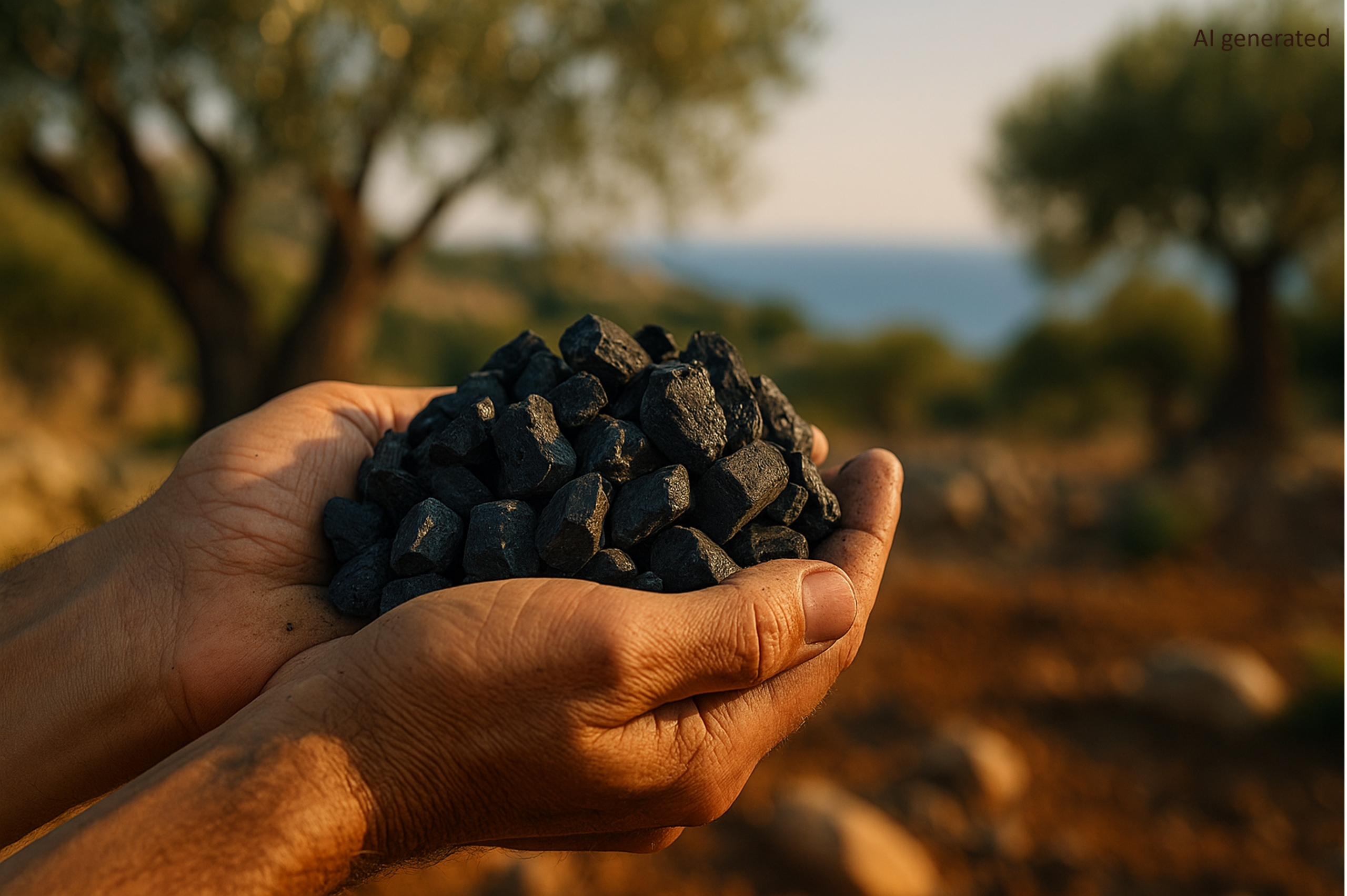
Biochar is a carbon-rich, solid material that looks like small black granules. It forms when we heat organic material at high temperature with very little oxygen. Instead of burning, the material changes into a stable, char-like product.
In Sludge2Energy, the process starts with dried wastewater sludge. Drying matters because it lowers water content and makes the material easier to handle. Then pyrolysis converts the dried sludge into two main outputs:
- an energy-rich fraction (which can support energy recovery, depending on the system)
- biochar, the solid carbon-rich product
Biochar helps Sludge2Energy move from “waste management” to resource recovery. The project does not aim only to treat sludge; it aims to create useful outputs and reduce the share of material that ends up in disposal routes.
Carbon storage, in simple terms
Biochar can keep part of its carbon in a more stable form than the original biomass. When biochar meets the right quality requirements and goes to suitable uses, it may support long-term carbon storage. This is why biochar often comes up in discussions about climate mitigation and circular solutions.
From residue to resource
Biochar’s value depends on where and how it performs. In general, people explore biochar for circular uses such as:
- soil-related applications (only where regulations allow and quality is adequate)
- technical and environmental uses where the material’s structure can be helpful (for example, support media in processes)
Sludge2Energy focuses on the same principle: use biochar only where it is safe, compliant, and effective.
Quality and safety come first
Before anyone can use biochar, the project needs clear evidence about its quality. The team therefore tests key parameters that influence safety and performance, such as:
- heavy metals and other contaminants
- organic pollutants (including selected pharmaceuticals)
- nutrient content (e.g., phosphorus and potassium)
- micro-/nanoplastics
- antibiotic resistance bacteria/genes
These checks help the project understand what applications are realistic and under which conditions.
Building real-world evidence
Sludge2Energy also looks beyond lab results. The project collects data from pilot and demonstration settings to understand how operating conditions affect biochar quality. This approach helps utilities and local stakeholders evaluate whether solutions can be replicated in their own context.
 Next Med