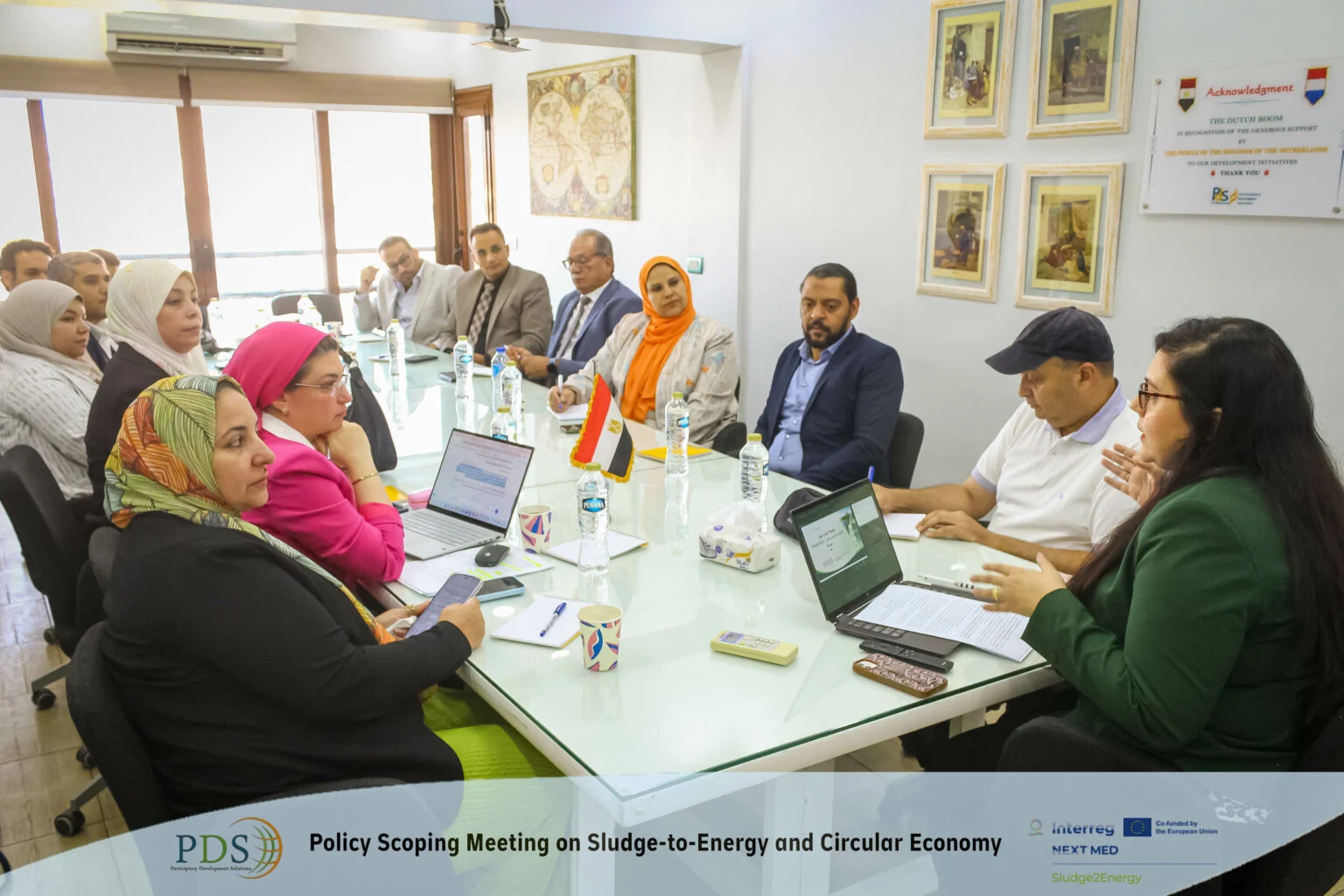
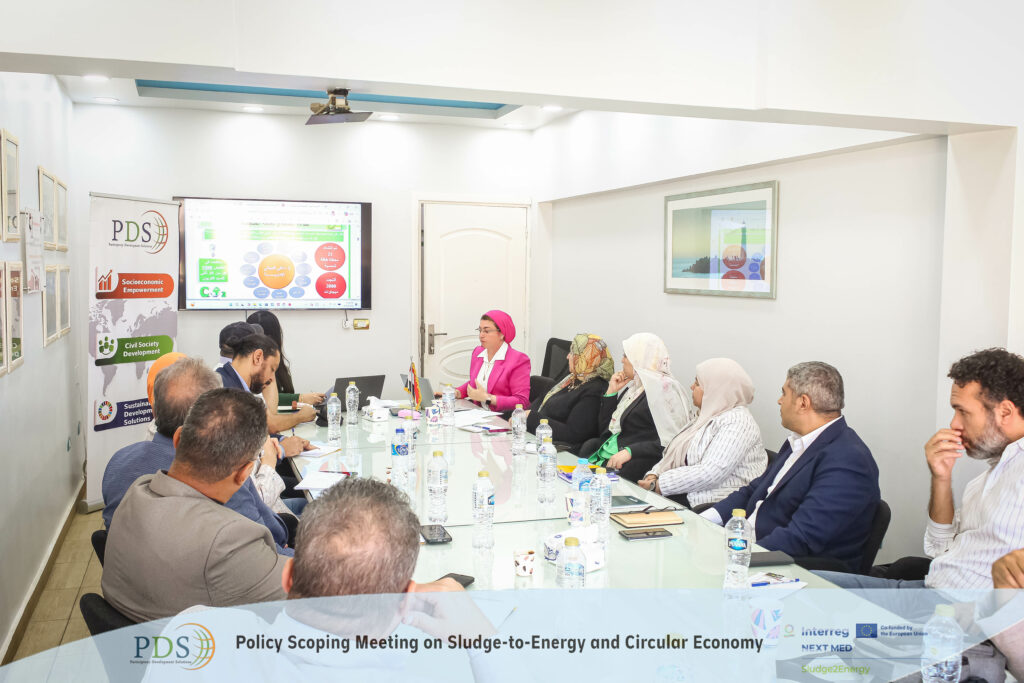
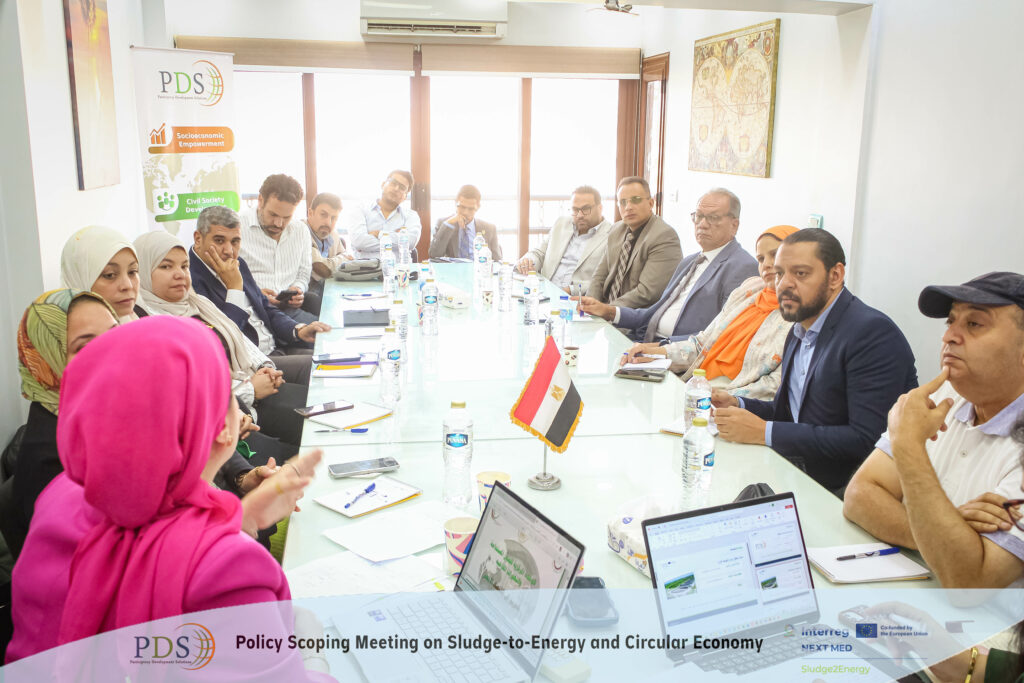
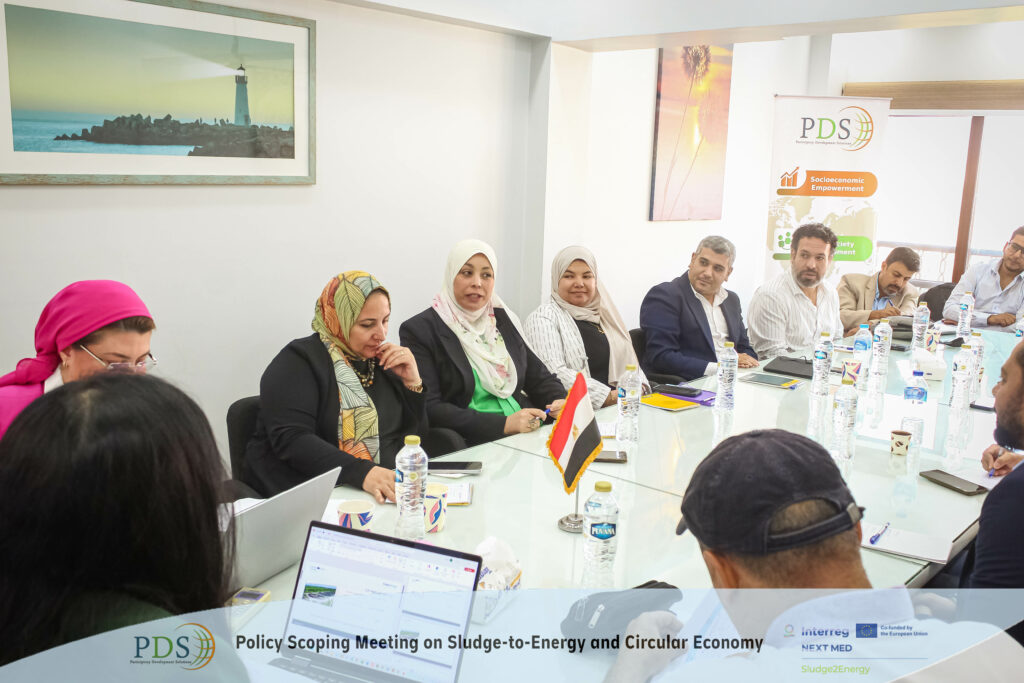
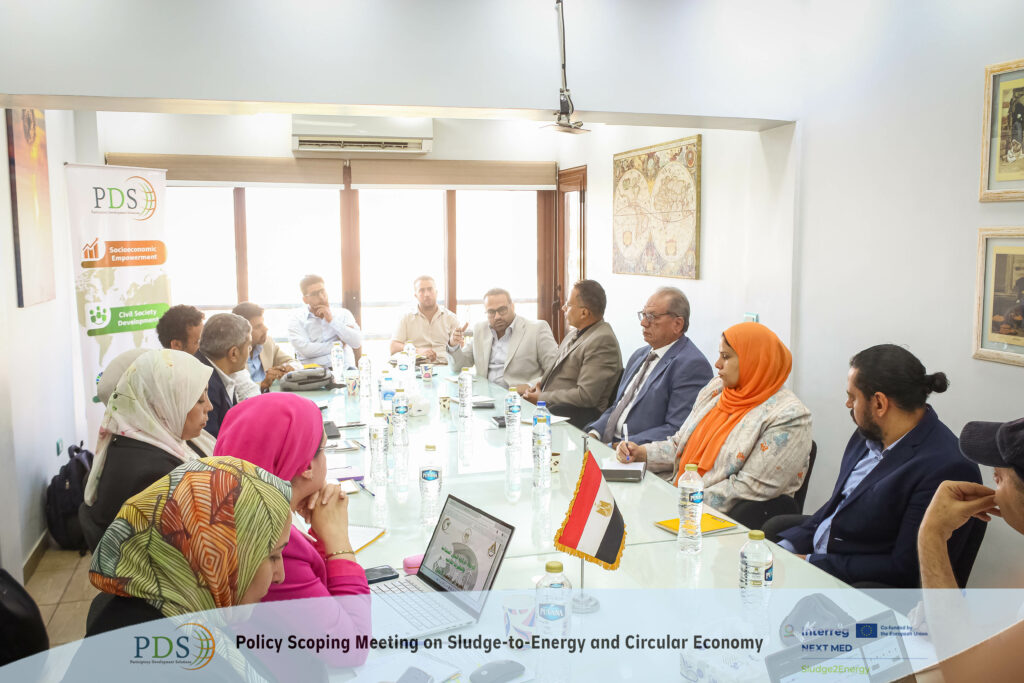
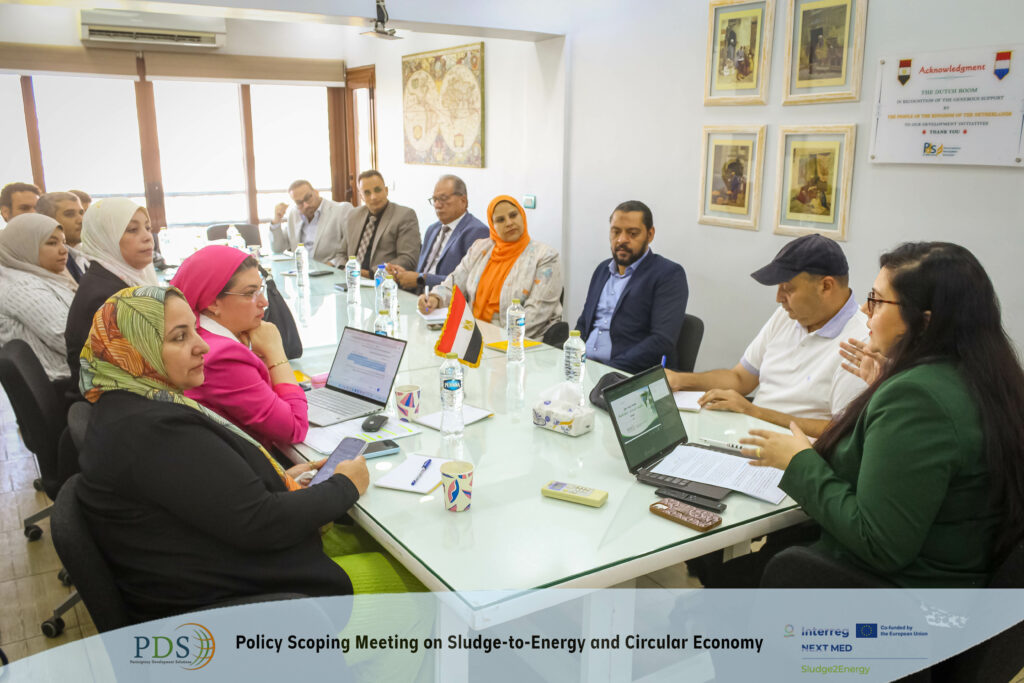
What if the sludge left over from wastewater treatment were not only a problem to dispose of, but a resource to recover? That question was at the heart of the Policy Scoping Meeting on Sustainable Sewage Sludge Management and Circular Economy in Egypt. Participatory Development Solutions – ElMahrousa (PDS), the Egyptian partner of Sludge2Energy, organised it on 30 August 2026.
Around the table: government, research and practice
The closed expert session brought together 15 participants. Twelve of them were high-level stakeholders from governmental, operational, research and academic institutions. Experts came from the Egyptian Atomic Energy Authority, the Ministry of Water Resources and Irrigation, the Holding Company for Water and Wastewater, the New Urban Communities Authority of the Ministry of Housing, the Agricultural Research Center, the Desert Research Center, the National Water Research Center, the Channel Maintenance Research Institute, the Egyptian Environmental Affairs Agency and Alamein International University. Legal, consultancy and private-sector professionals also took part.
From waste to resource, safely
The discussion explored how Egypt can stop treating sewage sludge mainly as waste to dispose of and start managing it as a source of energy and materials. Strong environmental and public-health safeguards would stay in place.
Participants agreed on several priorities:
- a national baseline and database on sludge quantities, characteristics and geographical distribution;
- classifying sludge by origin and risk profile;
- controlling industrial wastewater and separating it at source;
- clarifying regulatory and institutional responsibilities;
- stronger MRV (monitoring, reporting and verification) and traceability systems, from the treatment plant to the final use.
No one-size-fits-all solution
Experts looked at a range of recovery pathways:
- biogas and energy recovery;
- pyrolysis (heating sludge with little or no oxygen);
- biochar (the carbon-rich material that pyrolysis produces);
- industrial applications;
- composting;
- selected agricultural or non-food uses.
One key conclusion came out of the discussion: no single technology can handle all of Egypt’s sewage sludge. The right pathway depends on the sludge’s characteristics, the environmental risks, the location, transport costs and economic feasibility.
The meeting also stressed the need to link scientific research with operational needs, develop investment opportunities, raise public awareness and build the capacities of policymakers and other stakeholders.
What comes next
The meeting is the first step of a broader policy-engagement process led by PDS. Its findings will feed into an initial National Scoping Paper on Sustainable Sewage Sludge Management in Egypt. They will also lay the groundwork for a wider National Policy Forum, planned for 1 October 2026.
 Next Med