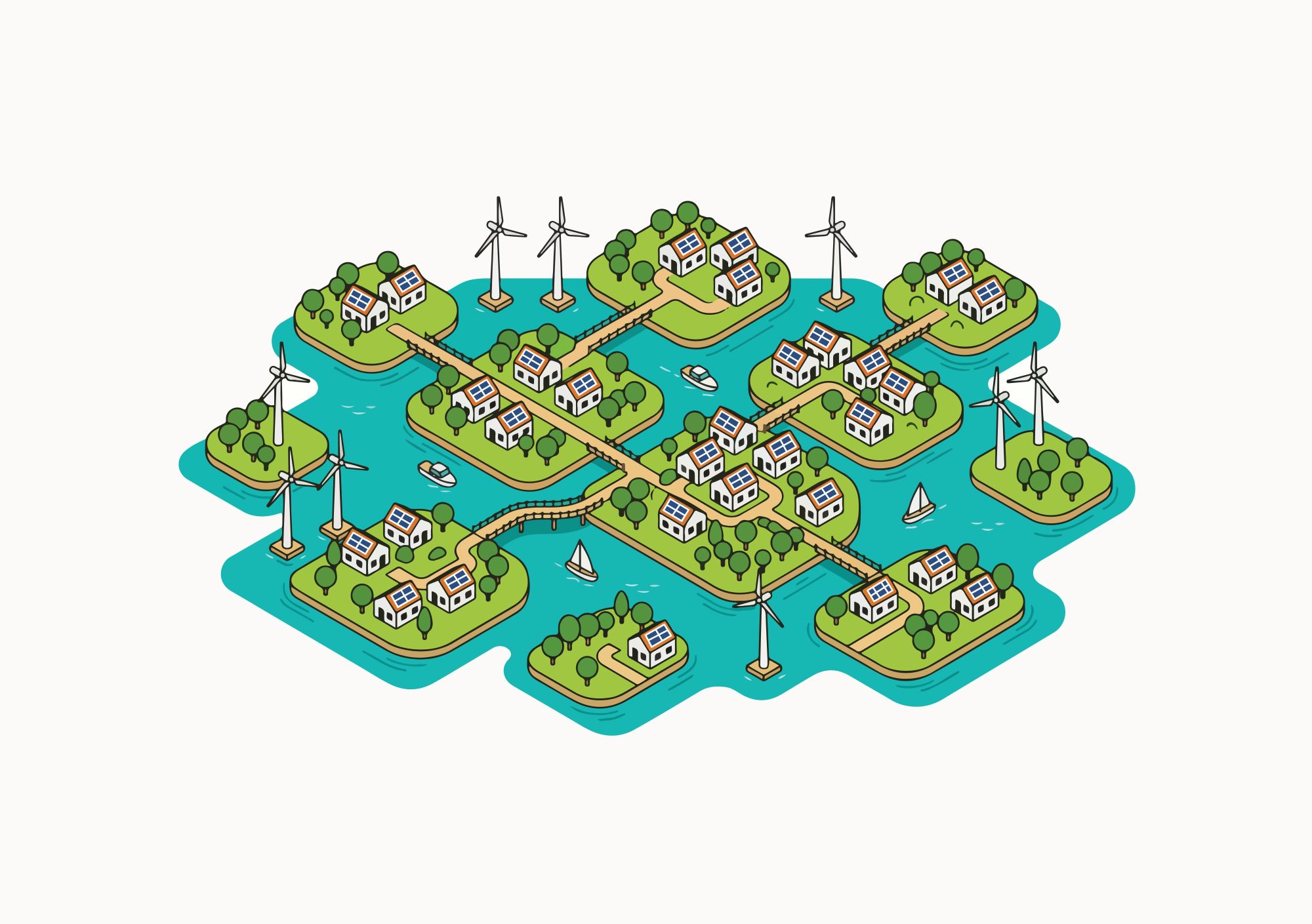
The SHAREN project is investigating how Energy Sharing Solutions (ESS) and Renewable Energy Communities (RECs) can support the energy transition in Mediterranean heritage cities.
To better understand this context, the project analysed the current status of ESS and RECs across the partner countries (Italy, Jordan, Lebanon, Türkiye and Spain). The study revealed several barriers, including conservation constraints, ageing energy grids, and complex regulations. At the same time, it points to promising opportunities for integrating renewable energy in ways that respect the character and identity of historic urban areas.
Energy Sharing Solutions empower citizens to produce, share, and manage energy collectively. In particular, Renewable Energy Communities bring together residents, associations, SMEs, and local authorities located near the production facilities, enabling renewable energy to be generated and shared at local level.
The analysis also shows that buildings account for a significant share of total energy use in SHAREN partner countries, due in part to inefficient stock and year-round heating and cooling needs. At the same time, the Mediterranean region offers excellent conditions for renewable electricity generation, making it an ideal setting for innovative energy-sharing models.
In recent years, Italy and Spain have seen rapid growth in Renewable Energy Communities, supported by European and national policies promoting self-consumption. In many cases, local governments act as facilitators or even active members of these initiatives. In Türkiye, Lebanon, and Jordan, regulatory frameworks are still evolving, but new forms of energy sharing are beginning to emerge, especially through small-scale renewable installations.
Introducing ESS and RECs in historic city centres remains a complex challenge, shaped by technical, regulatory, financial and social factors. Raising public awareness is also essential, as communities need to understand that energy transition and heritage preservation can go hand in hand.
By addressing these issues, SHAREN aims to identify practical and context-sensitive solutions that help Mediterranean heritage cities move towards a more sustainable future without compromising their historic identity.
👉 The study on the current status of ESS and RECs in partner countries (SHAREN Framework) is available here: https://zenodo.org/records/18986983
👉 Follow the SHAREN project on LinkedIn: https://www.linkedin.com/company/sharen-project/
Illustration by Alghozy on Unsplash
 Next Med