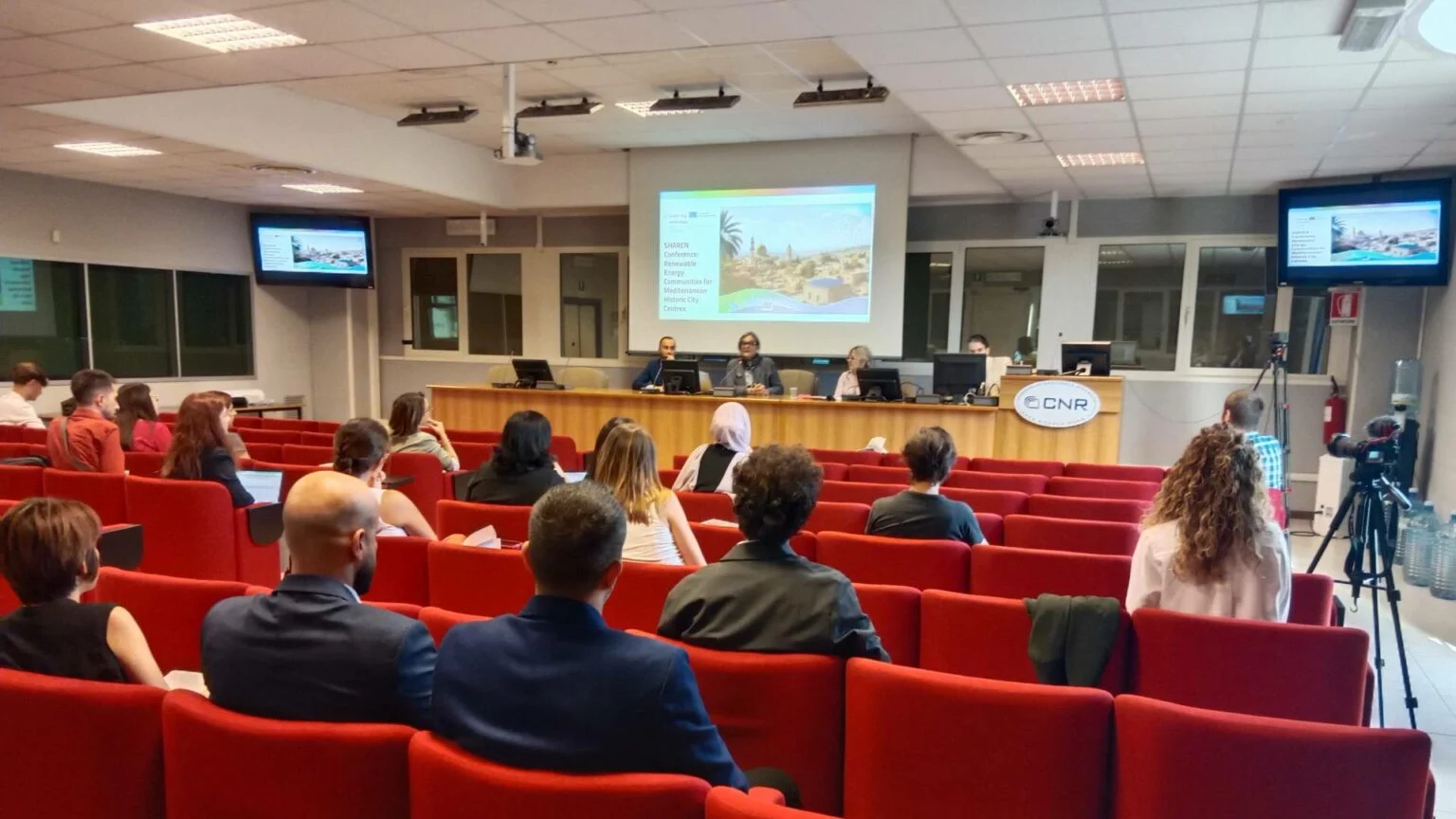
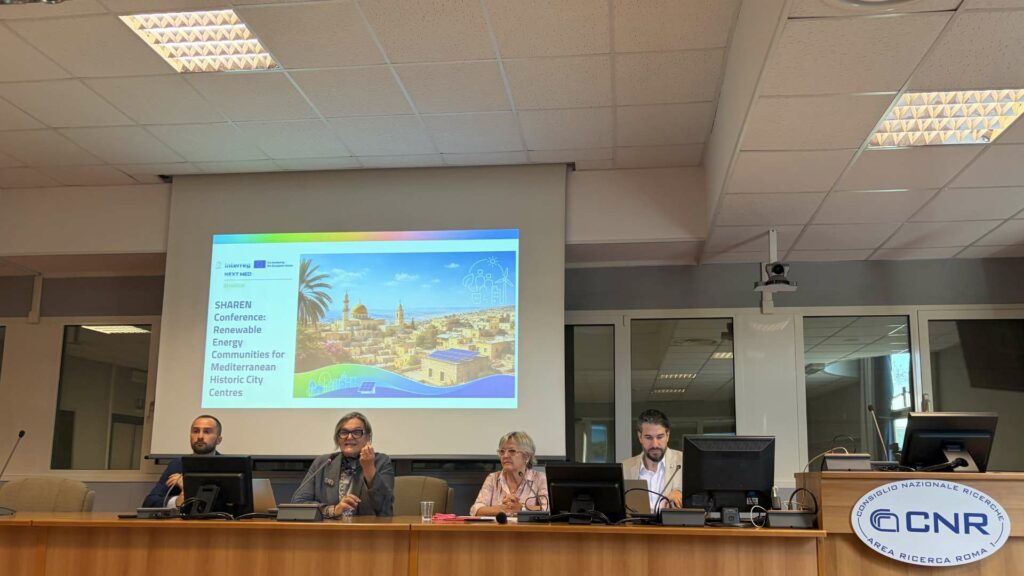
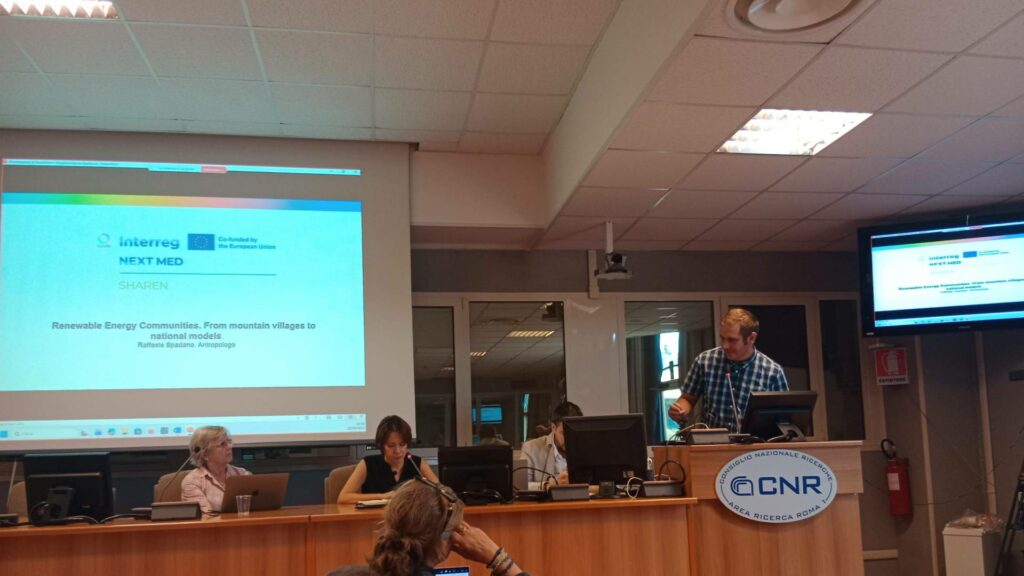
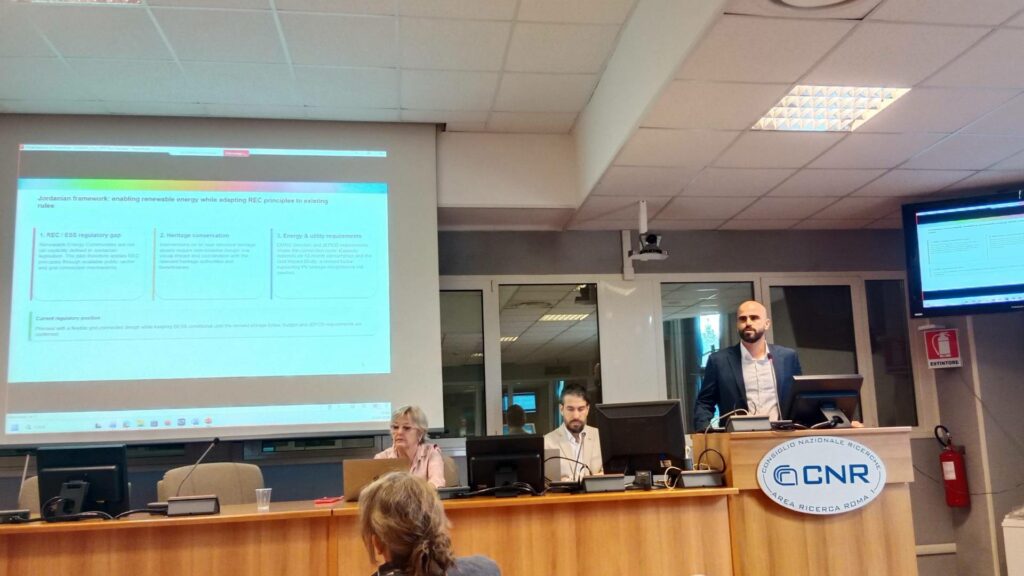
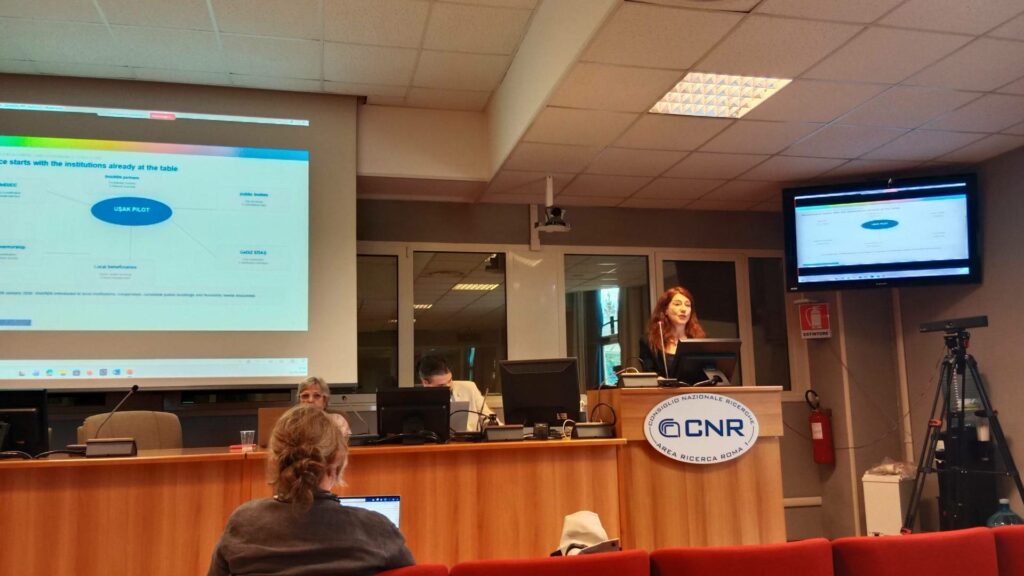
How can Renewable Energy Communities contribute to the energy transition of historic cities while respecting their cultural heritage and involving local communities? This question brought together researchers, public authorities, energy experts and practitioners at the international conference “Renewable Energy Communities for Mediterranean Historic City Centres”, held on 22 September 2026 at the CNR headquarters in Montelibretti (Rome), with online participation also available.
Organised by the National Research Council of Italy – Institute of Heritage Science (CNR-ISPC) within the framework of the SHAREN project, the conference provided an opportunity to connect the project with other experiences and initiatives already underway in Italy, exploring different approaches to energy communities and their potential application in historic and heritage contexts.
The event was opened by Costanza Miliani, Director of CNR-ISPC, and Riccardo Varone, Mayor of Monterotondo, the Italian municipality involved in SHAREN. Their participation highlighted one of the key messages of the conference: the importance of bringing research institutions, local authorities and communities together to turn innovative energy models into solutions that respond to real urban needs.
Learning from experiences already underway
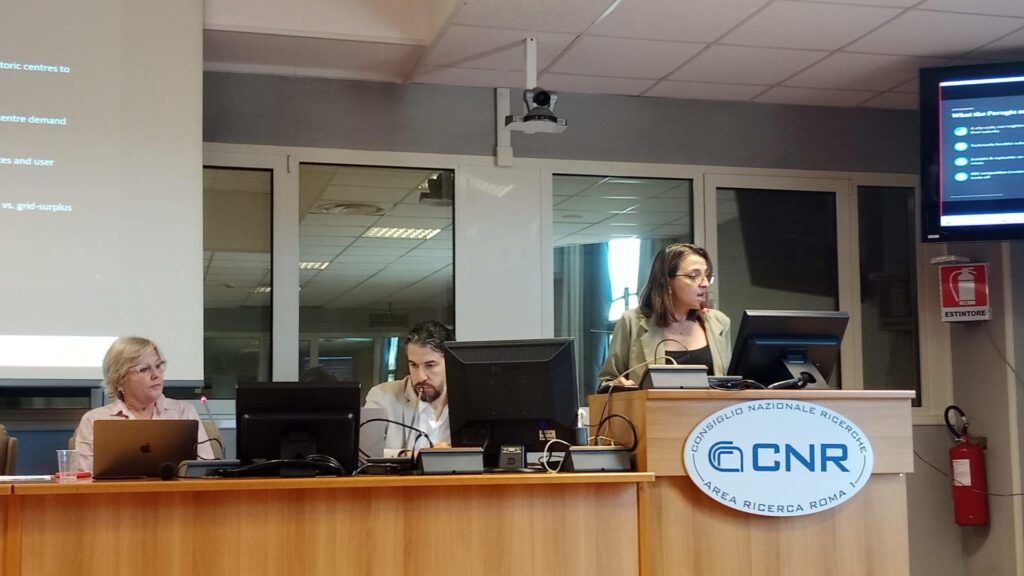
The first part of the conference brought SHAREN into dialogue with several Italian Renewable Energy Community experiences, covering different urban and territorial contexts and combining technological, institutional and social perspectives.
The discussions showed that there is no single model for an energy community. Local governance, citizen participation, social objectives, technical solutions and the characteristics of the built environment all influence how each initiative develops.
For SHAREN, these experiences provide valuable opportunities for exchange, mutual learning and future synergies. Lessons from initiatives already underway can help the project identify approaches that could be adapted to Mediterranean historic centres, while SHAREN’s specific focus on heritage environments can in turn contribute new knowledge to the wider energy-community ecosystem.
Connecting experiences across the Mediterranean
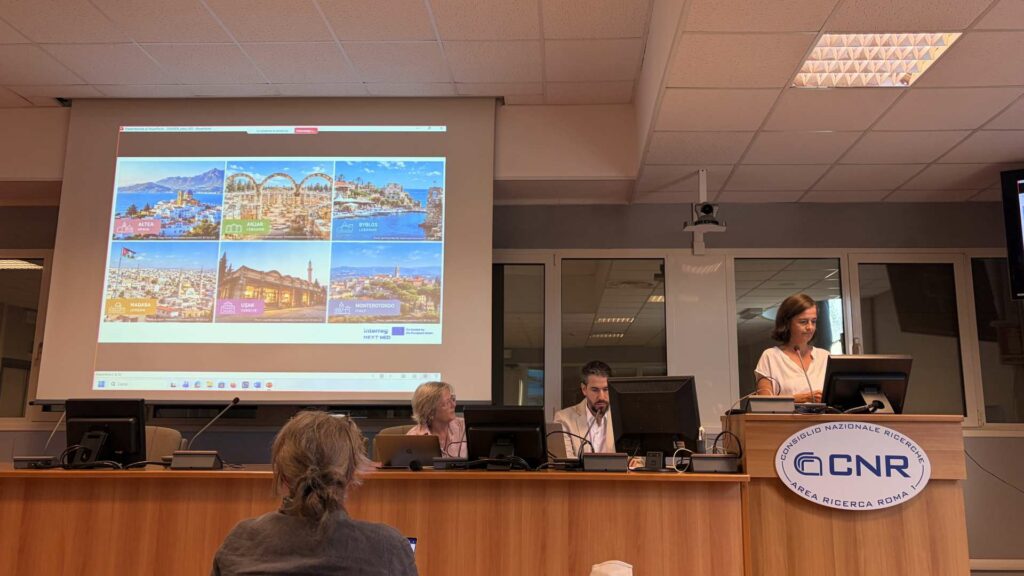
The second part of the conference turned to SHAREN and its Mediterranean territories, presenting the work underway in Altea (Spain), Byblos and Anjar (Lebanon), Madaba (Jordan), Monterotondo (Italy) and Uşak (Türkiye).
These territories represent very different urban, regulatory, energy and social contexts. This diversity is central to SHAREN: rather than proposing a one-size-fits-all model, the project seeks to understand how Energy Sharing Solutions and Renewable Energy Communities can be adapted to local conditions while preserving the value and identity of historic environments.
Bringing the SHAREN cases together with Italian experiences created a valuable space for dialogue between researchers, municipalities, energy-community practitioners and local actors, opening opportunities for further exchange and cooperation as the project progresses.
Conference presentations
The presentations delivered during the conference are available below:
SHAREN and invited experiences
– Project SHAREN introduction — Pepa Esparza Arbona, Valencia Institute of Building (IVE) & SHAREN Project Coordinator
– Renewable Energy Communities in Historic Cities: the Perugia City-Scale Model — Claudia Fabiani, University of Perugia / CIRIAF
– Energy as a Common Good: the “A Otto Minuti dal Sole” Renewable Energy and Solidarity Community in Rome — Alessandro Mengoli, CERS “A Otto Minuti dal Sole” ETS
– Community Energy and Re-inhabitation in Inner Areas: the Gagliano Aterno Experience — Raffaele Spadano, Montagne in Movimento (MiM)
– CER Parma 2030: Research, Institutions and Citizens for a Climate-Neutral City — Andrea Zappettini, Fondazione CER Parma 2030 / CNR-IMEM
SHAREN Mediterranean experiences
– SHAREN Pilot — Altea (Spain) — Isabel Mas Crespo, Enercoop
– SHAREN Pilot — Byblos & Anjar (Lebanon) — Ghada Daouk, Lebanese Center for Energy Conservation (LCEC)
– SHAREN Pilot — Madaba (Jordan) — Saif Abu Baker, Royal Scientific Society – National Energy Research Center (RSS-NERC)
– SHAREN Pilot — Monterotondo (Italy) — Filippo Calcerano, National Research Council of Italy – Institute of Heritage Science (CNR-ISPC)
– SHAREN Pilot — Uşak (Türkiye) — Mehtap Kumdakcı Can, Ministry of Environment, Urbanization and Climate Change of Türkiye
The conference reinforced the value of connecting experiences across territories rather than developing solutions in isolation. Building these bridges can help knowledge, successful approaches and lessons learned travel from one city to another — an essential step towards making the energy transition of Mediterranean historic centres more collaborative, inclusive and replicable.
 Next Med