One common sight on Mediterranean beaches, especially following a storm, is a line of apparently rotting algae. This unpleasant view is often cleaned soon after the storm for aesthetic reasons by beach facilities owners or local administrations, unknowingly removing what is neither an alga nor an unwanted waste from the sea.
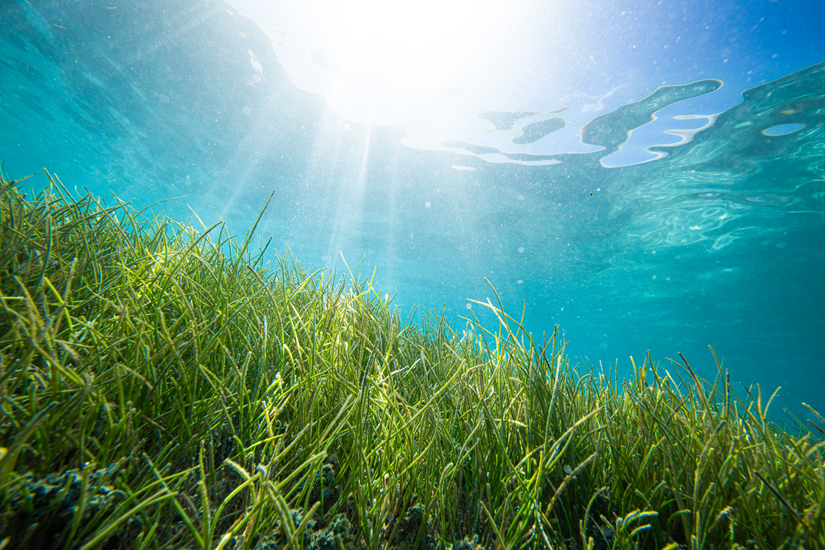
These are in fact dead leaves (the so-called banquettes) from Posidonia oceanica meadows, an endemic superior marine plant which has been growing in the Mediterranean seabed for millions of years. Posidonia oceanica, also called “seagrass”, represent a rich, complex and useful ecosystem in our sea, providing ecosystemic services and playing a key role in climate change adaption strategies.
Due to its fundamental role in coping with the climate crisis, MedPROACT focuses on restoring this ecosystem – together with coral reefs, which play a similar role – as seagrass meadows can bring benefits not only to the environment, but to the local economy and social system as well.
As the sea appears to be in better health when seagrass meadows are more extended – more biodiversity, cleaner water and more stability are the criteria – Posidonia oceanica has been used as a “ecological thermometer” in the Mediterranean.
In the past 50 years, around 34% of seagrass meadows in the Mediterranean Sea were lost. As Posidonia oceanica has a very slow growth process, these damages may require centuries to be fixed. Here is why a project like MedPROACT focus on seagrass restoration as a way to mitigate climate change-related risks for Mediterranean costs and coastal communities: by restoring these ecosystems, we preserve their ecological functions but also, we enhance their, and therefore ours, resilience to climate change.
The loss of seagrass meadows is mainly due to anthropic-related activities: wastewaters, harbors, dams and similar infrastructures, destructive fishing activities, and uncontrolled anchoring by boats. Climate change enhances the effects, causing higher water temperature, marine heatwaves, and higher frequency of extreme meteorological events.
Posidonia oceanica, together with coral reefs, is crucial for biodiversity, carbon storage, and coastal protection. Seagrass meadows can capture CO₂ (blue carbon) and store it in their biomass and marine sediments, where it can remain trapped for thousands of years. Therefore, Posidonia acts not only as a habitat but also as a barrier against future emissions. Their coastal protection function is evinced by their capacity to attenuate wave energy and by the barrier formed by banquettes against storms along the shoreline. As for biodiversity, seagrass meadows constitute a safe place for marine species and flora species, providing shelter, food and a place to reproduce safely. This is not only an essential ecological service, but also a key point for tourism activities.
MedPROACT, while building adaptation plans together with the local communities and administrations, will consider the consequences of losing seagrass meadows in the pilot sites involved (Italy, Turkey and Tunisia): increased erosion, biodiversity loss and the consequent decline in fisheries resources, worsening of water quality and enhanced exposure to climate change. These effects are all connected to local socioeconomical conditions: protecting Posidonia oceanica means protecting coastal communities’ survival.
 Next Med