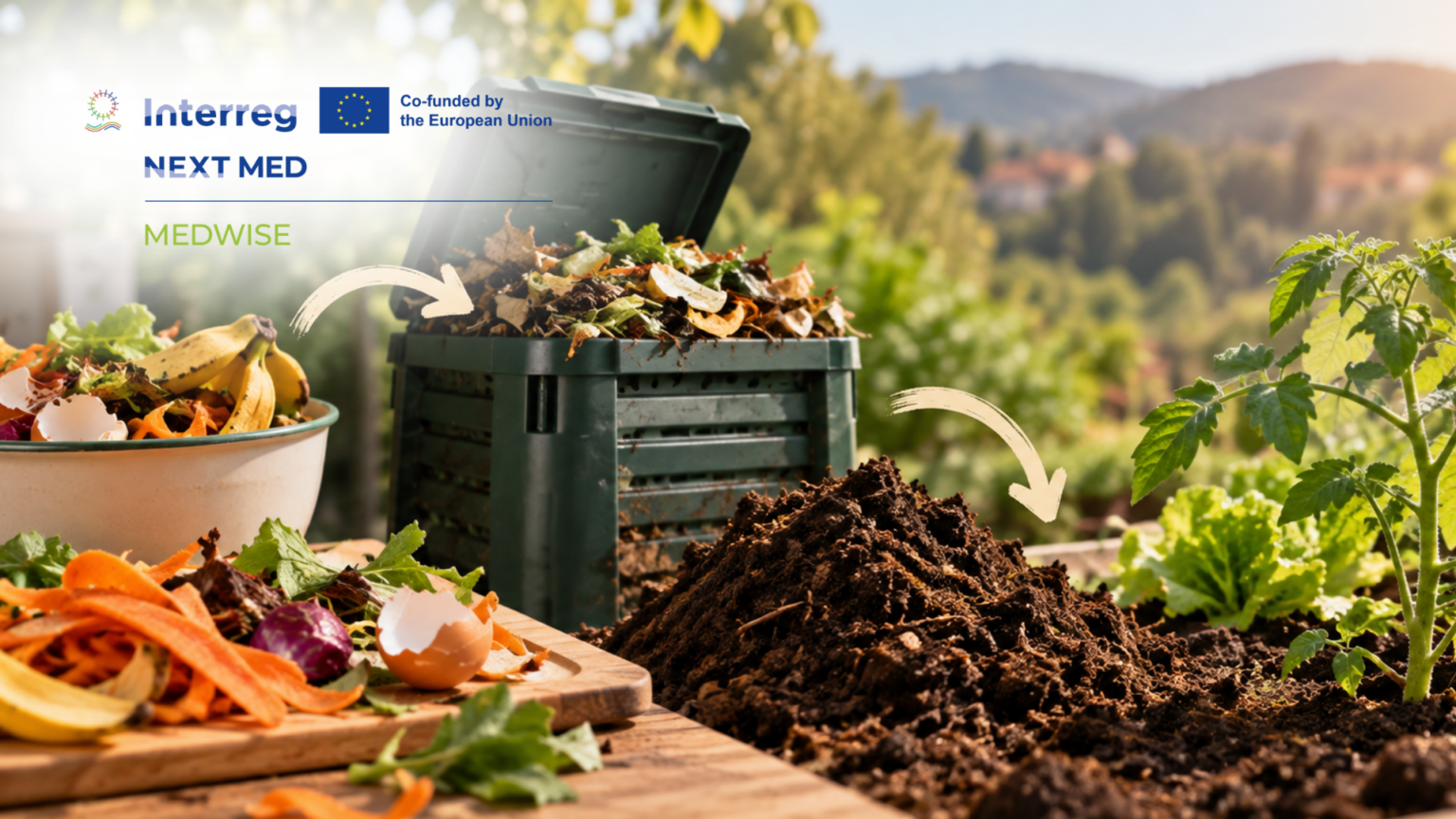
A significant share of household waste is organic and can be given a second life through composting. Instead of ending up in landfills, food scraps, yard waste, and other biodegradable materials can be transformed into valuable resources for healthier soils.
The composting process begins with the separation of organic waste from plastics and other non-compostable materials, helping prevent contamination. Once properly separated, microorganisms naturally break down the organic matter under the right conditions of oxygen, moisture, and nutrients.
Over time, this process transforms organic waste into a nutrient-rich compost; a soil-like material that can improve soil structure and fertility, retain moisture, and support healthier plant growth.
By turning organic waste back into a useful resource, composting is a simple yet effective example of circular resource management, reducing waste while returning valuable nutrients to the soil.
MEDWISE promotes sustainable approaches to waste management that contribute to more resource-efficient and resilient communities.
 Next Med