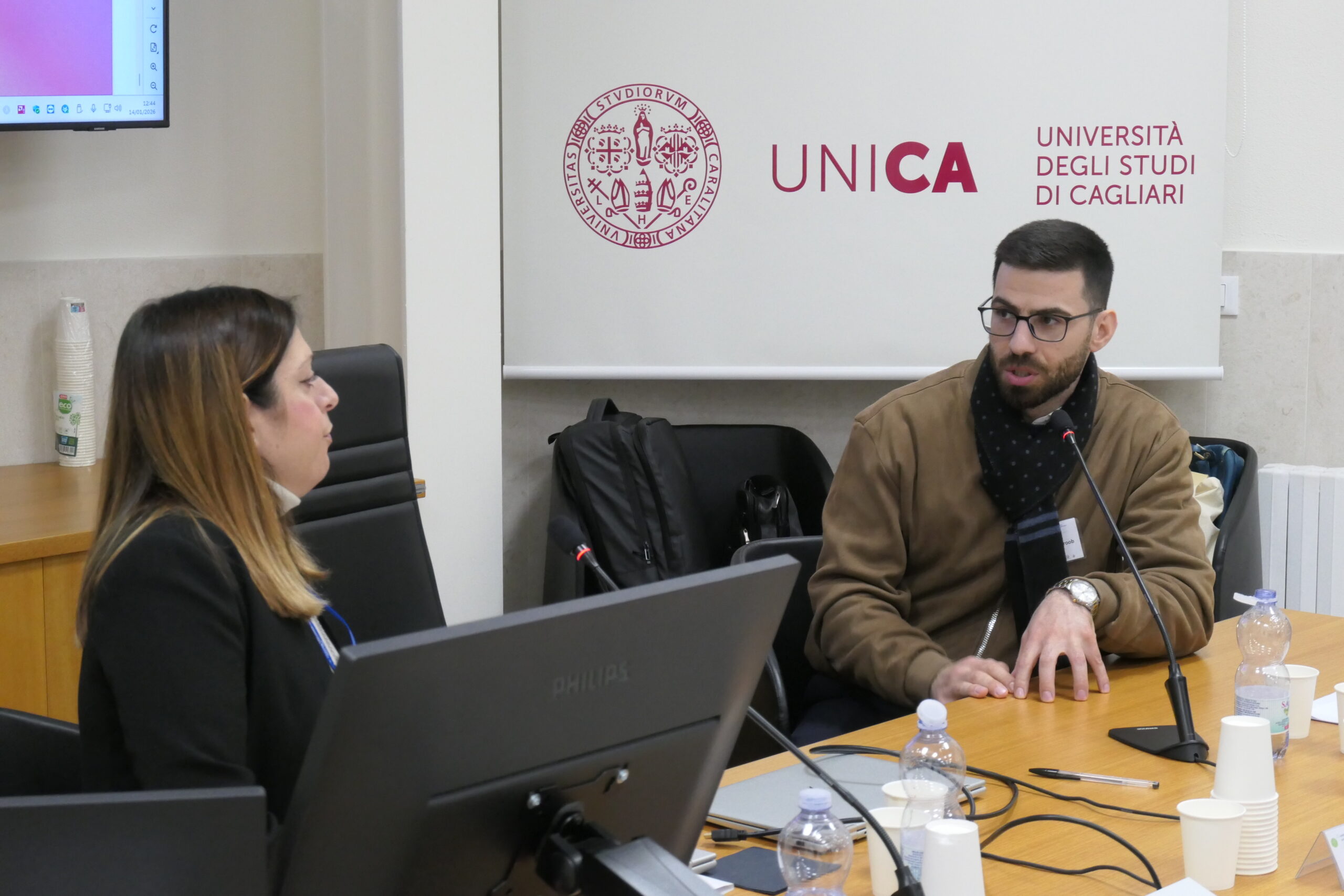
MedRESOURCE is a project funded by the Interreg NEXT MED Programme, and intertwines the cooperation of four countries: Italy, Palestine, Tunisia and Jordan. The initiative aims to promote the circular economy and environmental resilience. In this interview to the project partner of Jericho and Al-Aghwar Governorate we talking to Eng. Moutaz Hroub.
Eng Moutaz Hroub, could you describe the most environmentally critical issues in Jericho?
Environmental and agricultural challenges in the region are primarily linked to the scarcity of essential natural resources, particularly water. The drilling of artesian wells is highly restricted, and groundwater access is largely limited to shallow sources. Excessive use and unregulated drilling contribute to rising salinity levels, making the water increasingly unsuitable for agriculture.
Farmers also face movement restrictions, frequent closures, and checkpoints, while the majority of Jericho’s land is classified as Area C, where many agricultural facilities have been subject to demolition or removal.
From a technical perspective, one of the key environmental issues addressed by this project is the large volume of biomass generated from annual palm pruning. farmers in Jericho prune thousands of date palms, generating large quantities of fronds — estimated at around 6,000 tons annually.
Much of this waste is burned or discarded in valleys, creating environmental burdens despite its potential value as a reusable resource.
What are the pillars in the MedRESOURCE project?
Jericho and Al-Aghwar Governorate became the fifth partner in the MedRESOURCE project as a continuation of its previous partnership with the Palestinian Wastewater Engineers Group (PWEG) in the Mediterranean Integrated System for Water Supply (MEDISS) project, which was implemented by the governorate with funding from the European Union for the benefit of the Palm Farmers Association in Jericho and Al-Aghwar.
This accumulated experience in managing internationally funded projects strengthened the governorate’s institutional capacity and positioned it as a reliable partner in regional cooperation initiatives focused on environmental sustainability and resource efficiency.
Jericho Governorate will provide the Palm Farmers Association with the necessary equipment to collect, store, and shred palm fronds generated from seasonal pruning. The project will also assess the feasibility of mixing these residues with sludge produced by the Jericho wastewater treatment plant to create environmentally friendly organic compost. In addition, the governorate will review the legal and regulatory frameworks governing the agricultural use of sludge and share the project outcomes with decision-makers and relevant stakeholders across all regions covered by the project.
Eng Moutaz Hroub, why opening a Living Lab is so strategic?
The Living Labs are expected to generate the greatest impact within the project, because they directly address the substantial environmental burden caused by palm pruning and the resulting biomass.
Beyond mitigating environmental risks, this approach will transform agricultural waste into an investment opportunity for the Palm Farmers Cooperative by converting it into a source for producing eco-friendly organic fertilizers, thereby supporting both environmental sustainability and local economic development.
Eng. Moutaz Hroub holds a Bachelor’s degree in Civil Engineering and a Master’s degree in Engineering Management. He is the Head of the Sustainable Development Department at the Jericho and Al-Aghwar Governorate. GoJ is a palestinian governmental institution responsible for coordinating development efforts, supporting economic growth, and enhancing public services across the governorate. Moutaz Hroub is a member of the SC of the MedRESOURCE initiative.
 Next Med