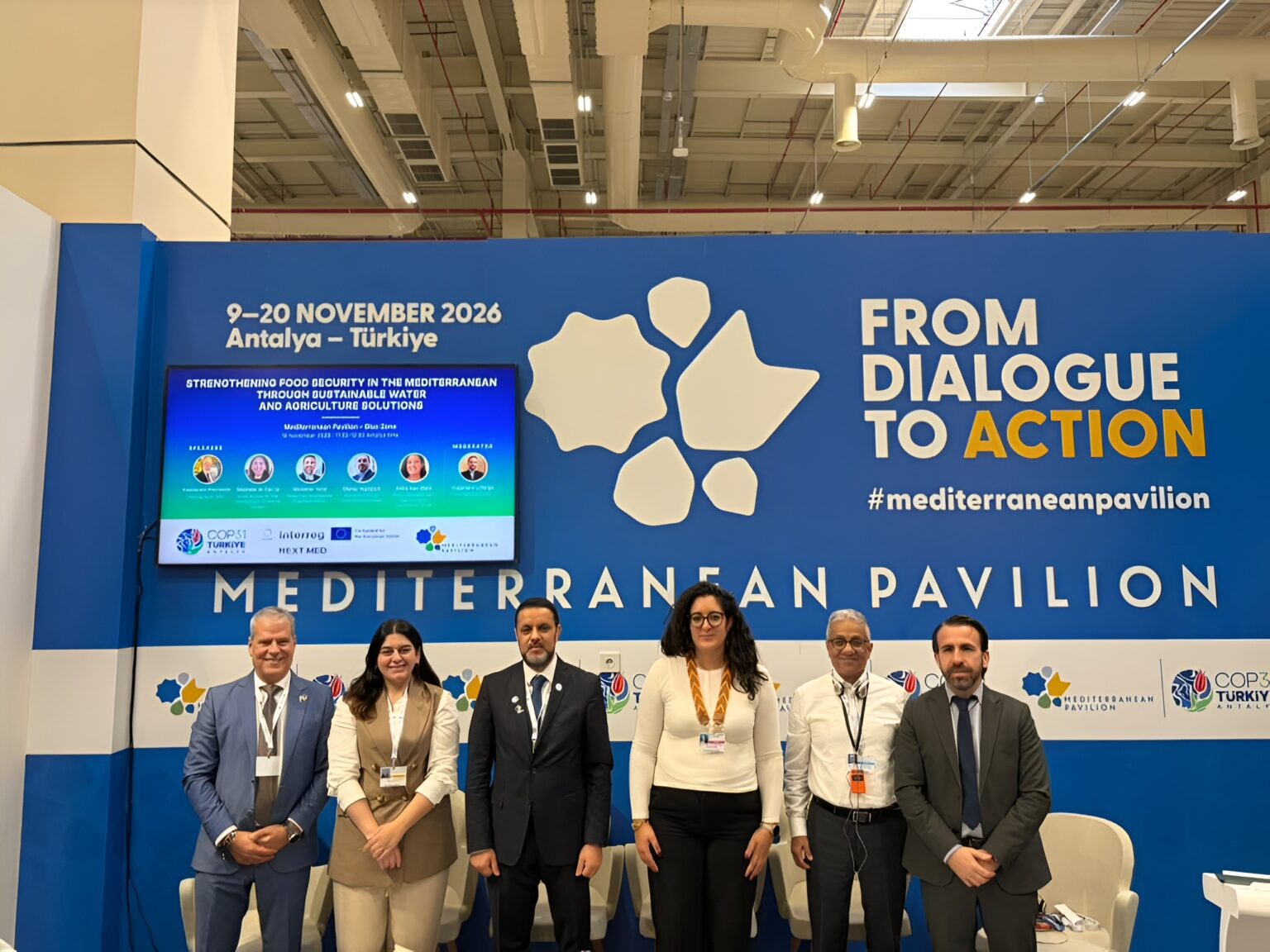
COP31 was held in Antalya, Türkiye, from 9 to 20 November 2026, under the United Nations Framework Convention on Climate Change (UNFCCC). This year the world’ mayor event on climate change offers a unique platform to address Mediterranean challenges. COP31 brought together governments, alongside international organisations, civil society, experts, businesses and global media, to negotiate climate commitments and advance collective responses or solutions to the current climate crisis. The case of the MedRESOURCE project was presented on the 16th during the seminar of the frame “From Dialogue to Action”. The focus of the symposium was on the emerging solutions that could transform wastewater management and reuse in the Mediterranean region. Eng. Monther Hind from PWEG, lead partner of MedRESOURCE: “We have promising technologies, including membrane-based treatment, advanced disinfection, energy-efficient processes and digital monitoring. These can improve the quality and reliability of reclaimed water. But innovation should also mean solutions that are affordable, easy to operate and suitable for smaller municipalities, not only sophisticated systems that require high investment and specialist maintenance. We should also look beyond the water itself. Wastewater sludge contains organic matter and nutrients that can potentially be recovered and returned safely to productive use. Composting and biochar production, where technically appropriate and supported by strict quality controls, can help improve soils and reduce dependence on conventional inputs. This is precisely the circular-economy approach we are exploring through MedRESOURCE, with Living Labs across Mediterranean partner countries”. The key message launched by the general director of PWEG is that technology becomes transformative only when it responds to local needs and it is supported by institutions and is adopted by farmers and communities. Best innovations are the one that works reliably on the ground and can be replicated. Eng. Hind added upon the priority of a dedicated Mediterranean investment mechanism that finances the entire wastewater reuse and resource-recovery chain, accessible to municipalities and local utilities: “We have spent considerable resources on treatment facilities, but too often the investment stops at the outlet of the plant. Safe reuse also requires storage reservoirs, pumping stations, distribution networks, farm connections, quality monitoring and trained operators. Without these elements, we cannot expect farmers to use reclaimed water, even when the treatment technology performs well. Indeed, I would like this investment mechanism to combine capital funding with technical assistance, sustainable operation and maintenance arrangements, and practical regulatory guidance. It should also support resource recovery from sludge, including compost or biochar where environmental and health safeguards are met. Harmonized principles can help, but each country must be able to adapt implementation to its local conditions. For countries such as Palestine, this would make an important difference. We do not need more strategies that remain on paper; we need the means to turn proven ideas into functioning systems that serve communities and agriculture. Projects such as MedRESOURCE show the value of partnerships among researchers, public authorities and local actors, but pilot results must have a pathway to investment and wider adoption”. 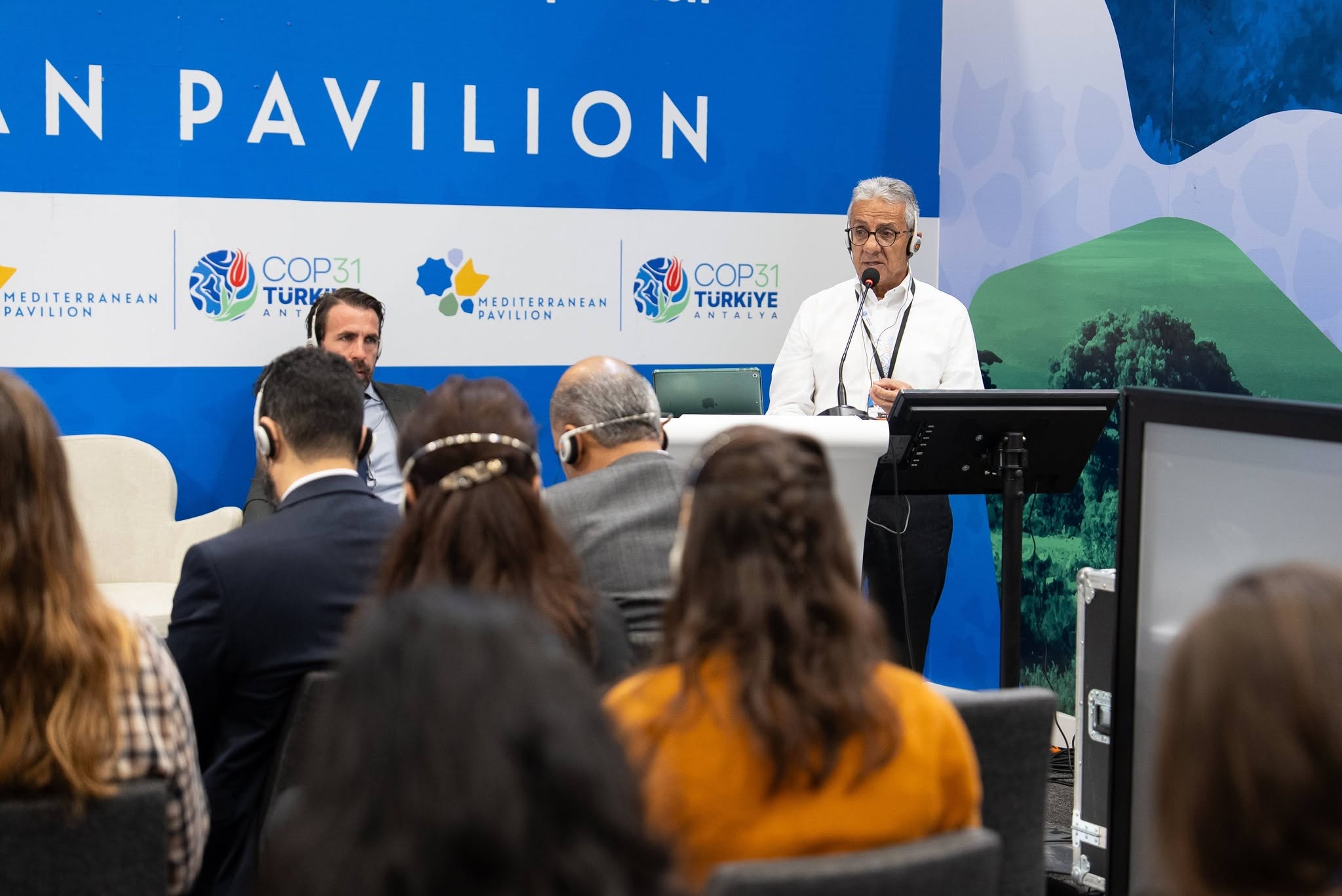
 Next Med