November 26, 2026 Press Release
Mediterranean Day: The European project MedPROACT develops an online tool for mapping the physicochemical parameters of Mediterranean waters
Italy, Jordan, Tunisia, and Turkey join forces to develop adaptation plans and guidelines to make coastlines more resilient to the climate crisis
The project continues its research on Posidonia oceanica, invasive and non-invasive alien species, and other biological factors to understand the impacts of climate change on marine biodiversity
Press Kit
The Mediterranean Sea is becoming increasingly warm: the summer of 2026 was the hottest ever recorded in Western Europe, with average temperatures 2.5 degrees higher than those of the 1991–2020 period (Copernicus, 2026). Average surface water temperatures also reached record highs—levels once considered unthinkable—such as on August 5, when the Sa Dragonera buoy, off the coast of Mallorca, recorded 33.02°C, the highest water temperature ever measured within the Puertos del Estado monitoring network (source: puertos.es, 11/09/2026).
Rising temperatures are a direct consequence of climate change—an effect particularly pronounced in the Mediterranean Sea, which serves as a “climate hotspot.” The semi-enclosed nature of the basin, which limits the exchange of energy and heat with the Atlantic Ocean, makes it especially vulnerable to warming and extreme weather events.
What are the consequences for marine biodiversity and ecosystems? A European project, funded through the Interreg NEXT MED programme, is studying these issues across various Mediterranean regions, involving research bodies, institutions, and associations from four different countries: Italy, Jordan, Tunisia, and Turkey.
The MedPROACT (Mediterranean Pilot Actions for Climate Adaptation) project, which began in 2025 and is coordinated by Legambiente, one of the leading environmental no-profit organizations in Italy, combines technical research—such as biochemical, ecotoxicological, and molecular analyses, including environmental DNA (eDNA) techniques—with local community engagement through interviews and workshops with fishermen and other local stakeholders. Based on the findings, the project aims to develop management guidelines for coastal environments and communities in each area. Specifically, in the Egadi Islands—with the involvement of the local Marine Protected Area—and in Monastir, Tunisia, the project will produce a comprehensive adaptation plan, enabling policymakers to make more informed, science-based decisions.
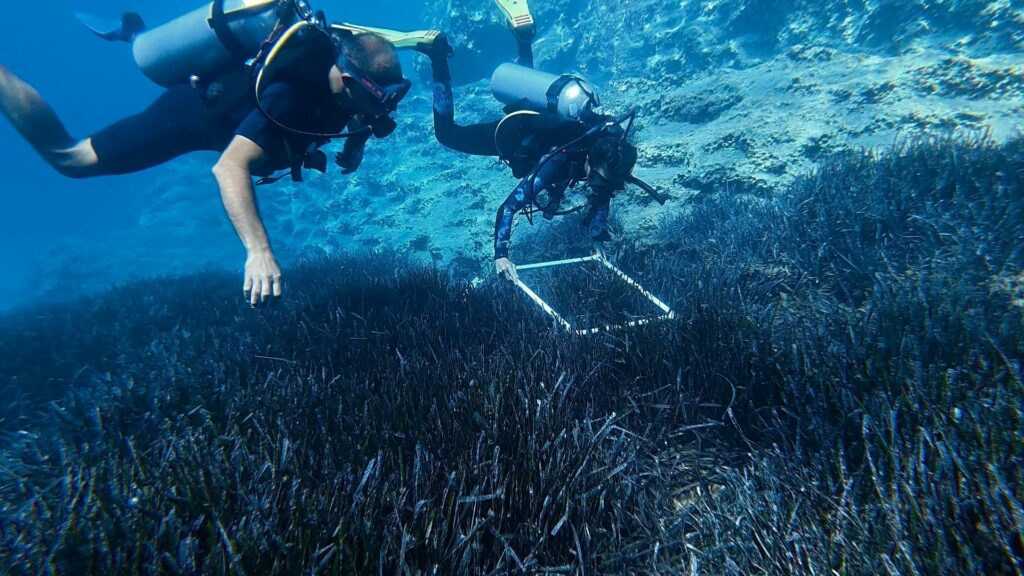
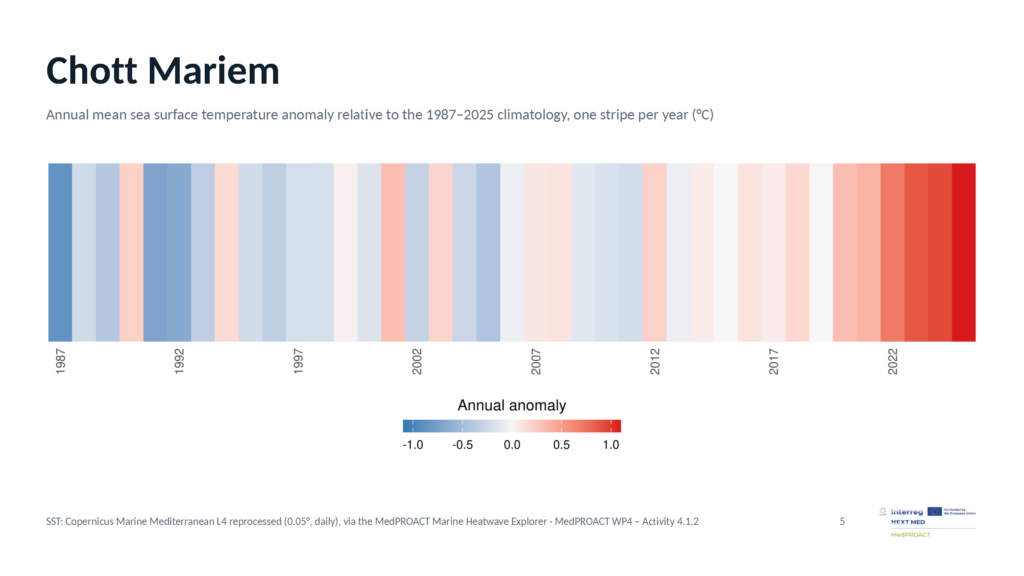
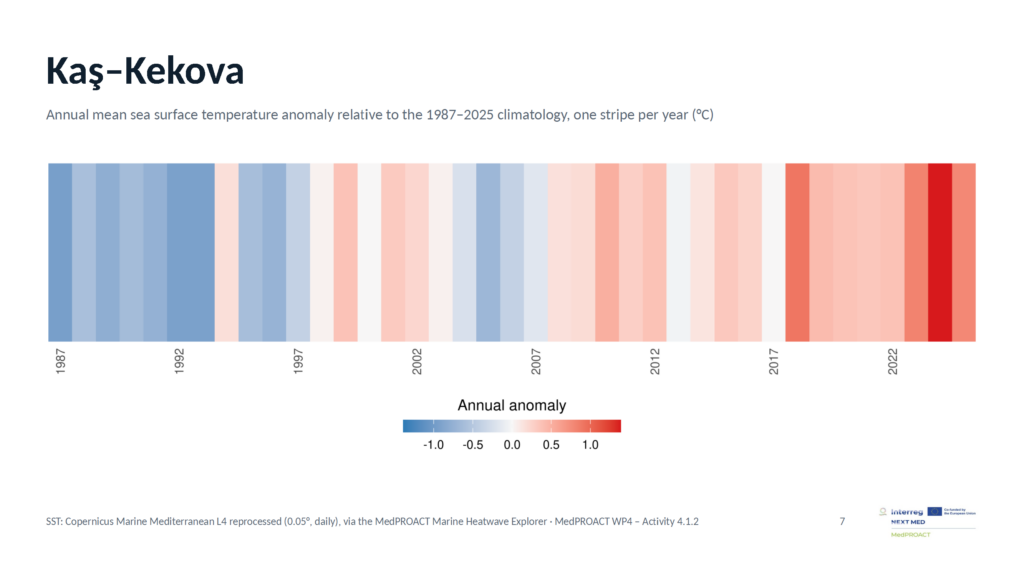
Furthermore, across various sites—including several Marine Protected Areas in Italy (Secche della Meloria in Tuscany; the Egadi and Pelagie Islands and Capo Milazzo in Sicily; and the stretch of the Apulian coast from Otranto to Santa Maria di Leuca), as well as locations in Türkiye (Finike–Kaş–Kekova), Jordan (Gulf of Aqaba), and Tunisia (Monastir and Chott-Meriem)—sampling and analysis are being conducted to monitor the health of Posidonia oceanica seagrass meadows. Additionally, in all pilot areas, data on the presence of invasive fish species—both non-native and native—have been collected using biological and environmental indicators. This information, combined with a participatory process involving key local stakeholders, will enable the development of adaptation strategies tailored to each area.
The project includes initiatives to restore seagrass meadows in sites where monitoring and diagnostic assessments confirm degradation and a genuine opportunity for intervention. Restoring Posidonia meadows serves as an example of climate change adaptation in coastal zones: Posidonia not only helps sequester carbon dioxide (CO2) and provides a habitat for numerous marine species, but—once it dies and is washed ashore by waves—it also forms natural breakwaters (known as banquettes). Its presence is therefore doubly beneficial, as it also helps protect coastlines from increasingly extreme weather events.
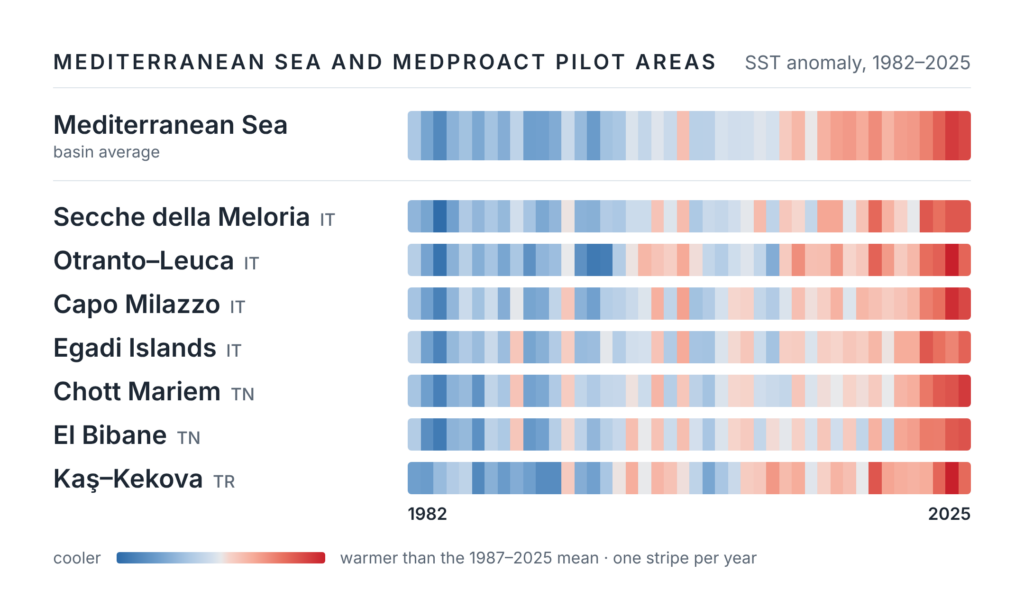
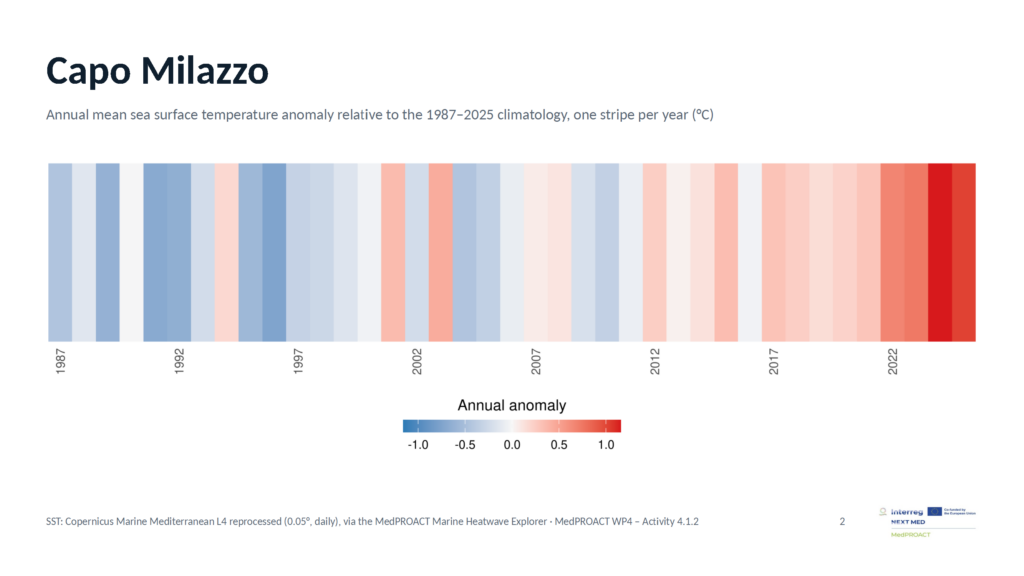
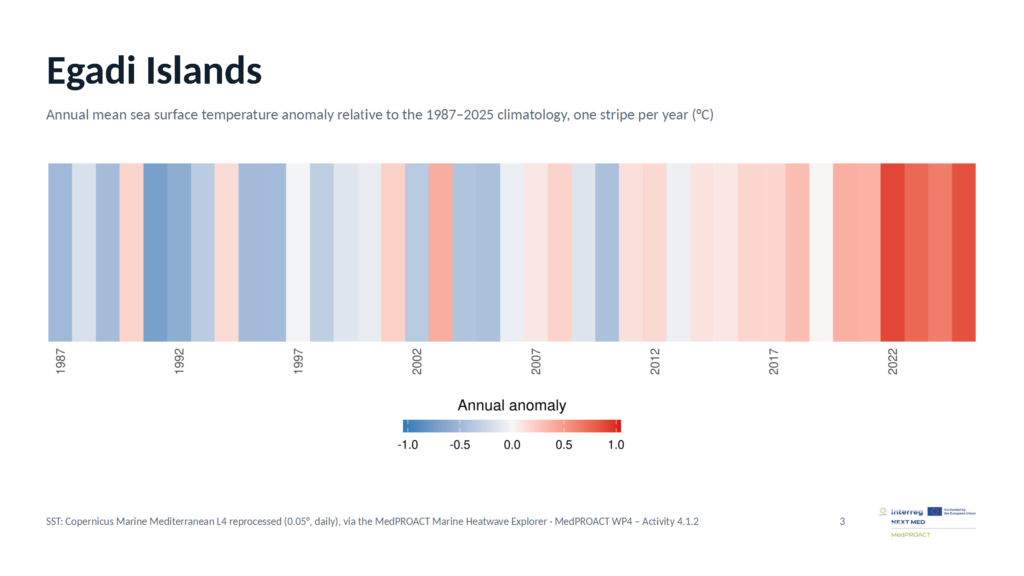
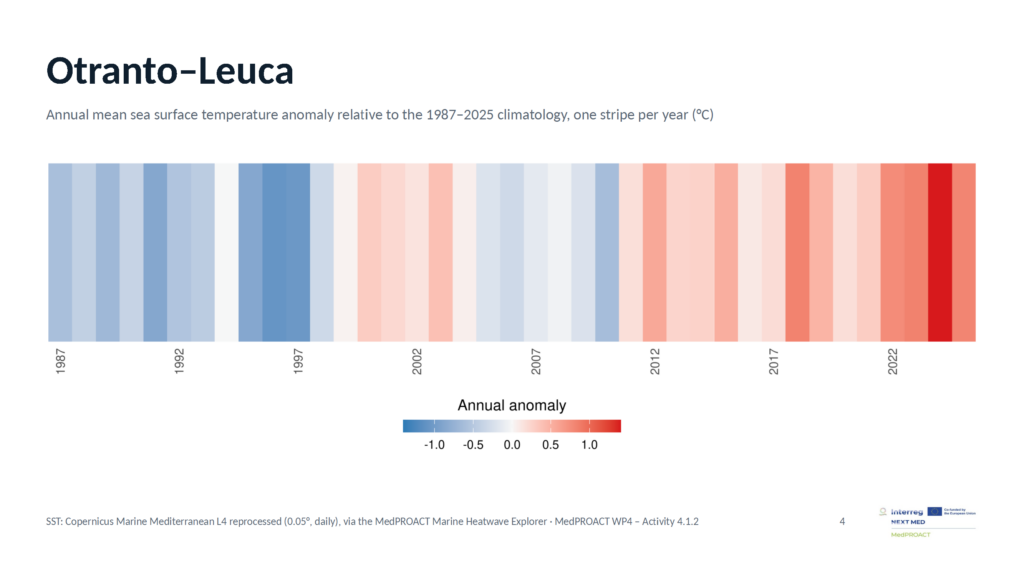
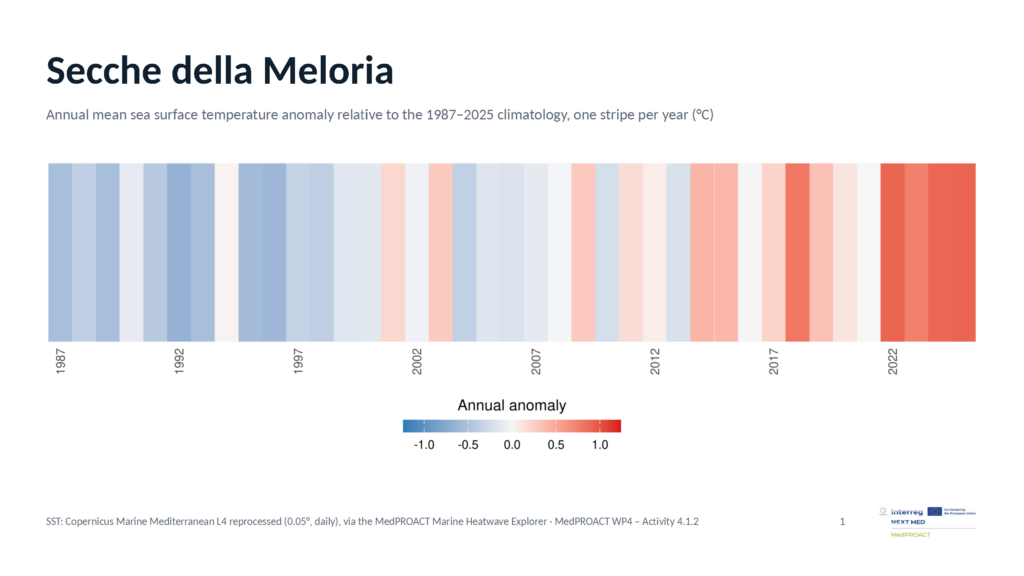
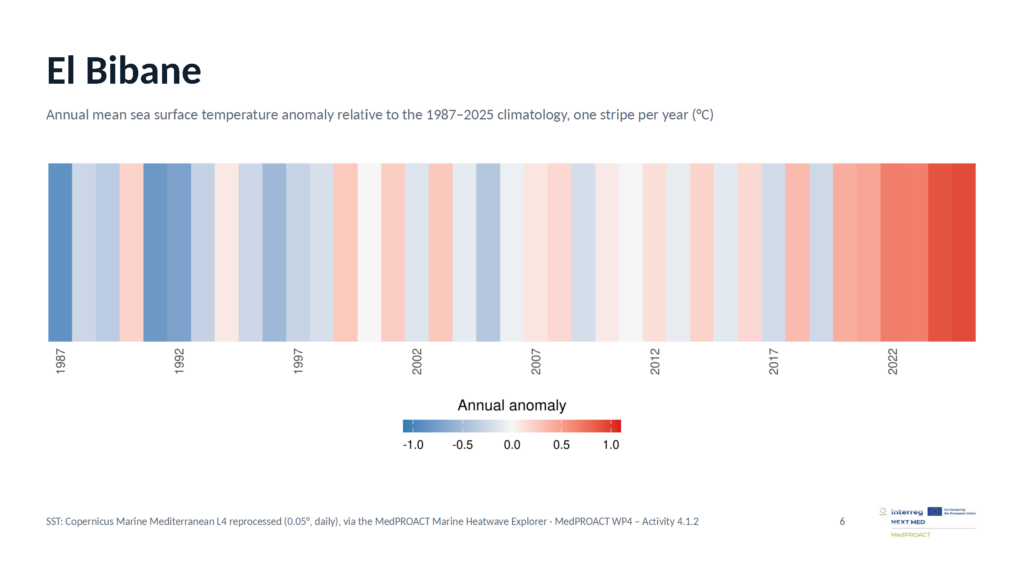
While analysis and sampling continue across the various pilot sites, the University of Siena has developed a significant mapping tool that allows for the integrated tracking of factors such as sea surface temperature in the Mediterranean, with a specific focus on the project’s pilot areas. This will enable MedPROACT researchers—and others—to compare data across different geographic and temporal scales, both through graphical representations for immediate insight and by accessing precise datasets via European services such as the Copernicus Climate Change Service and the Copernicus Marine Service.
At this link, you can view the “climate stripes” developed for each of the MedPROACT project’s pilot areas. This visual representation clearly shows that the Mediterranean Sea has experienced a steady warming of its waters in recent years.
“On the occasion of Mediterranean Day on November 28th, it is important to remember that there are no barriers in the water. Our coasts are affected by global processes, and fish species migrate following currents and food sources—unconcerned with the fact that they may be the primary livelihood for certain fishing communities, or that they might be encroaching upon the territory of other species,” says Stefano Raimondi, Head of the Biodiversity Office at Legambiente. “Cooperation with other countries is therefore essential to promote decisions and strategies that, while focused on the local level, are also part of a shared project for adapting to the climate crisis. Only by working together across the Mediterranean Basin can we find solutions to address it.”
The MedPROACT Project in Sicily
In Sicily, the MedPROACT project—carried out by the University of Siena in collaboration with ISPRA, the Italian Agency for Environmental Protection—conducts sampling and research activities in the Pelagie Islands, as well as in the Egadi Islands and Capo Milazzo Marine Protected Areas. In the latter two locations, the project also involves the local community in the development of guidelines for local administrators. Furthermore, for the Egadi Islands, a comprehensive climate change adaptation plan will be created in close cooperation with the Marine Protected Areas and the relevant authorities.
“This integrated approach—which assesses the combined effects of climate change and other stressors, such as pollution from both emerging and legacy toxic compounds and microplastics, alongside an evaluation of biodiversity—will enable us to diagnose the health status of key Mediterranean ecosystems. The ultimate goal is to design specific mitigation actions tailored to each study area,” explains Professor Maria Cristina Fossi, a full professor at the University of Siena.
The MedPROACT Project in Tuscany
In Tuscany, at the Secche della Meloria (Meloria Shoals), the University of Siena is conducting a thorough and precise study on the state of Posidonia seagrass meadows, as well as on bioindicator species and the presence of microplastics. This work intersects with other European projects—such as MIRAMAR, co-financed through the Interreg EURO-MED program—as part of the broader “Plastic Busters” initiative. “The integrated approach—which assesses the combined effects of climate change and other stressors, such as pollution from both emerging and legacy toxic compounds and microplastics, alongside an evaluation of biodiversity—will allow us to diagnose the health status of key Mediterranean ecosystems.
“This, in turn, will enable the design of specific mitigation actions for each study area,” explains Professor Maria Cristina Fossi, a faculty member at the University of Siena. “The synergy between the European projects MIRAMAR and MedPROACT is a fundamental element in bringing together both shores of the Mediterranean toward a common goal: the protection of its ecosystems.”
The MedPROACT project in Puglia
In the Puglia region, the MedPROACT project—through initiatives led by CIHEAM Bari—is active along the Otranto–Tricase–Santa Maria di Leuca coastline. Here, research focuses on understanding the various anthropogenic stressors affecting biodiversity; this involves analyzing water and Posidonia (seagrass) samples, as well as cataloging non-native and invasive alien species encountered by fishermen. Furthermore, in the Otranto–Leuca area, Legambiente will hold workshops with local stakeholders—including fishermen, fishing and tourism associations, and policymakers—to enable them to determine how the territory they inhabit can adapt to the changes brought about by the climate crisis.
“Understanding how marine ecosystems are changing is crucial for identifying effective responses—ones that can reconcile the protection of biodiversity with the economic needs of coastal communities. In this context, CIHEAM Bari is committed to transforming research findings into practical tools for those working in the field, while also exploring new ways to add value to invasive species and diversify income streams for fishers,” states Biagio Di Terlizzi, Director of CIHEAM Bari. “It is equally important to strengthen the expertise of public officials and policymakers, ensuring that scientific knowledge can be translated into concrete policies and programs—initiatives capable of protecting marine areas while simultaneously fostering sustainable development for the regions and the communities that inhabit them. The challenge lies in turning marine conservation into a driver for growth, creating new economic opportunities without compromising the natural heritage upon which the future of coastal communities depends.”
MedPROACT is a project 89% co-funded by the European Union (€2,499,993.86) through the Interreg NEXT MED program. The content of this press release is the sole responsibility of Legambiente and cannot, under any circumstances, be considered to reflect the position of the European Union.
Legambiente Press Office for project MedPROACT
Elisa Leo
+ 39 347 40 66702
e.leo@legambiente.it
 Next Med