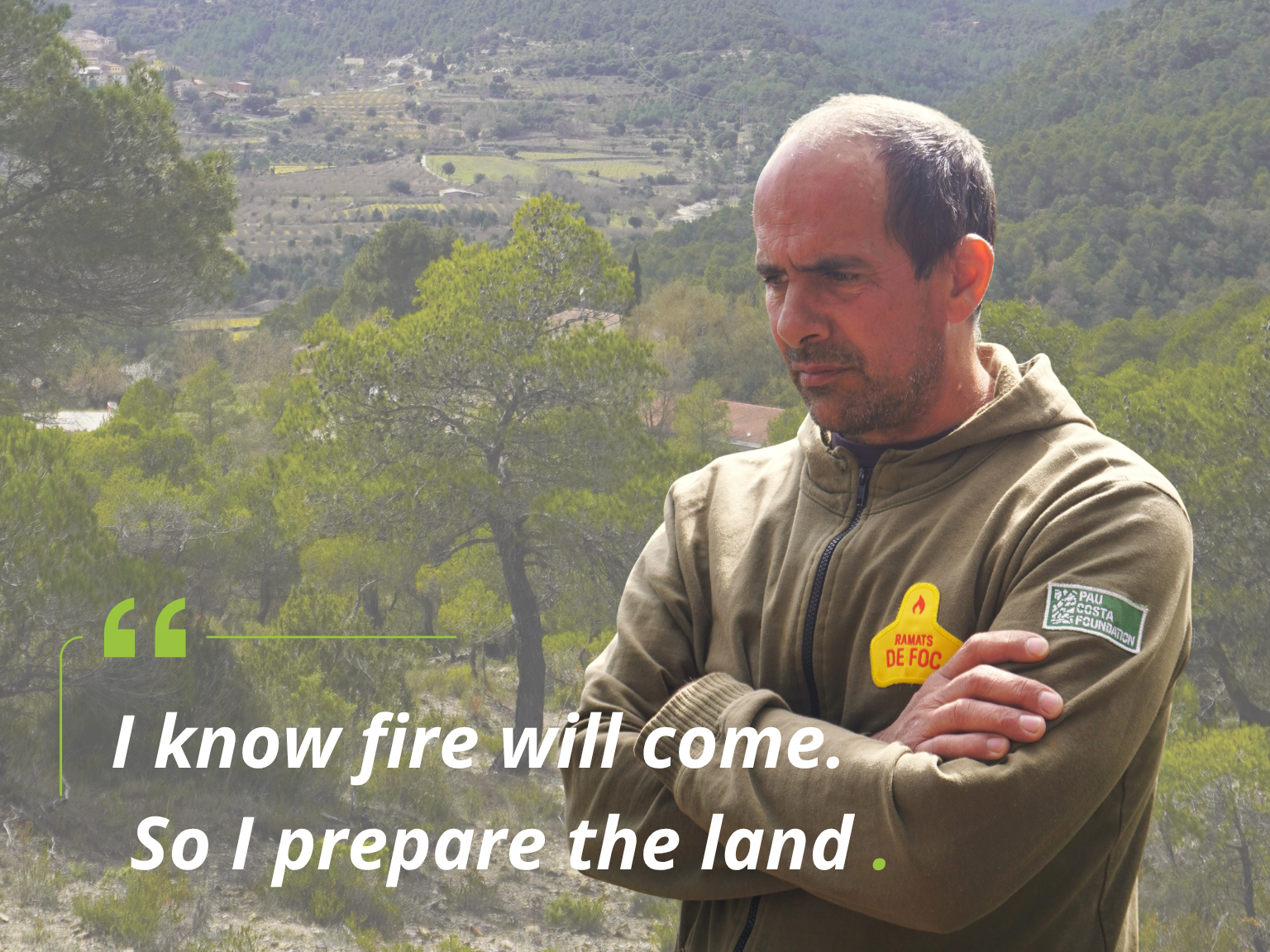
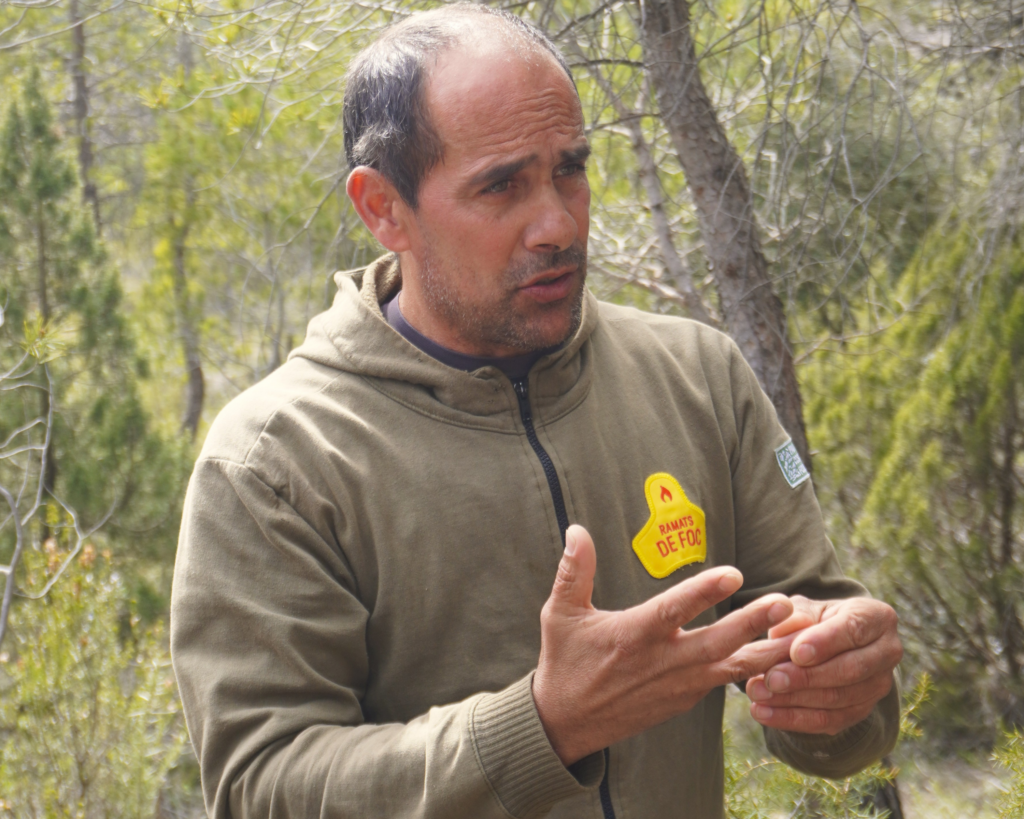
While wildfires are becoming more frequent and intense across the Mediterranean, some of the most effective solutions are rooted in long-standing land management practices. In Capafonts, Sergi Serra and his herd of goats are helping reduce vegetation in key areas through prescribed grazing—a practical, nature-based approach that supports prevention before fire starts.
During the MedFireWise field visit to Catalonia on 27 March, organised by the Pau Costa Foundation, our team had the opportunity to meet Sergi and see firsthand how his daily work contributes to landscape resilience.
Sergi is a shepherd, cheese producer, and educator. With a herd of around fifty goats, he manages grazing in strategic forest zones where vegetation needs to remain under control. By feeding on shrubs, grasses, and dense undergrowth, the animals help reduce fuel loads that can intensify wildfires.
But Sergi’s story is also about restoring land that had gradually closed in over time.

“When I started here as a shepherd, there hadn’t been shepherds for thirty-two or thirty-three years,” he explained.
Since then, he has watched inaccessible areas gradually open again.
“Before there were narrow paths. Now there are green meadows.”
His words reflect something often overlooked in wildfire prevention: maintaining the land is just as important as responding when a fire begins.
Across Mediterranean regions, prescribed grazing is increasingly recognised as an effective nature-based solution. After forestry treatments or prescribed burning, livestock can help keep vegetation levels low, slow fuel accumulation, maintain open habitats, and reduce long-term management costs.
For Sergi, however, the issue is also deeply personal.

“There is a lot of talk about a major wildfire in these mountains. Every time I speak about it, I get goosebumps because I know sooner or later it will happen here.”
That awareness drives his commitment to maintain the strategic zones where grazing can make a difference if fire reaches the area.
“I feel obliged to maintain these open areas.”
His work also supports the local economy through goat cheese production and creates social value by welcoming schools and student groups to learn about livestock farming, environmental stewardship, and rural life.
Sergi now hopes to expand his herd and believes greater recognition of pastoral work, together with practical support and guidance, can help strengthen the role of grazing in landscape management and wildfire prevention.
 Next Med