How can artificial intelligence help us respond faster and more effectively to health emergencies? This question was at the heart of the AI4Purpose National Hackathons organized by the MEDAIGENCY project.
Bringing together talents from across the Mediterranean, these hackathons sparked innovative solutions grounded in real-world needs.
In this interview, we hear from the IEEEngineers team from Birzeit University, who share their experience and present Aid NAV, an AI-powered platform designed to improve access to critical healthcare information during crises.
Interview with IEEEngineers – Birzeit University
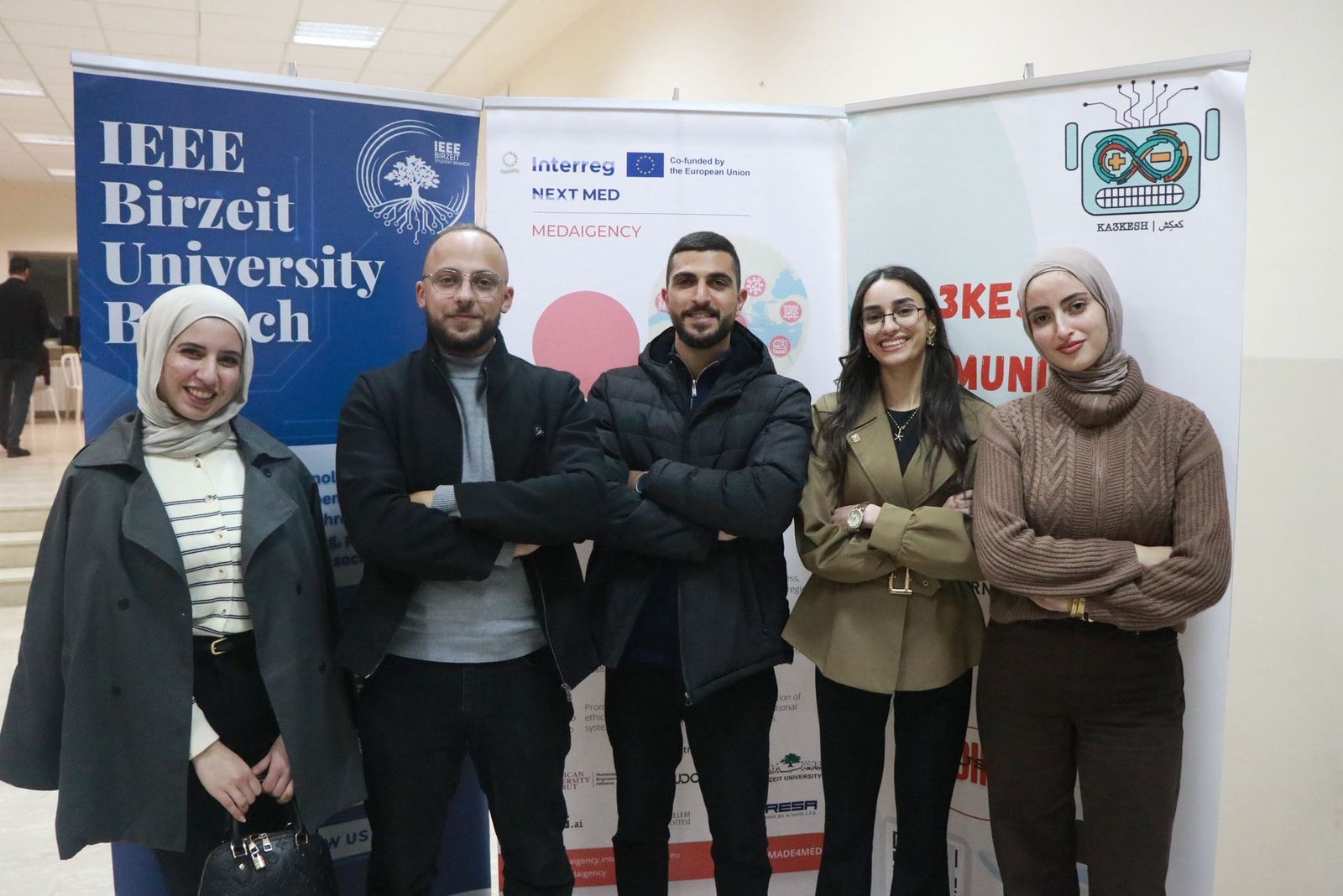
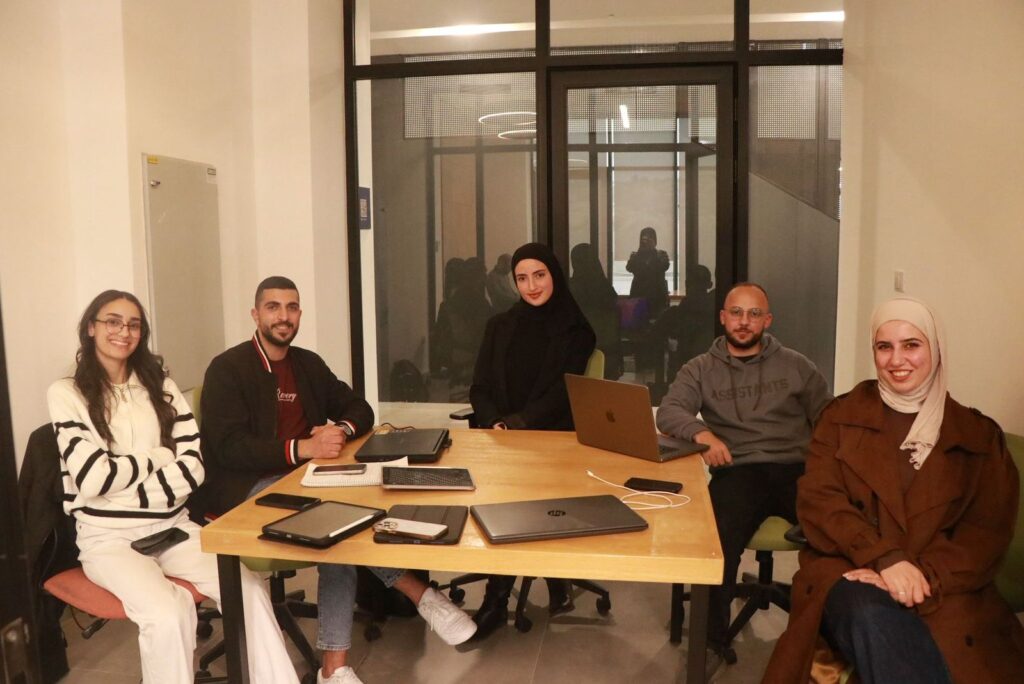
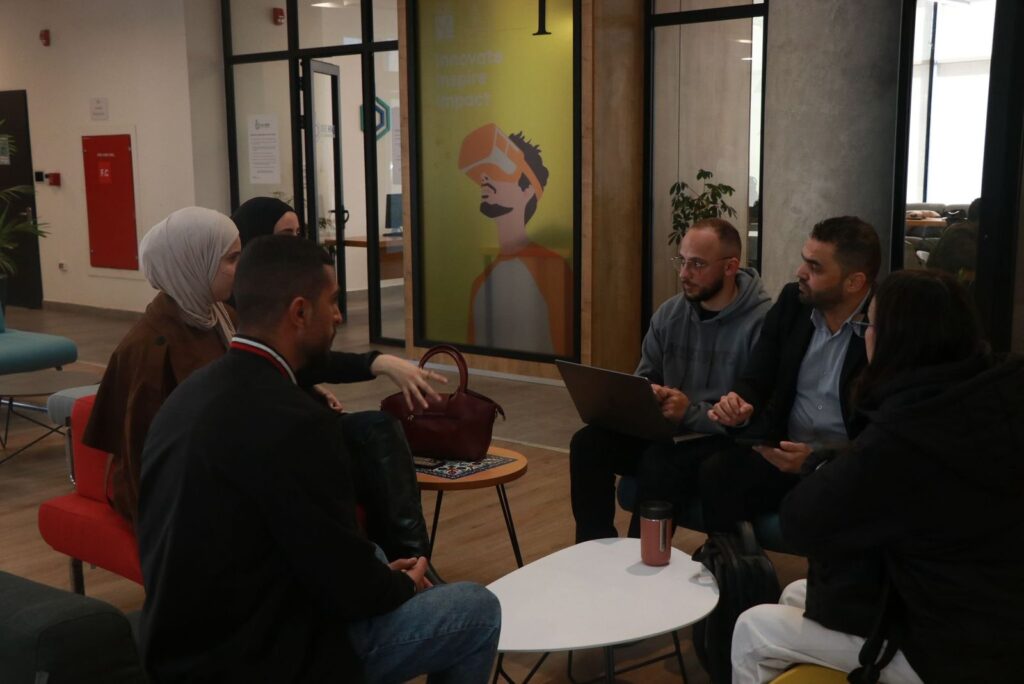
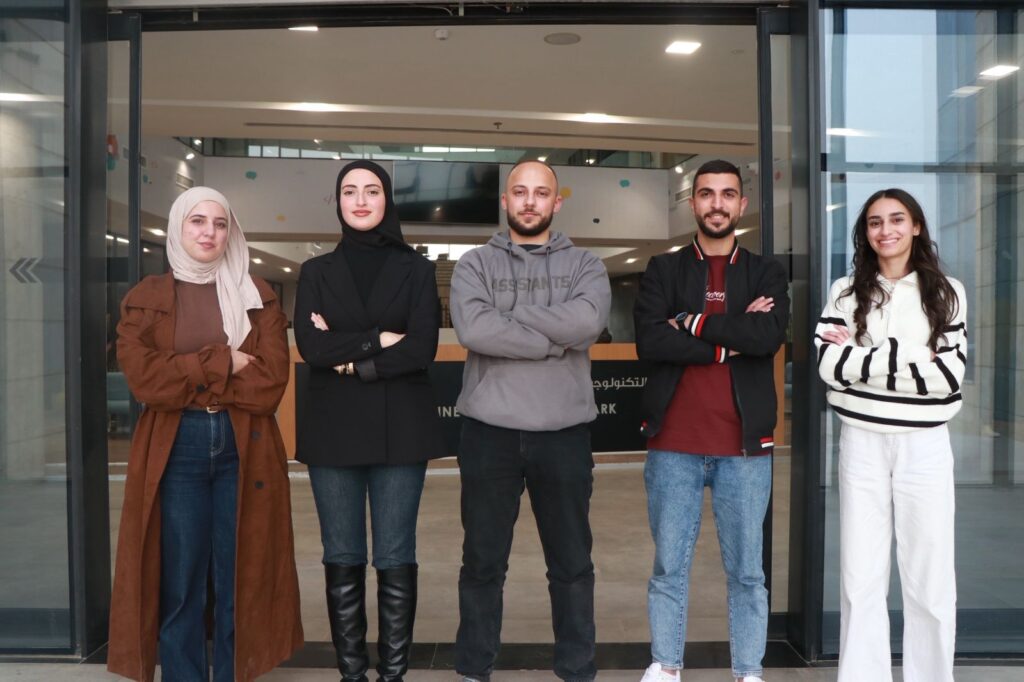
We are IEEEngineers — a team of five Computer Systems Engineering students at Birzeit University, Palestine. Our team is led by Baraa Said, joined by Mohammadkhair Awwad, Sadeen Faqeeh, Lana Sayes, and Nadeen Jaber.
Together, we bring expertise across artificial intelligence, software engineering, mobile development, backend systems, and UX design. We are passionate about building technology that solves real-world problems in our local context, and Aid NAV is a direct expression of that commitment.
Your motivation to participate
We learned about the AI4Purpose Hackathon through Birzeit University and the MEDAIGENCY project network. The challenge immediately resonated with us because it spoke directly to a problem we see every day in Palestine.
The healthcare system in the West Bank operates under chronic fragmentation — 114 health facilities, 185 emergency resources, 45 active incidents, and 11 governorates, all without a unified coordination system. During crises, health professionals waste critical minutes making phone calls to locate available ICU beds or functional emergency resources. We wanted to build something that could change that.
The intersection of AI and humanitarian response is deeply meaningful to us. We believe technology should serve people in their most vulnerable moments, and this hackathon gave us the opportunity — and the urgency — to act on that belief.
Your AI solution
Aid NAV is an AI-powered crisis navigation platform designed to give health coordinators, emergency responders, and medical staff instant, accurate answers about available healthcare resources — in one question, in their own language.
• Problem addressed: Fragmented, inaccessible health data that costs lives during emergencies.
• Intended users: Health coordinators, field emergency teams, hospital administrators, and first responders across Palestine.
• AI role: The platform uses Retrieval-Augmented Generation (RAG) powered by Llama 3.3 70B on Groq Cloud. Users ask natural-language questions in Arabic or English and receive answers drawn from a live database of 114 facilities — in under 700 milliseconds. The AI synthesizes rather than fabricates: it finds, not invents.
The stack: Flutter & Dart (iOS/Android frontend), Python FastAPI (backend via Secure Tunnel), and Groq Cloud with Llama 3.3 70B — 13,000 lines of code written in 48 hours, for humanity.
Future development of the idea
We have a clear roadmap for Aid NAV’s evolution:
• WHO API integration: Direct connection to World Health Organization health data feeds for real-time, authoritative facility information.
• Conflict-aware routing: AI-powered navigation that analyzes and avoids active conflict zones — a critical feature for our region.
• Expansion to Gaza: Scaling the system to cover the Gaza Strip, where the need for coordinated emergency health navigation is most acute.
• Ministry of Health partnership: Working with the Palestinian Ministry of Health to formally integrate Aid NAV into national emergency protocols.
We are seeking collaboration with MEDAIGENCY partners, NGOs operating in the region, and health institutions to pilot Aid NAV in real emergency scenarios. The platform architecture is designed to adapt to other Mediterranean countries facing similar challenges — fragmented crisis data, multilingual populations, and infrastructure limitations.
Mediterranean perspective
Competing in a Mediterranean-level hackathon profoundly shaped how we think about Aid NAV’s potential. Knowing that teams from across the Mediterranean — countries with their own crisis histories and healthcare challenges — were working on similar problems pushed us to design for adaptability, not just local use.
The needs assessment materials presented during the hackathon helped us understand that fragmented emergency data is not unique to Palestine. It is a shared Mediterranean challenge, from earthquake response in the Eastern Med to refugee health crises along the southern shore. This gave us confidence that Aid NAV’s architecture — a centralized, AI-powered, multilingual query layer over distributed health data — is a model that can transfer.
Interacting with mentors and jury members with international public health and AI backgrounds sharpened our thinking on responsible AI, data governance, and sustainability. Their questions challenged us to think beyond the hackathon: How do you maintain data quality at scale? How do you earn trust from health workers who are skeptical of new technology? These are questions we are now actively building into our roadmap.
Most importantly, this experience reminded us that the problems we face in Palestine are not isolated — and that solutions built here, with care and rigor, can serve people far beyond our borders.
Stay tuned for more insights from AI4Purpose participants across the Mediterranean.
We would like to warmly thank Mr. Ayman Rahmeh, MEDAIGENCY Communications Manager at the American University of Beirut, for facilitating this series of interviews.
 Next Med