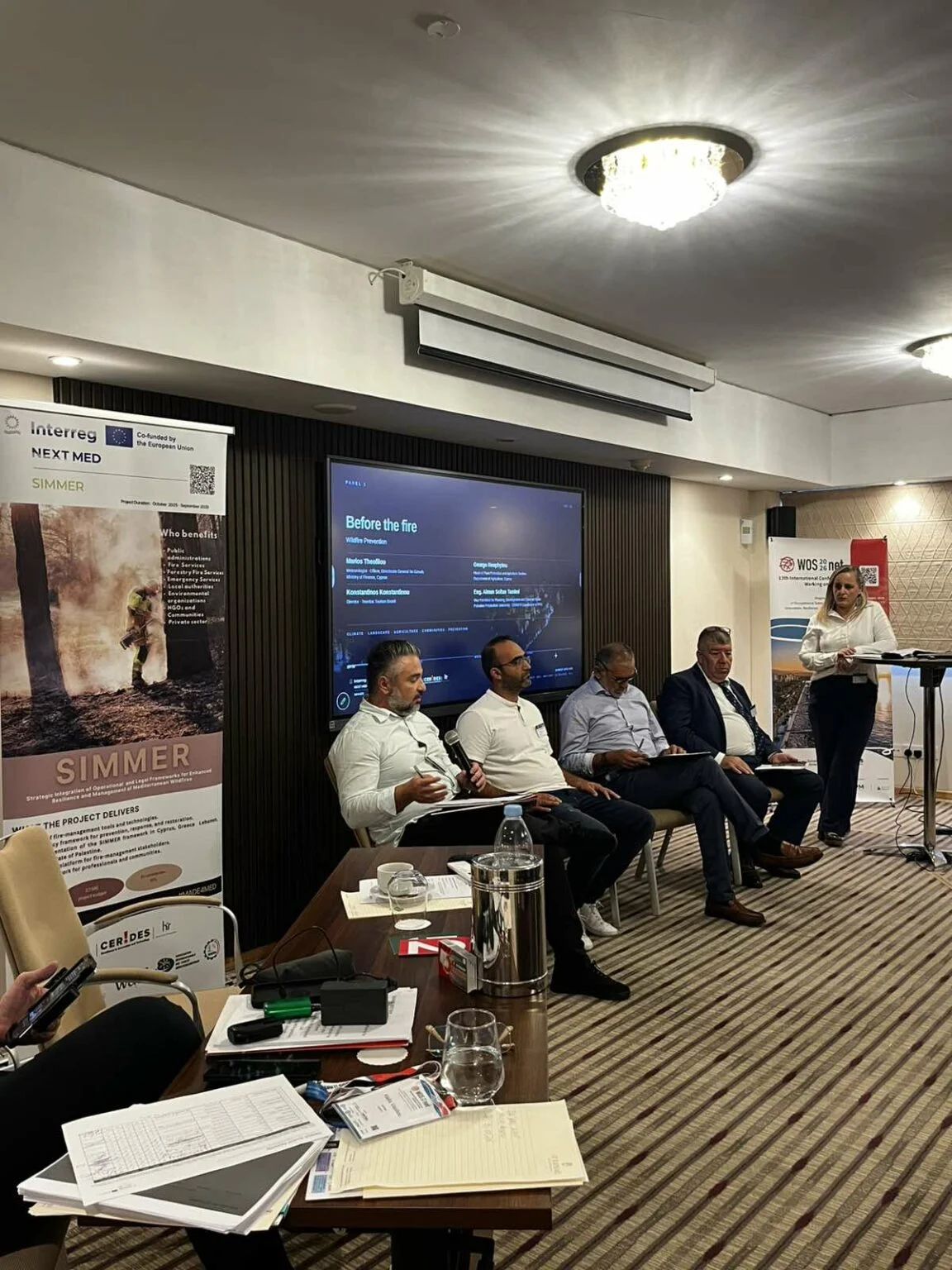
Land abandonment and illegal dumping intensify Mediterranean wildfire risk – SIMMER Info Day panel 1
SIMMER experts called for year-round wildfire prevention during the first Info Day panel in Limassol. They connected climate information with active land management and stronger support for rural communities.
Publication Date 22/09/2026
Reading Time 2minutes
Wildfire prevention is often the least visible part of wildfire management. When it works, there is no dramatic event to record. Nothing burns, nobody is evacuated and no aircraft appears over a hillside. However, the absence of disaster is precisely what prevention should achieve.
Prevention begins before the high-risk season
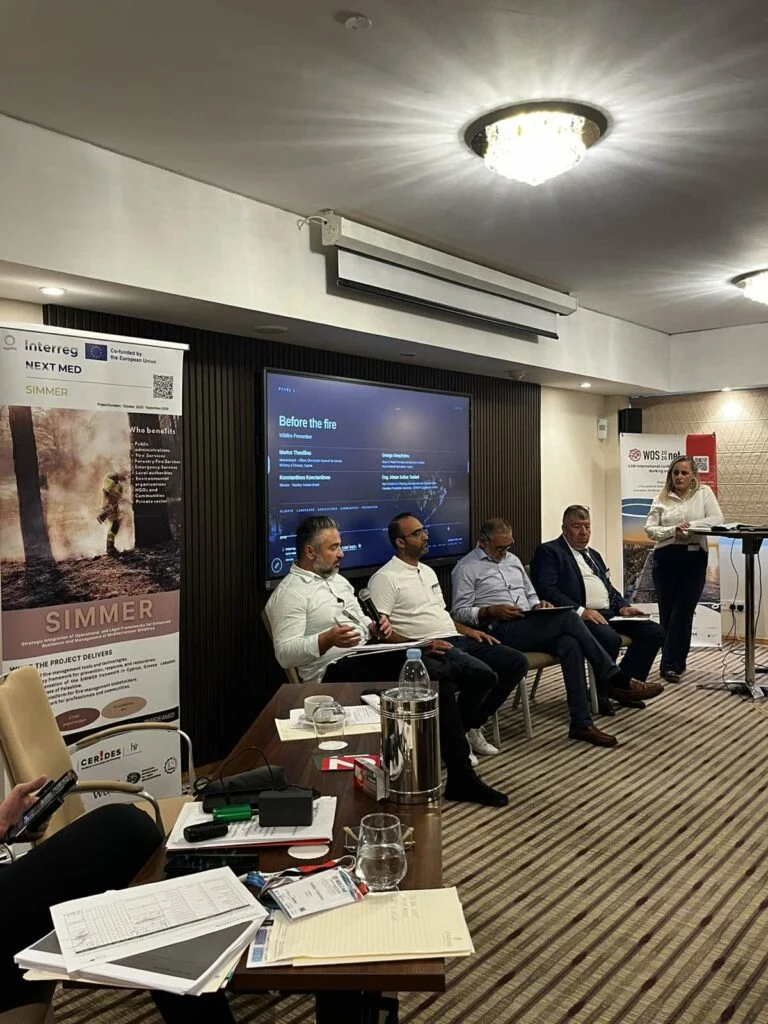
This was the starting point of the first SIMMER Info Day panel in Limassol on 18 September 2026. Marios Theofilou brought the climate perspective, while Giorgos Neophytou represented the Department of Agriculture. Konstantinos Konstantinou connected wildfire prevention with tourism and the future of mountain communities. In addition, Aiman Soltan Tamimi brought experience from Palestine and the wider Mediterranean region.
Together, the speakers showed that wildfire risk develops long before the high-risk season. When farming declines, vegetation grows without control and dry material builds up each year. As a result, the traditional Mediterranean pattern of cultivation, grazing and land clearing gradually disappears. This pattern once helped slow the spread of fire.
Unmanaged land and illegal dumping increase the danger
Illegal dumping creates another serious danger. Waste can provide an ignition source and may release hazardous material when it burns. Therefore, prevention must also include cleaner landscapes, safer waste practices and stronger local responsibility.
Longer and more frequent droughts place even greater pressure on an already vulnerable landscape. For this reason, Mediterranean wildfire prevention cannot begin in spring and end in autumn. It requires continuous management of land, vegetation, access routes and possible ignition sources.
Rural communities are part of wildfire prevention
The panel also called for practical support for people who continue to manage rural land. Farmers, livestock keepers and local communities maintain landscapes that might otherwise become overgrown. Moreover, controlled grazing can reduce vegetation when it is carefully planned and monitored.
The wider lesson was clear. Living and well-managed rural landscapes are among the strongest forms of wildfire prevention available to Mediterranean communities. Climate information can guide early action, but local people must have the means to act on it.
The Interreg NEXT MED website uses technical, analytics and third-party cookies. By continuing to browse, you accept the use of cookies. Privacy Policy
 Next Med