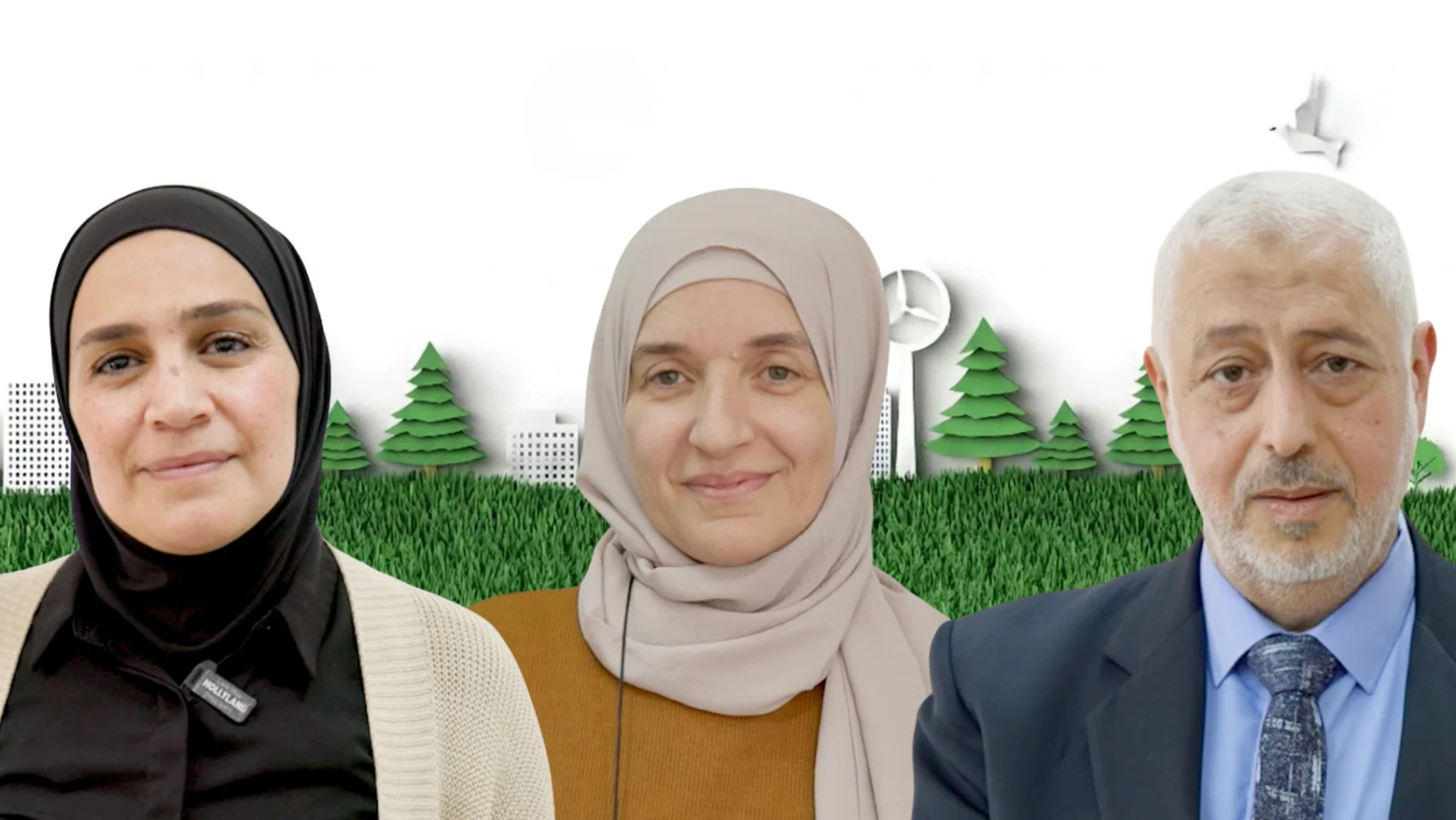
How aligned are national strategies with local realities, and what role can participatory governance play in bridging the gap?
We put these questions to Eng. Sahar Abdallah, Project Manager, Ranein Zetawi, Local Expert, and Mohannad Jallad, Deputy Mayor of Tulkarm, sharing their perspective from one of JADEITE’s partner territories in Palestine.
According to the interviewees, alignment between national strategies and local needs exists, but remains more theoretical than practical, due to weak links between planning and implementation at the local level. The most significant gaps are the limited involvement of local communities, insufficient accurate data, and the disconnect between national policies and real-world application.
Participatory governance is identified as the most effective approach: it builds citizen trust, improves decision quality, and ensures a better response to real needs. Among the voices that most need to be strengthened are youth, women, people with disabilities, and residents of marginalised or remote areas, not excluded, but currently less heard.
The main barriers to participation are lack of trust in community engagement processes, limited transparency, and insufficient formal communication channels. Building the capacity of both the municipality and the community in participatory planning is essential, alongside the activation of digital platforms, surveys, and public meetings to make information accessible to all.
On digital tools, the interviewees agree: in the Palestinian context, they are the backbone of community communication. However, significant challenges persist, including restricted internet access, still limited to 2G and 3G networks, drone bans, and other constraints imposed by the occupation. A dedicated app to reach the most marginalised groups is identified as a key next step.
Watch the full interview below.
 Next Med