What does it really mean to participate? And what is needed for participatory processes to generate real, lasting impact?
We put these questions to Massimo Morisi, Political Scientist and Lecturer at the University of Florence, who offers a frank and rigorous perspective on the state of participatory governance in the Mediterranean context.
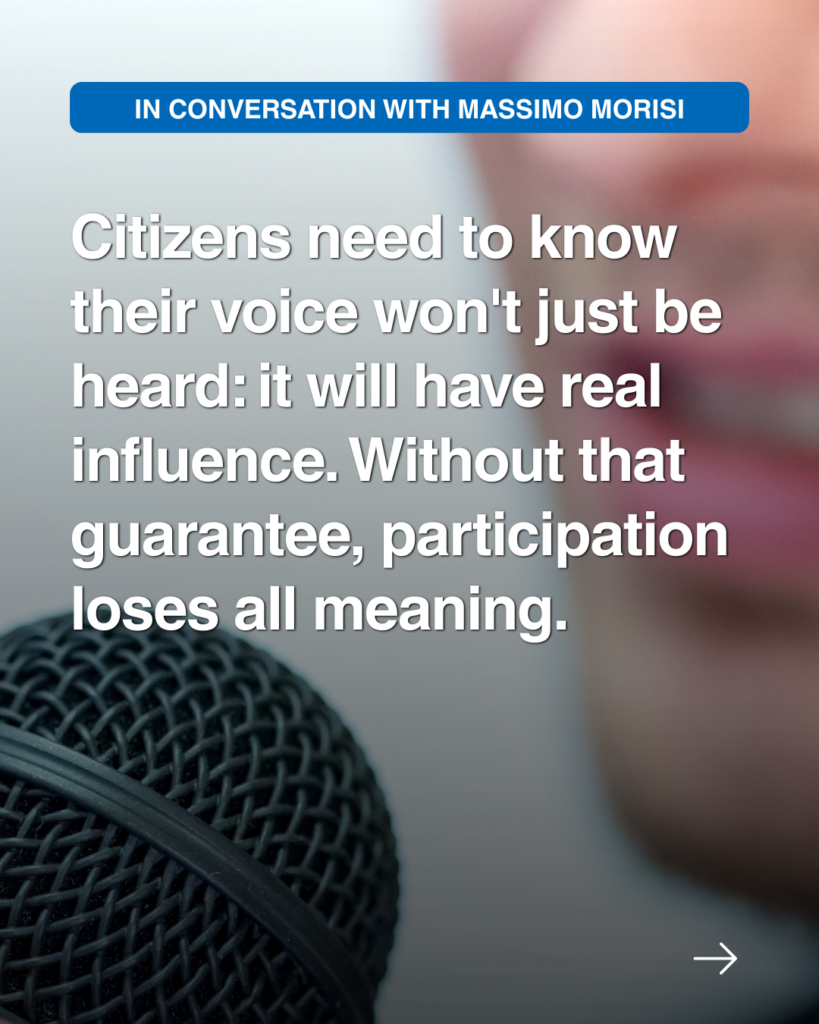
For Morisi, participation must be clearly defined: it is not voting, not protesting, not civic dissent. It means influencing the public policies that directly shape people’s lives. Without this clarity, everything risks becoming participation — and therefore nothing truly is.
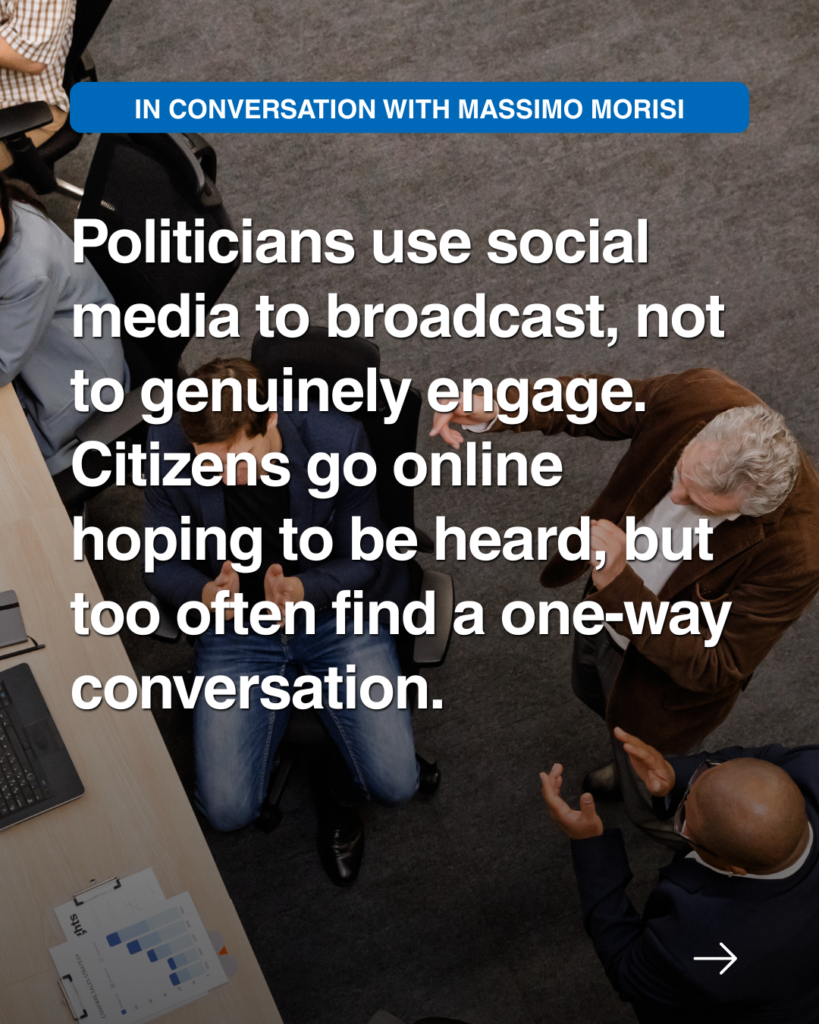
The biggest obstacle is the lack of genuine political commitment. Without it, even the best legal framework becomes a routine: always the same voices, always the same faces, never real impact on public policies. Digital tools offer new opportunities, but politicians too often use them to broadcast rather than to genuinely engage, leaving citizens with a one-way conversation.
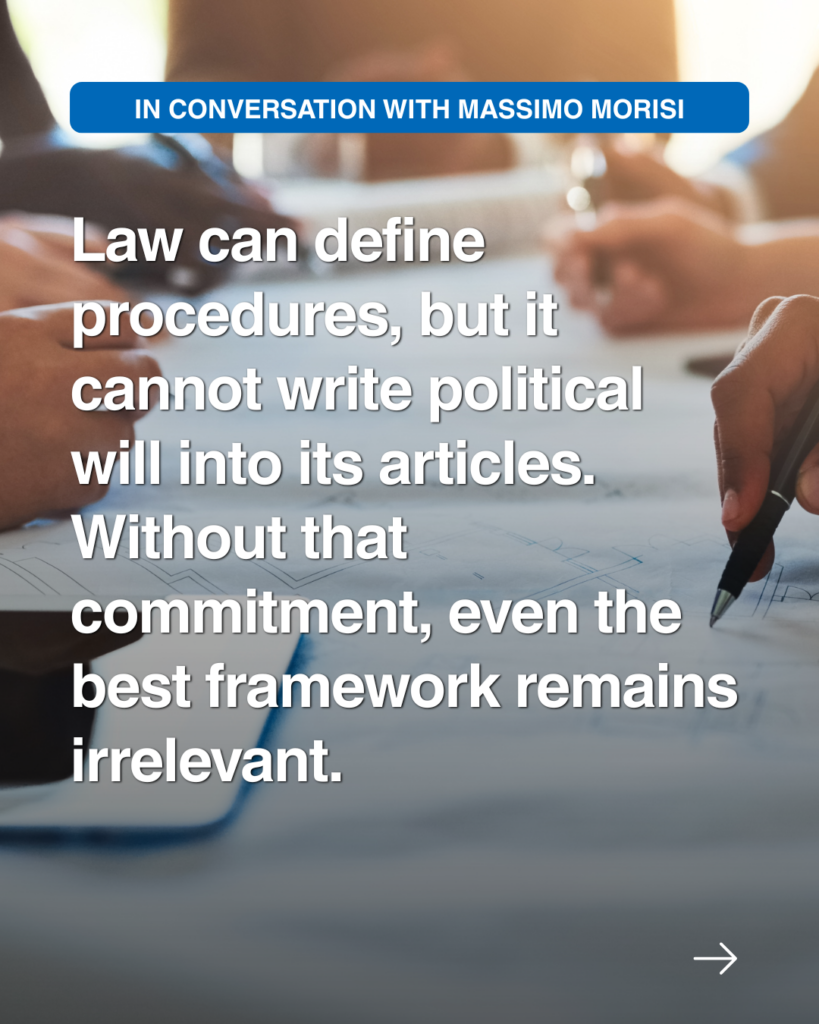
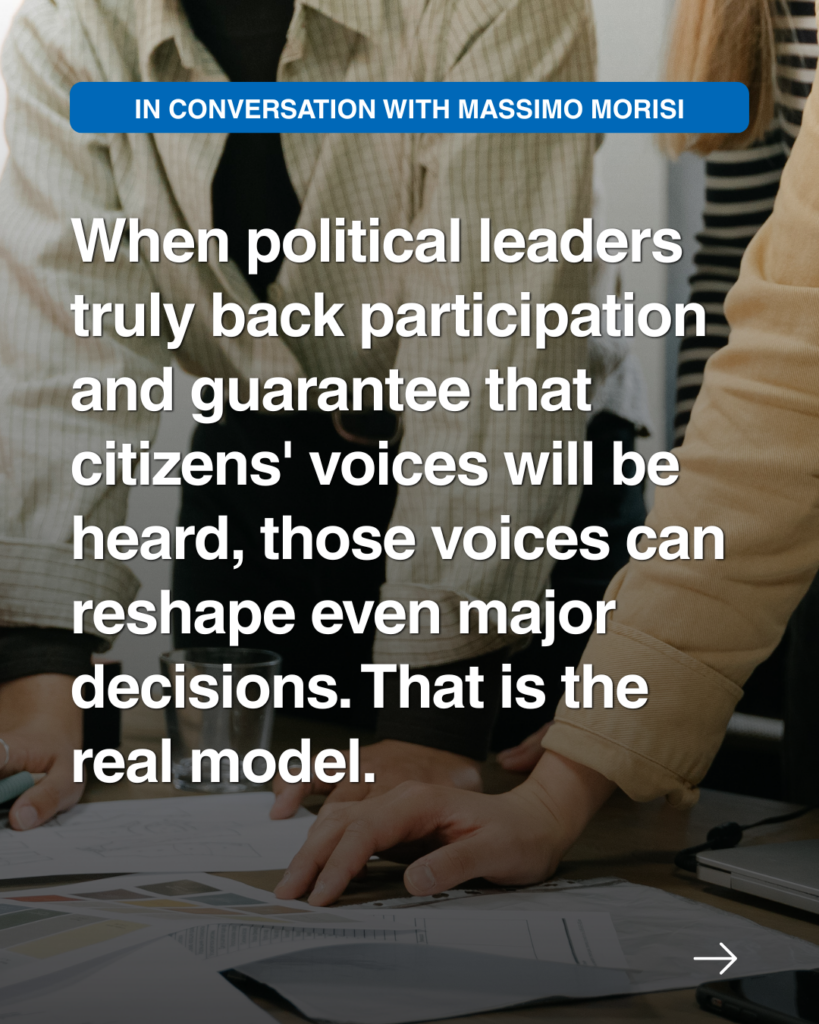
Law can define procedures, but it cannot write political will into its articles. Without that commitment, even the best framework remains irrelevant. When political leaders truly back participation and guarantee that citizens’ voices will be heard, those voices can reshape even major decisions. That is the real model.
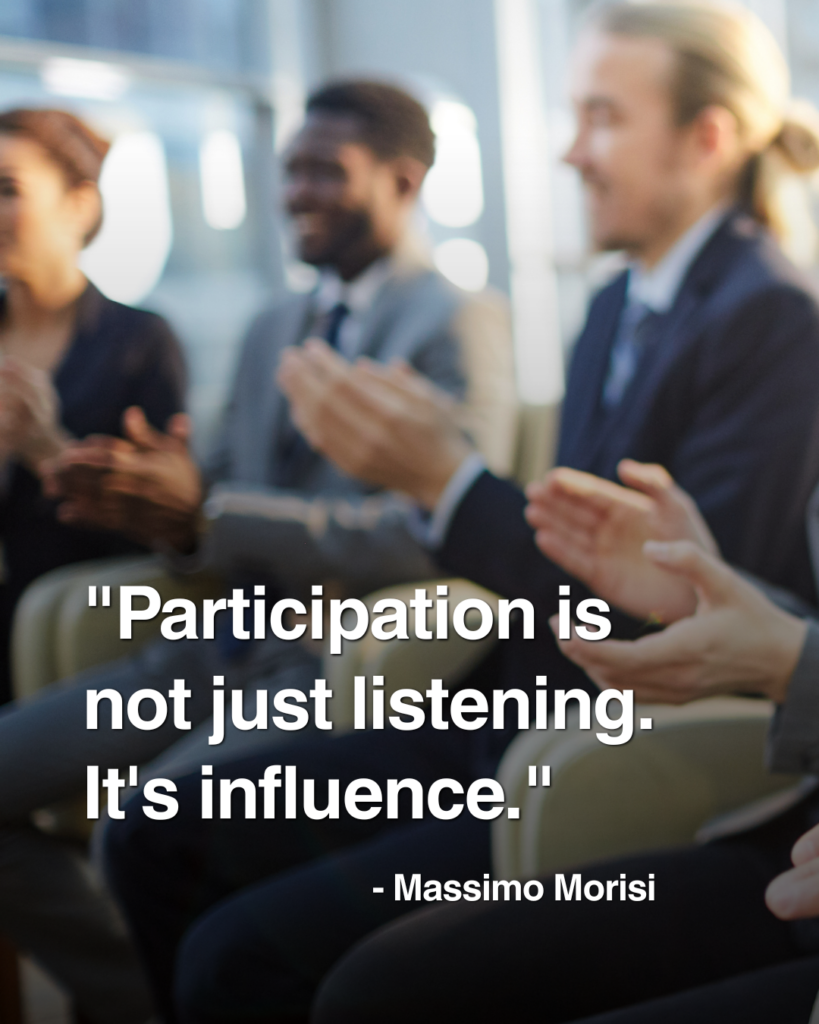
As Morisi himself puts it: “Participation is not just listening. It’s influence.“
Discover his key insights in the carousel below.
 Next Med