What does it take for participation to really work? JADEITE put the question to Riccardo Andreini and Vanna Profeti, representatives of Cesvot, the Volunteer Service Centre of Tuscany.
Since 1997, Cesvot has supported volunteering and the Third Sector in Tuscany, with training, consultancy and communication support for associations. Riccardo Andreini heads its Training, Project Design and Territorial Services Sector. Vanna Profeti is a reference figure in the Tuscan Third Sector and volunteering, and works with Cesvot in the province of Pisa.
Political will on paper, not always in practice
Asked how ready institutions are, Andreini describes a “leopard-spot” picture: excellent examples sit next to deep cultural resistance. Political will is often there on paper, but it struggles when participation touches real decision-making power. The test, he says, is accepting that the outcome is uncertain. If you already know where you want to end up, you are not doing participation, you are doing communication.
Even when the will is there, the technical side is often missing. Offices frequently lack specific skills in facilitation and conflict management. The slow pace of dialogue collides with the rigid pace of bureaucracy. And departments tend to work in silos.
What works and what does not
A good reference, for Andreini, is Collaboration Pacts. Adopted by many municipalities, starting from Bologna’s pioneering experience, they are not an isolated event but a legal tool that lets citizens and associations co-manage public spaces.
The most common mistake is “posthumous participation”: asking citizens to take part in a project that is already approved. It is not participation, it is late information, and it ends in protests and lost trust. Another way to fail is to listen and then disappear. Participation needs constant feedback, otherwise it looks like a black hole that swallows energy.
Skills and resources
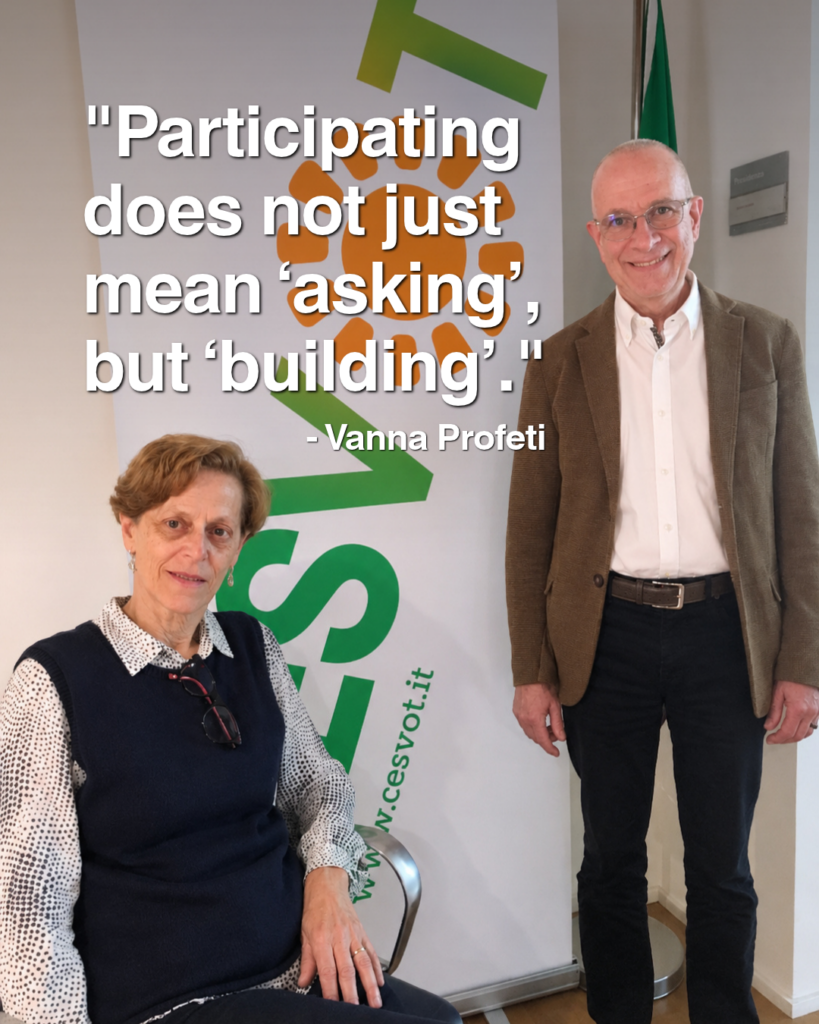
For Vanna Profeti, public officials need to make a cultural leap: from implementers of rules to directors of relationships. That means knowing how to design participatory processes, manage conflict, communicate clearly and work across sectors. The Third Sector and citizens, in turn, must move from a culture of protest to one of co-responsibility. Participating does not just mean “asking”, but “building”.
She also names three “infrastructure” resources: time, neutral places and professional facilitation. For Andreini, the most precious resource of all is mutual trust. It cannot be bought, it is built.
Follow JADEITE on our social channels to read more voices from the territory.
 Next Med