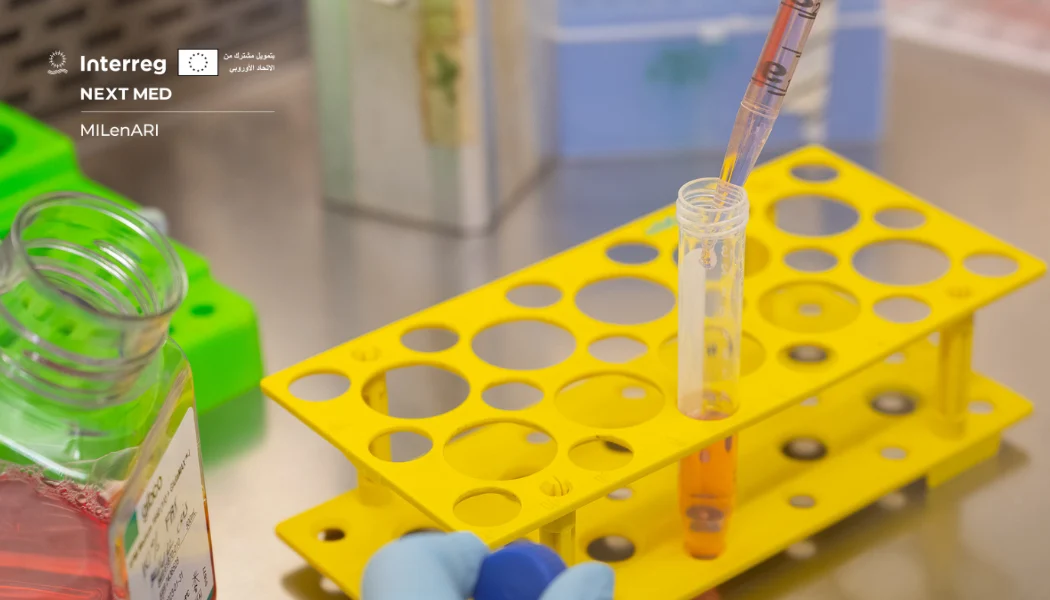
In the context of the MILenARI project, lentiviral vectors need to be shipped from Hospital Clínic Barcelona-IDIBAPS in Spain to partner institutions such as the American University of Beirut (AUB) in Lebanon, the King Hussein Cancer Foundation and Center in Jordan, and the Ospedale Pediatrico Bambino Gesù in Italy. And, while this may sound like a routine shipment, these biological materials are subject to strict transport, customs, safety, and regulatory requirements; each country has its own specific procedures and challenges.
To explore possible solutions, Hospital Clínic Barcelona-IDIBAPS is coordinating the shipment process together with specialised courier providers and partners, managing documentation, customs requirements, and all the necessary logistics to ensure the safe transfer of the vectors to the different partners. The handling and regulatory procedures involved make it particularly challenging to find a safe organization that takes the responsibility of doing so.
This situation highlights a challenge that many international research projects face. Funding and scientific expertise are essential, but they are not always enough. Research materials, technologies, and knowledge must also be able to cross borders under complex regulatory frameworks.
The experience shows that successful scientific collaboration depends not only on researchers and institutions, but also on the systems that make knowledge exchange possible in practice. Sometimes, one of the biggest challenges is simply ensuring that science can travel safely from one laboratory to another.
Through MILenARI, a practical solution has been found to keep scientific collaboration moving forward across the Mediterranean, and by 2026 the lentiviral vectors are expected to travel safely to their destination.
 Next Med