Industrial process heat is a stubborn source of emissions, as it is still largely supplied by burning natural gas. Chemical and petrochemical processes alone account for close to a quarter of the final energy used by EU industry, making it simultaneously one of the largest and hardest parts of the energy system to decarbonise. GREENOLIVE, a project funded under the Interreg NEXT MED Programme and coordinated by Università eCampus, is testing an alternative: using solar power, rather than gas, to supply that heat.
The project’s demonstration plant is being built at ASCHEM, a major plastics manufacturer located in Adana, Türkiye. There, a photovoltaic array feeds an electric heater and a thermal energy storage tank, which together supply the roughly 300°C heat the manufacturing process requires; a gas burner remains in place as backup. The system is designed to prioritise solar power first, then stored heat, and only fall back on gas when both are unavailable.
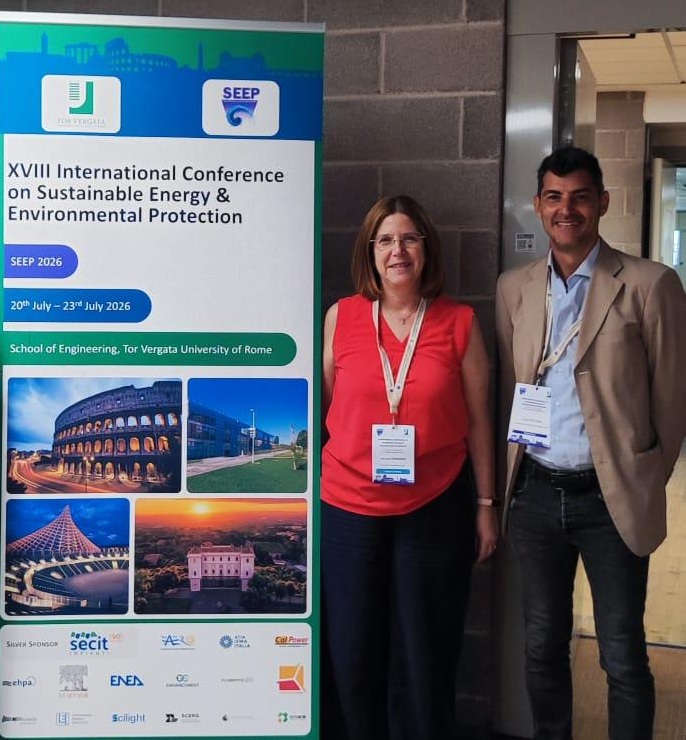
This work was presented at the 18th International Conference on Sustainable Energy and Environmental Protection (SEEP 2026), held from 20 to 23 July at Tor Vergata University in Rome. Prof. Luca Del Zotto, associate professor at eCampus University, presented a dynamic computer model, built by the project’s research team, that simulates, at one-minute resolution across a full solar year, how the plant’s photovoltaic modules, resistive electric heater, storage tank and gas burner interact. The simulation shows that, even with a photovoltaic system sized conservatively relative to the plant’s heat demand, the setup can already displace around 20% of the natural gas the process would otherwise consume, with direct solar power doing most of the work and the storage tank extending its use into the evening. The team also identified ways to push that figure further: a larger photovoltaic array and a smarter control of when the storage tank charges and discharges.
The presentation is part of GREENOLIVE’s broader effort to prove out the technology before the plant in Adana becomes operational, with the modelling results now feeding into the design choices for the physical system on site.
 Next Med