As Interreg NEXT MED Programme has one of its branch offices located in Valencia, Spain, it seems a must to take some time and explain what happens every year in the third city of Spain during the month of March. Have you ever heard of the most iconic regional festivity there called “Las Fallas”?
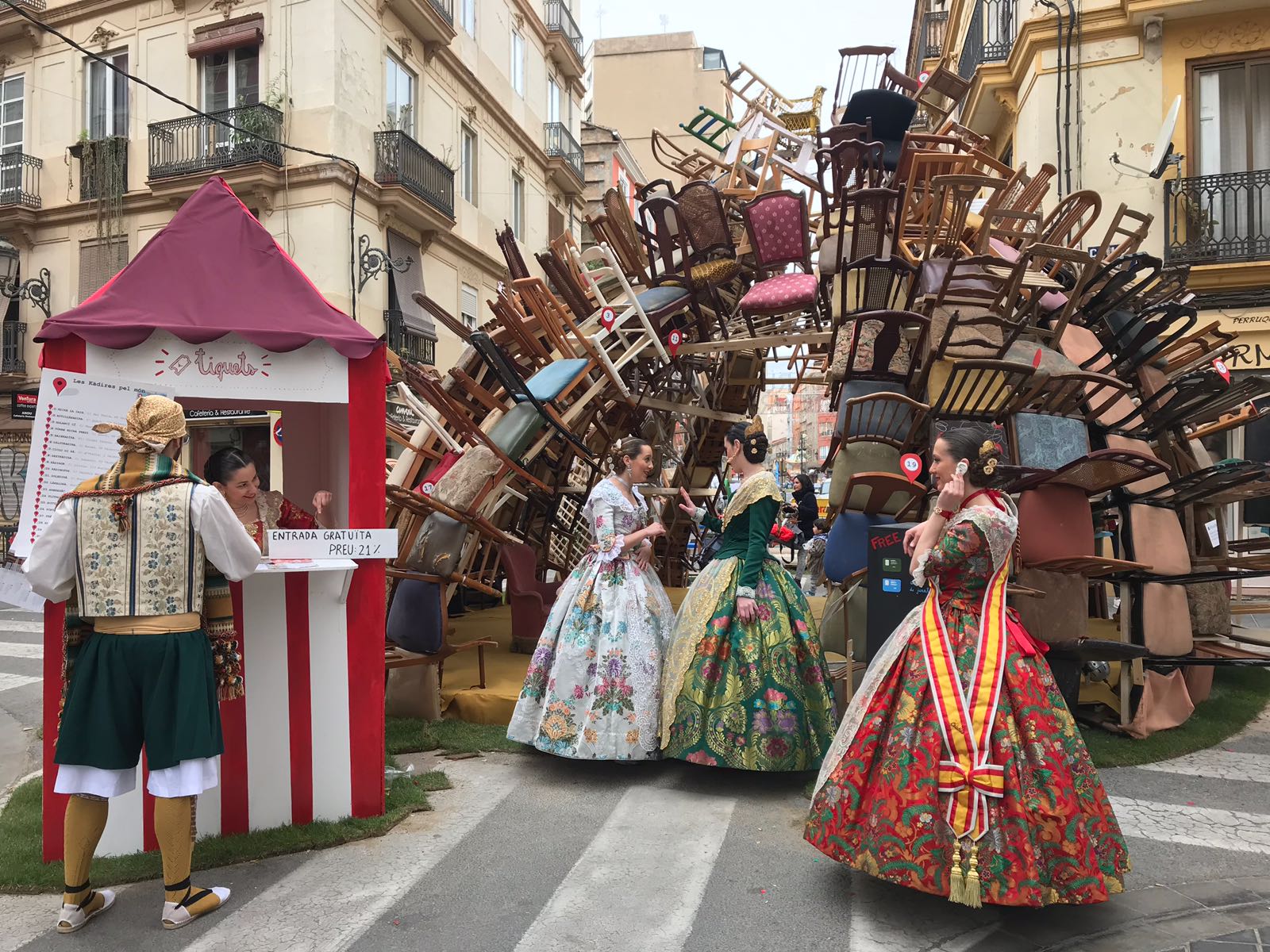
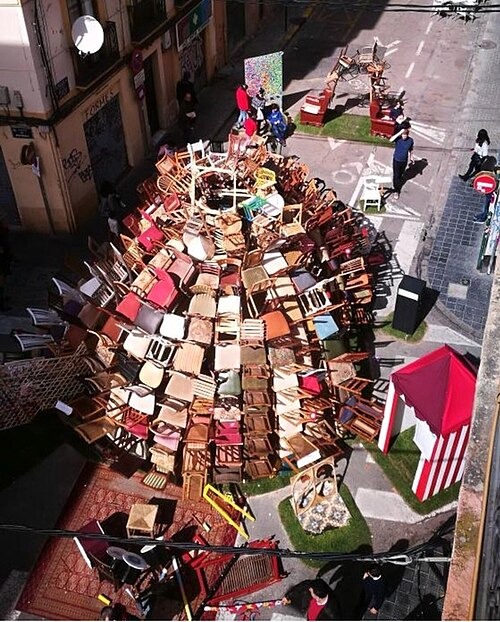
Las Fallas traces its roots to an old tradition in which Valencian carpenters burned old wood and leftover materials to celebrate the arrival of spring. This custom was linked to Saint Joseph, the patron saint of carpenters. Originally, these were simple bonfires of discarded winter materials – old furniture, wood scraps, and objects no longer needed. Over time, people began to decorate these burnable items, adding humorous figures, which eventually evolved into today’s elaborate artistic monuments with clear satirical messages.
With time, these structures were replaced by “white cork” which is technically expanded polystyrene (EPS), also known as expanded polystyrene foam. It is a material derived from petroleum.
Nowadays, it takes months to prepare these sculptural compositions by artists (artista fallero) that can be as high as 30 metres.
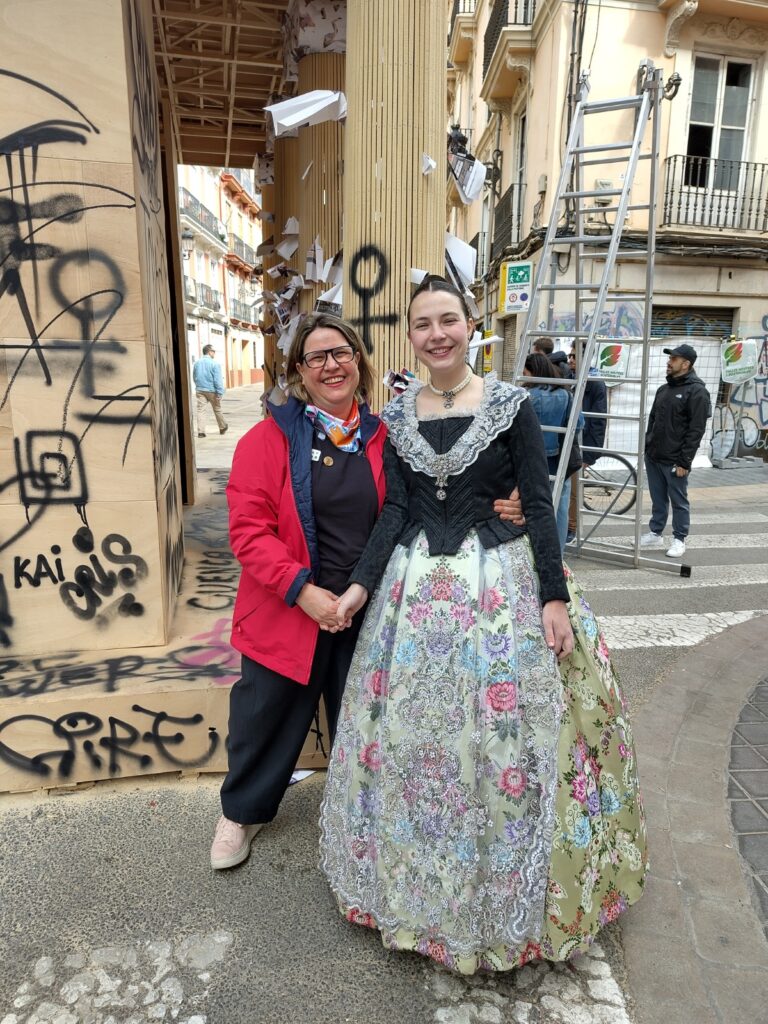
Each neighbourhood in Valencia has its fallas committees, social headquarters for the members (casal faller), who work throughout the year raising funds, organizing events, and designing their fallas. This transformed the festival into a major expression of community identity and craftsmanship, deeply tied to Valencian traditions such as artisan dress, music, and gastronomy.
The main celebrations take place between the 15–19 March each year, although events start earlier with daily firecracker shows called Mascletàs beginning of March (using around 120 kilos of explosive each day during nearly 3 weeks).
Besides these huge sculptures called fallas, there are smaller figurines within each falla, called ninots. There are many fireworks all over the city too and the ofrenda (a floral offering to the Virgen de los Desamparados on March 17–18). Over 100 000 falleros and falleros took part in the ofrenda in 2026.
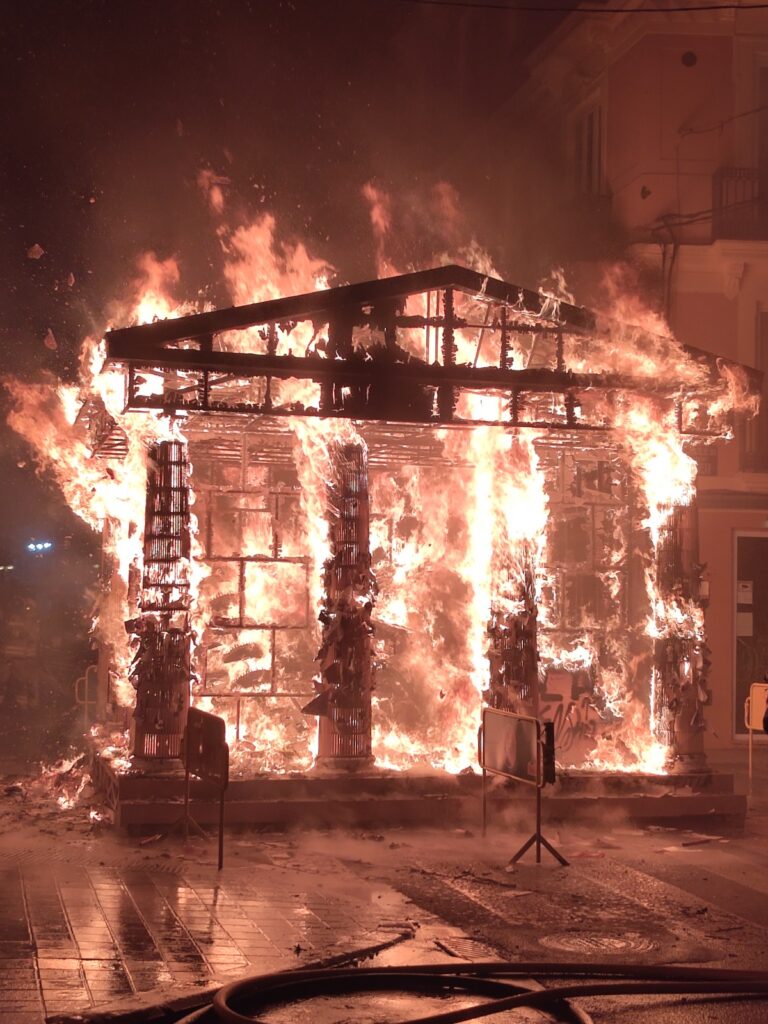
All this ends with the cremà: the final burning of all fallas (around 760 as there are about 380 fallas + same number of ninots) on March 19, symbolizing renewal.
According to a study from the ICTs Against Climate Change group from the Polytechnic University of Valencia (2021), the fallas is estimated to emit over 4,400 tons of CO2 annually (especially during the cremà),
So, yes, the fallas are impressive, build social cohesion among people in Valencia, maintain nice traditions, develop local economies, promote cultural event and celebration. Adding to that, the fallas were declared Intangible Cultural Heritage of Humanity by UNESCO on November 30, 2016.
But as we just celebrate the international day for zero waste, let´s reflect on how this amazing tradition could be more sustainable and aspire to reduce the waste it generates every year.
Fallas and sustainability
For that, Interreg NEXT MED interviewed Ms Mª Francisca Hipólito Bonet, the delegate for sustainability in her falla: the falla Borrull Socors.
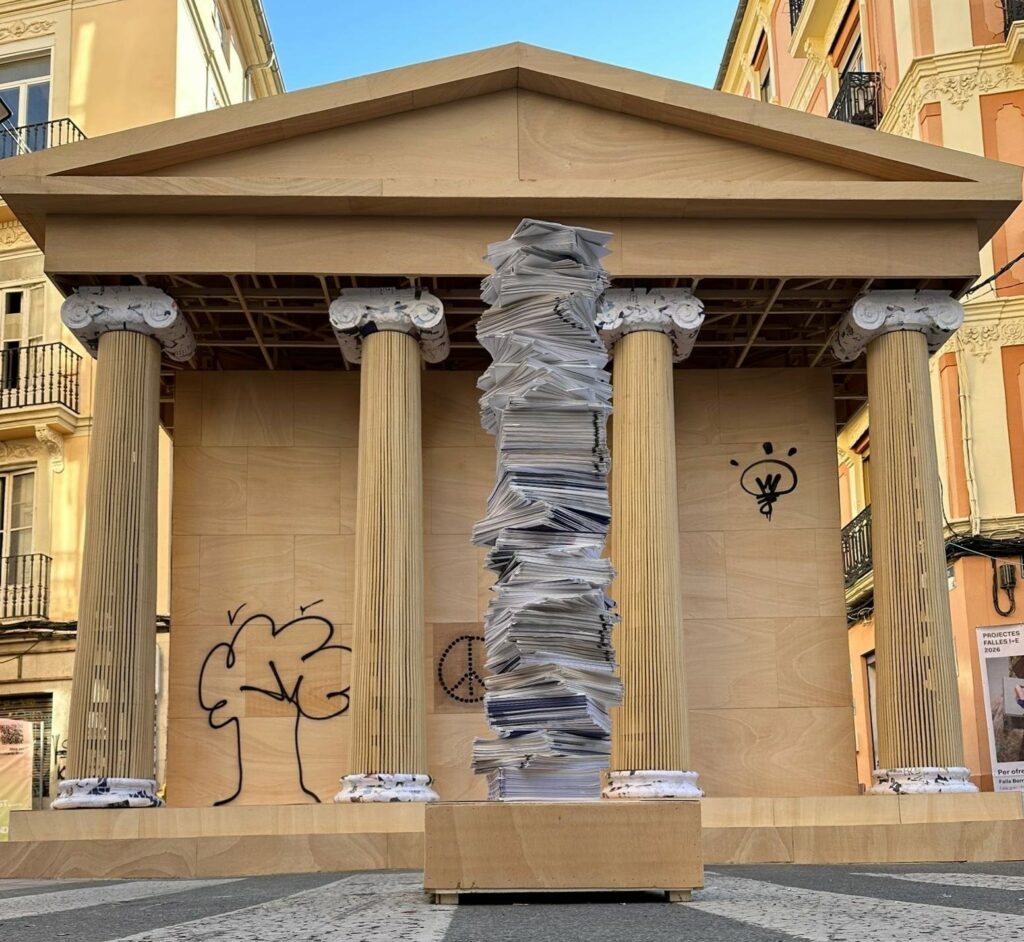
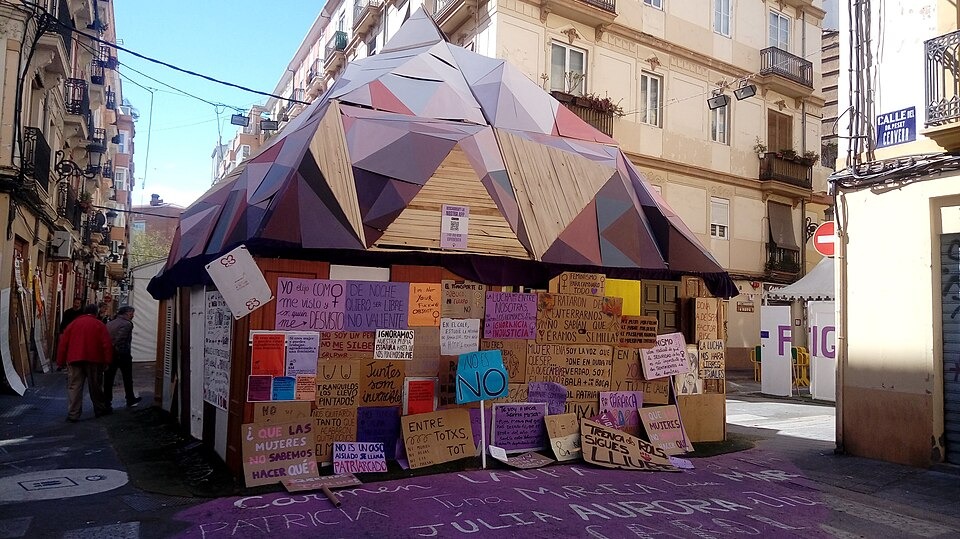
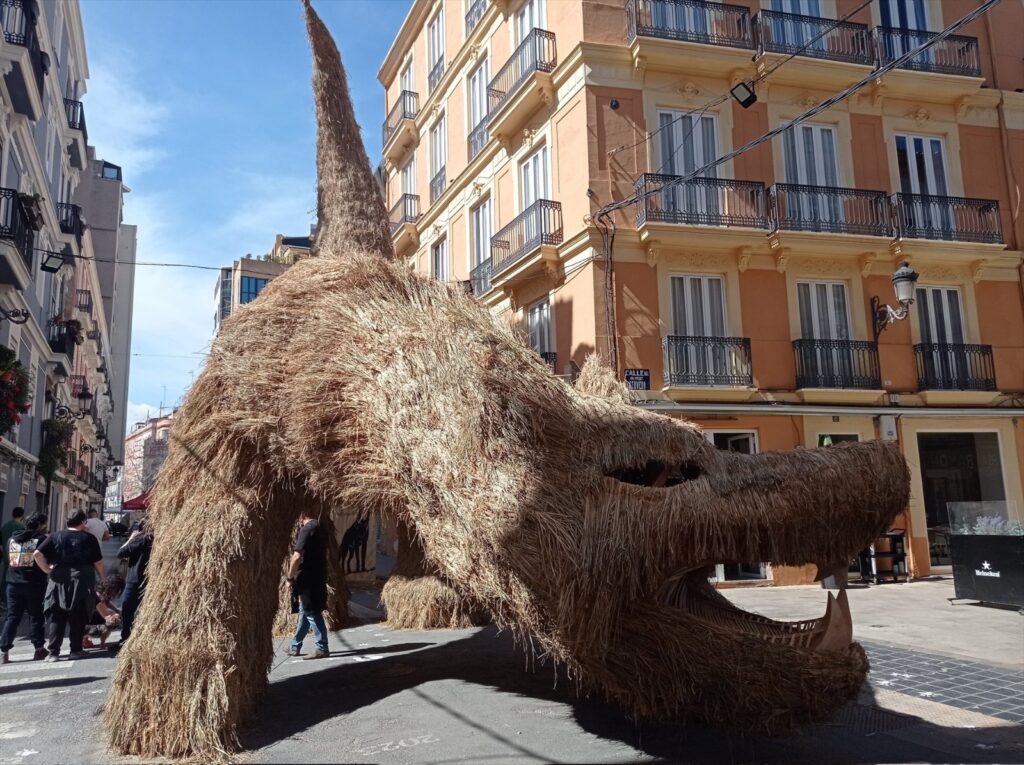
Since 2016, members of the falla Borrull Socors started thinking about how the fallas should evolve in a more sustainable way, using fewer resources. For instance, they began building their monument from cardboards and rice straws as in the south of Valencia city, there is a natural park of the Albufera where there are many rice fields. After the rice harvest, the rice straws are being burnt so they thought of using it for the falla.
What started with being more aware of what kind of material should be used, it expanded to every aspect of the casal faller: from zero waste regarding plastic and food to the use of renewable energy for electricity, to banning the use of disposable items.
First prize for sustainable fallas by the city hall of Valencia
In 2023, the city hall of Valencia launched for its first time a prize for sustainable fallas. Since this first edition until today (2026), the falla Borull Socors has won the first prize under this category. So, what makes them so successful in terms of sustainability?
First, each falla interested in presenting its candidacy for this prize has to submit a full application including measuring its carbon footprint using a tool form the Spanish Ministry for the Ecological Transition and the Demographic Challenge. Although this tool was designed for large companies to measure their carbon impact and it could be better adapted to the structure of a falla, it is a good starting point.
Use of material
As mentioned previously, the prize relies on the calculation of its carbon footprint mainly taking into account the material they use but also its weight. On the 19th March, how many kilos will be burnt?
Some people commented how nice to see the white smoke of a falla made out of more sustainable material compared to the black smoke that come out form polystyrene foam.
Use of renewable energy
In the case of Borull Socors, they belong to a local energy community, producing their electricity from solar energy.
Recycling
Most of the fallas use single use plastics for most of their gatherings (lunches and dinners), plastic bottles for water, beer in glass bottles.
In their case, they started using proper dishes and inverted in buying dish washing machines, use filter for water in glass bottles and install a beer tap.
Raising awarenss and workshops
Besides that, they organized many workshops for the children to raise awareness about how to recycle and adopt eco-friendly gestures.
Falla members´ involvement
All this represents a collective effort reflecting the time and energy what each one of 150 members of this falla puts in making it a reality. They organize shifts to make sure that all these tasks are done and monitored and shared by all.
What´s next?
Launching the sustainable prize is a good starting point to incentivize people to take action, however it is not enough. Among the 380 fallas all over Valencia city, only 16 presented their candidacy to such prizes in 2026.
The next step could be some measures to expand these good practices, support the fallas through practical guides and checklists that can be easily monitored. Provide them with the support of advisors for environmental aspects, implementing more workshops to spread these simple but so important ecofriendly gestures.
Finally, Francisca´s wish would be to put the environment at the heart of the fallas agenda.
And may be not to forget the origin of this nice regional celebration which consisted of getting rid of old wood and leftover materials to celebrate the arrival of spring!
For more information about the Falla of Borrull Socors and its editions since 1921, check here.
 Next Med