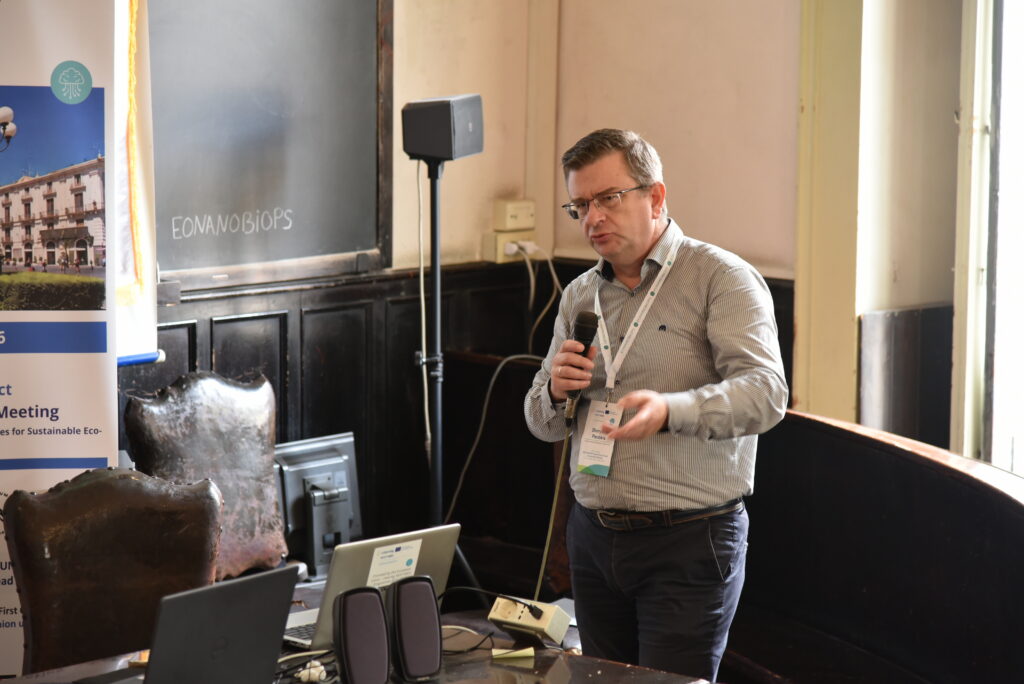
The third day of the First Annual Consortium Meeting of EONANOBIOPS, focused on reviewing consolidated research findings, strengthening collaborative research capacities and planning the project’s second year, as part of its efforts to develop innovative and more sustainable solutions for tomato crop protection.
Consolidated essential oil screening results
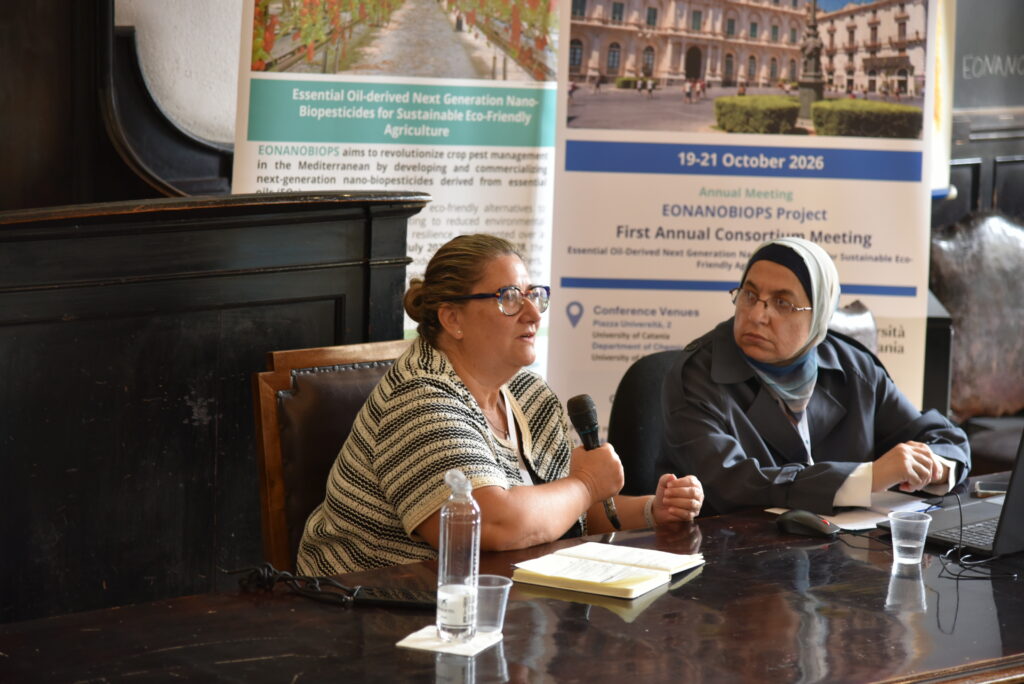
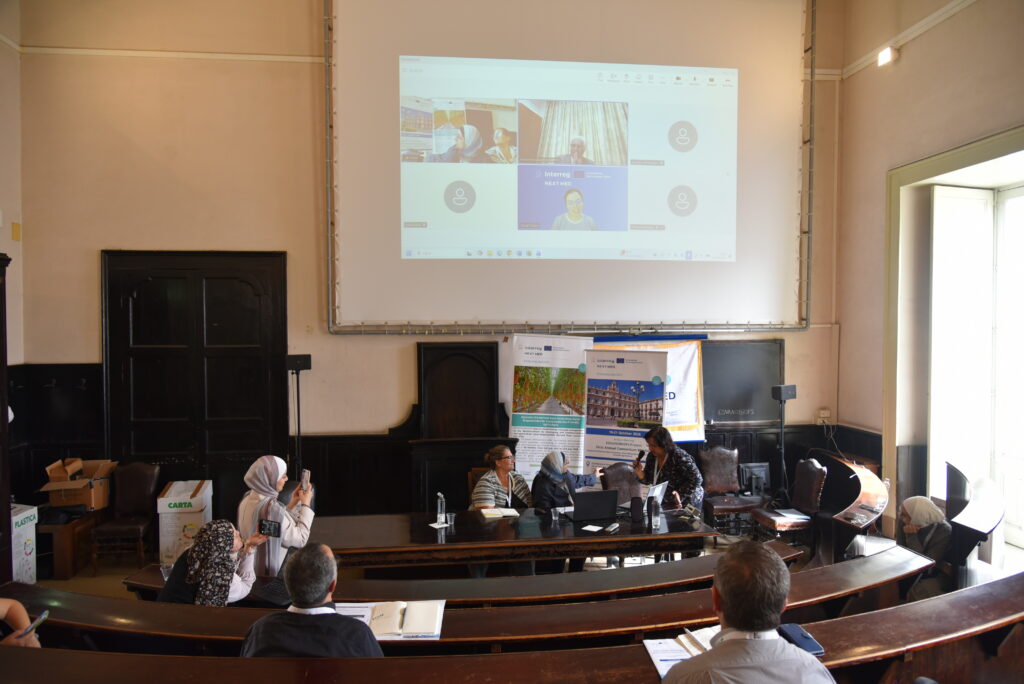
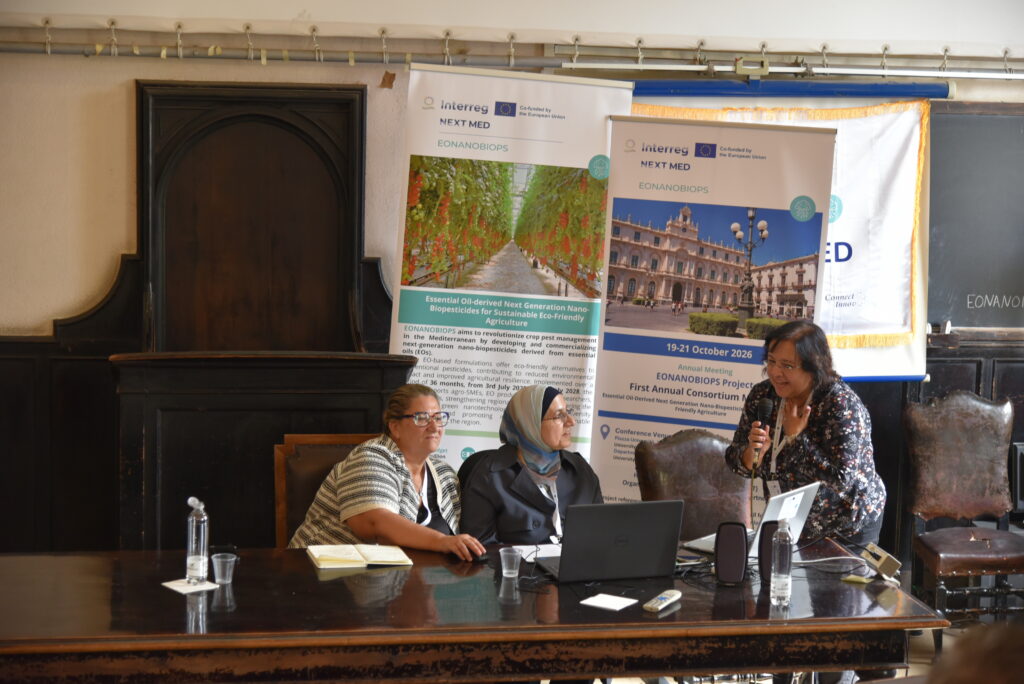
Following a recap of the scientific discussions and practical activities of the first two days, on behalf of Prof. Mohammed Saleem Ali-Shtayeh, EONANOBIOPS Project Coordinator at BERC, Dr. Rana M. Jamous, EONANOBIOPS Project Manager, presented the consolidated essential oil screening results. The presentation brought together findings from 81 essential oil samples and highlighted 28 priority oils for further evaluation, drawing on the complementary expertise and contributions of the partner institutions.
Discussions addressed the remaining biological screening and safety assessments needed to guide candidate selection for nanoformulation development. Particular attention was given to completing mite, non-target and cytotoxicity testing, alongside harmonising experimental methods and reporting procedures to strengthen the comparability of results across partner laboratories.
Harmonising methodologies through a shared Technical Manual
A key follow-up priority is updating the EONANOBIOPS Project Technical Manual to incorporate partners’ methods, protocols and proposed revisions arising from their research activities. This collaborative process aims to ensure that procedures, materials, controls and data-recording practices are clearly documented and consistently applied across the consortium.
The updated manual will provide a common methodological reference for essential oil screening, nanoformulation characterisation and efficacy and safety assessments, supporting comparable results and coordinated research across partner laboratories.
Capacity building through hands-on joint research
The programme continued with a presentation on capacity building through Hands-on Joint Research (HOJR) and Complementary Research Partnerships (CRP). Combining exchanges of essential oils and formulations with collaborative laboratory missions, the proposed programme enables researchers to work alongside partner teams, exchange practical skills and generate shared experimental data. These activities connect biological screening with nanoformulation preparation, characterisation and validation, supporting the transfer and application of methods across the consortium.
As a concrete follow-up, partner-specific activity tables are being used to coordinate Complementary Research Partnerships through the exchange of essential oils and nanoformulations, with each receiving partner evaluating the samples according to its scientific expertise and laboratory capabilities. Alongside hands-on joint research visits, these exchanges bring together complementary contributions to biological screening, formulation development and validation. The tables also clarify partner responsibilities and support a joint timetable for sample exchanges and research visits, with proposed dates subject to agreement between the partners involved.
A complementary series of introductory scientific webinars was also proposed, with partners invited to contribute topics within their areas of expertise. The initiative aims to build a shared scientific foundation, particularly for young researchers and postgraduate students, and extend knowledge exchange across the partnership.
Year 2 action planning
The subsequent session focused on the Year 2 action plan, outlining partner responsibilities, implementation timelines and dependencies between the work packages. Partners discussed priorities for completing essential oil assessments, exchanging selected oils and formulations, organising joint research activities and advancing formulation efficacy and stability testing.
The closing discussions reinforced the importance of translating these priorities into coordinated activities, clear responsibilities and timely follow-up, supported by the updated Gantt chart and regular Steering and Scientific Committee meetings.
Risk management and Programme guidance
The review of risks and bottlenecks provided an opportunity to discuss practical challenges affecting implementation and the measures needed to address them. Topics included supply and procurement delays, expenditure progress, formulation performance, scale-up feasibility and regulatory requirements, with an emphasis on clear responsibilities and timely follow-up.
Dr. Charaf M’RABET, Project Management and Monitoring Expert, representing the Interreg NEXT MED Programme’s Joint Secretariat, joined the session dedicated to Year 2 action planning and risk management. Dr. M’RABET welcomed the relevance and value of the topics presented, expressed here full readiness to support the partnership, and responded to partners’ questions, providing guidance in line with project and Programme requirements.
Scale-up and commercialisation
The afternoon session addressed nano-biopesticide scale-up and commercialisation under WP5, with contributions from Connect’Innov, chaired by ANNU and co-chaired by BERC. The presentation reviewed preparatory work on partnership and licensing, market research and pilot infrastructure planning, while outlining priorities related to pilot-scale production, quality control, regulatory pathways, intellectual property, confidentiality and end-user needs. Discussions also highlighted the formulation and production data required to support life-cycle assessment and future business development.
The meeting concluded with closing remarks from BERC and agreement on follow-up actions for the coming year. These included accelerating procurement and financial implementation, strengthening communication and dissemination, updating the Technical Manual, and finalising the capacity-building programme and research exchanges.
The three-day programme provided an opportunity to review progress, exchange scientific and practical expertise, and strengthen coordination between essential oil screening, nanoformulation development and preparation for future application.
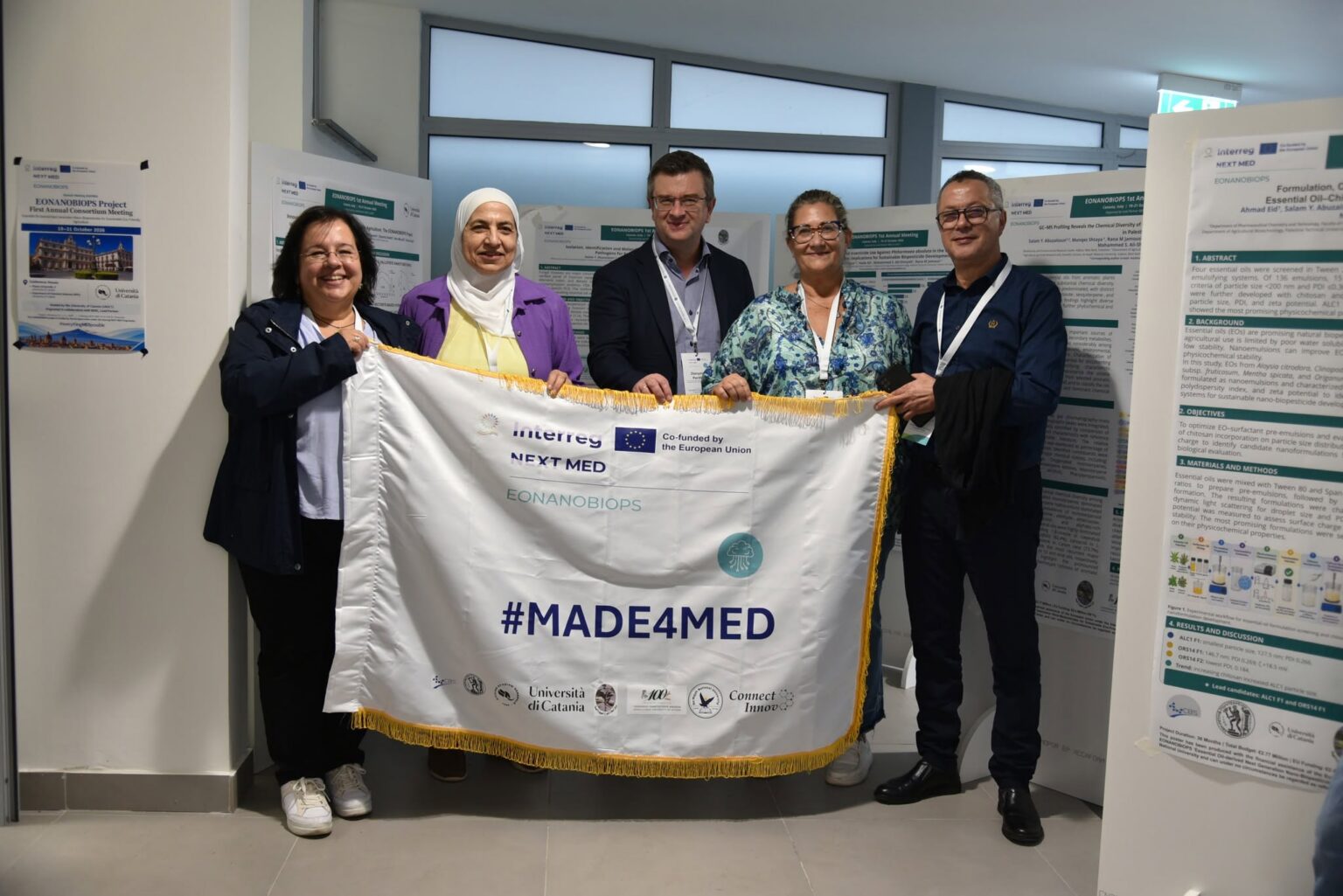
We thank the University of Catania, Prof. Serena Riela and her team at the Department of Chemical Sciences for their warm welcome, generous hospitality and excellent organisation. We also thank all partners and participants for their valuable contributions and collaboration.
These discussions reflect the importance of coordinated planning and cooperation among Mediterranean research institutions in translating scientific findings into innovative solutions for more sustainable agriculture.
 Next Med