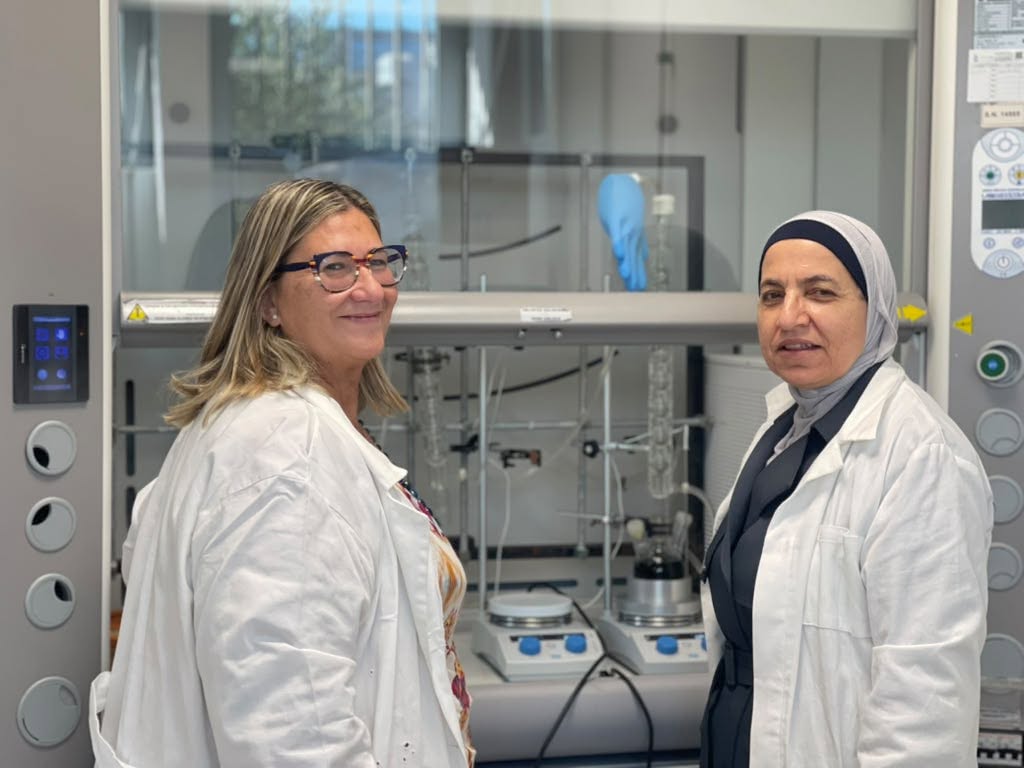
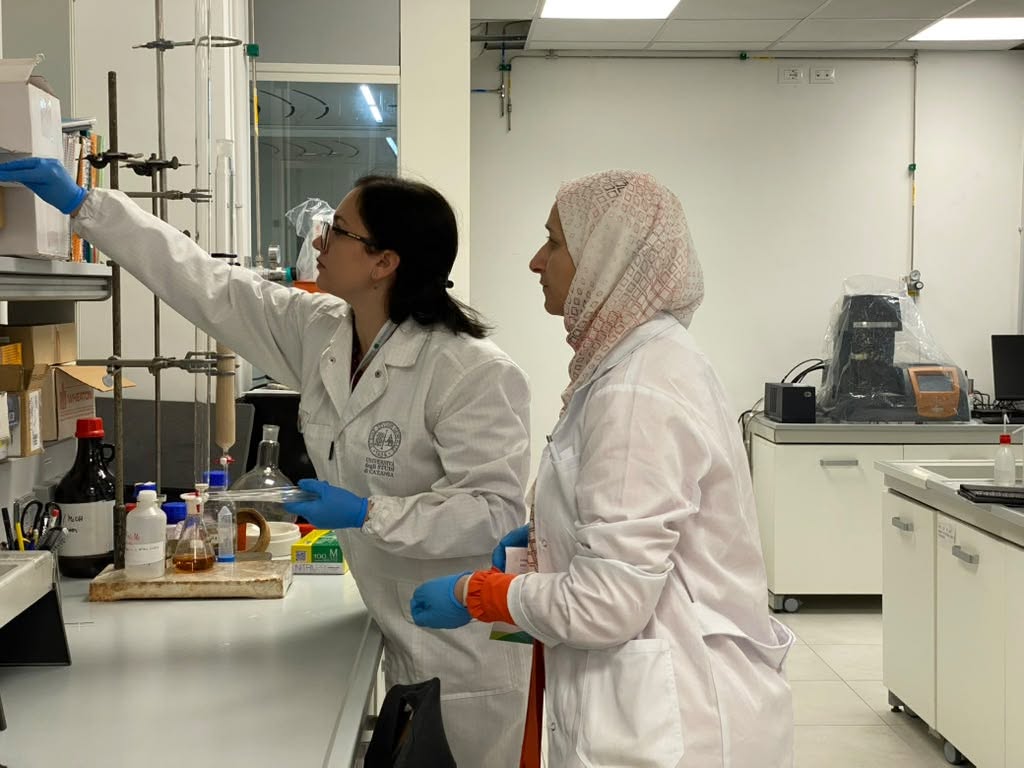
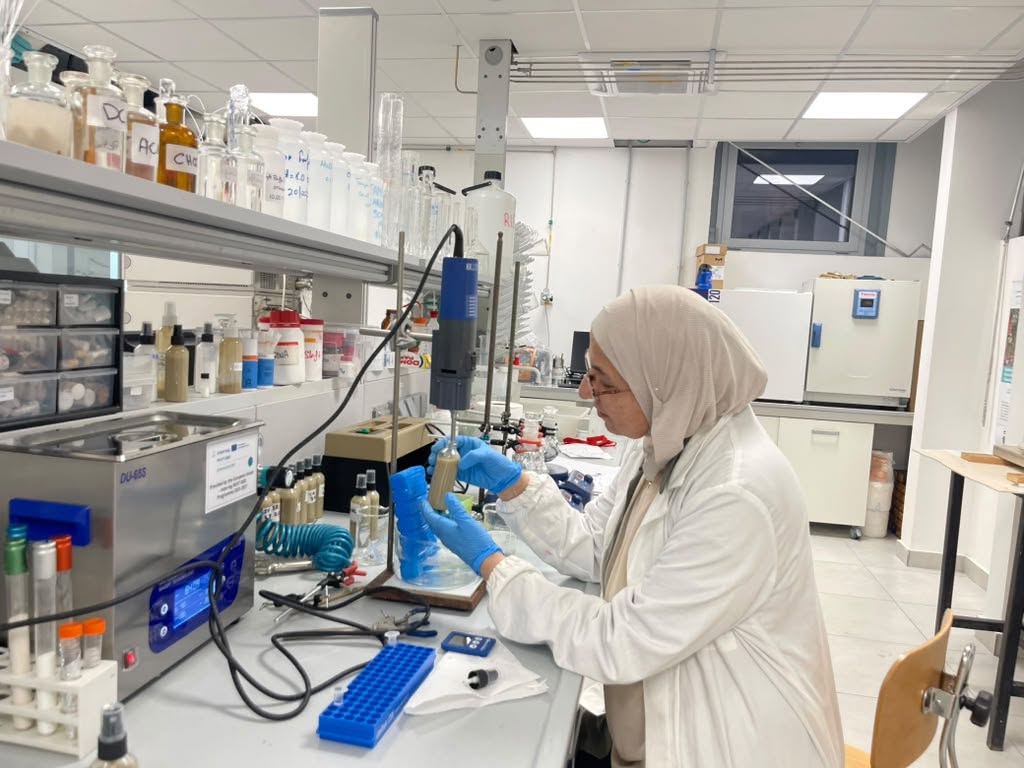
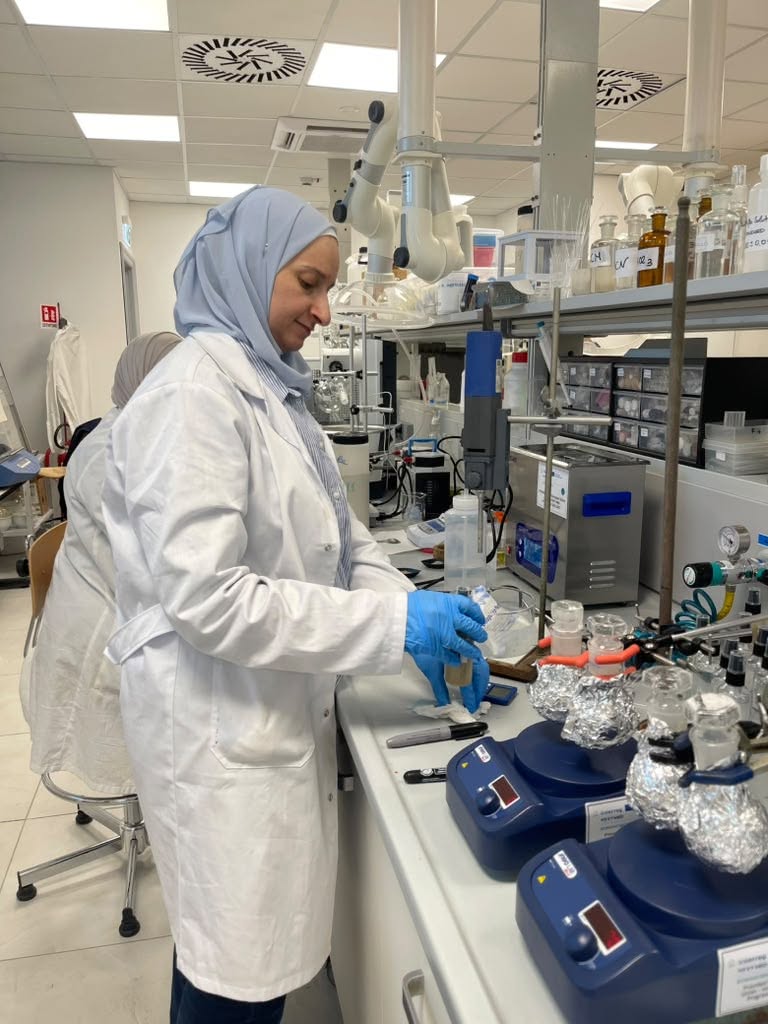
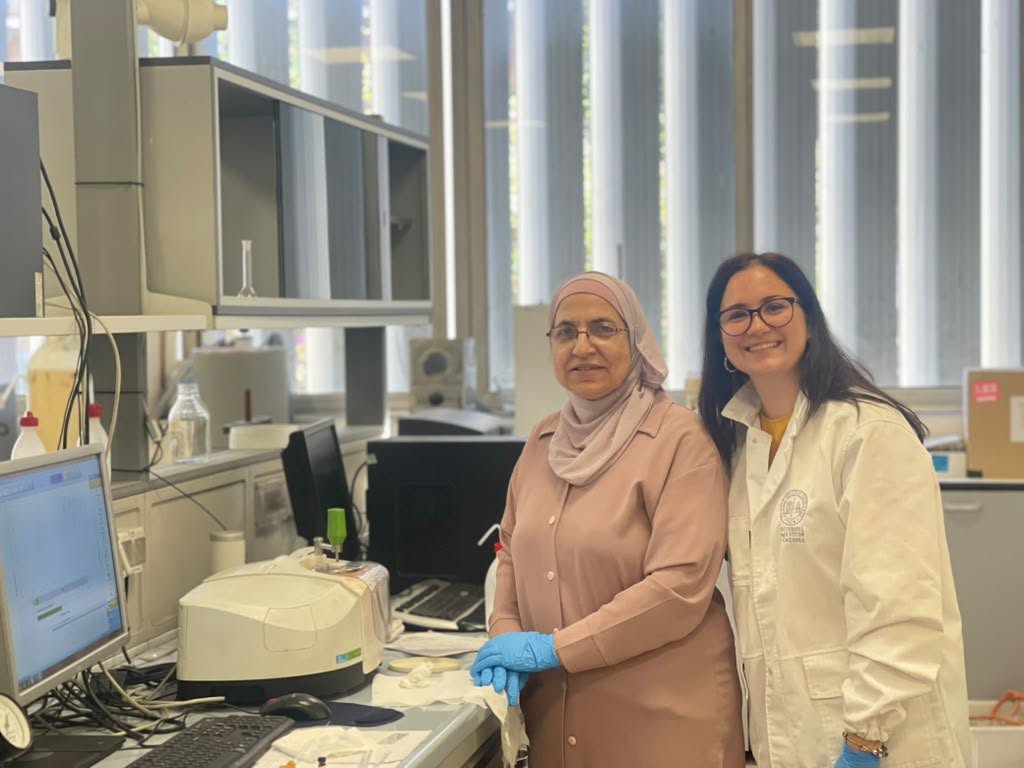
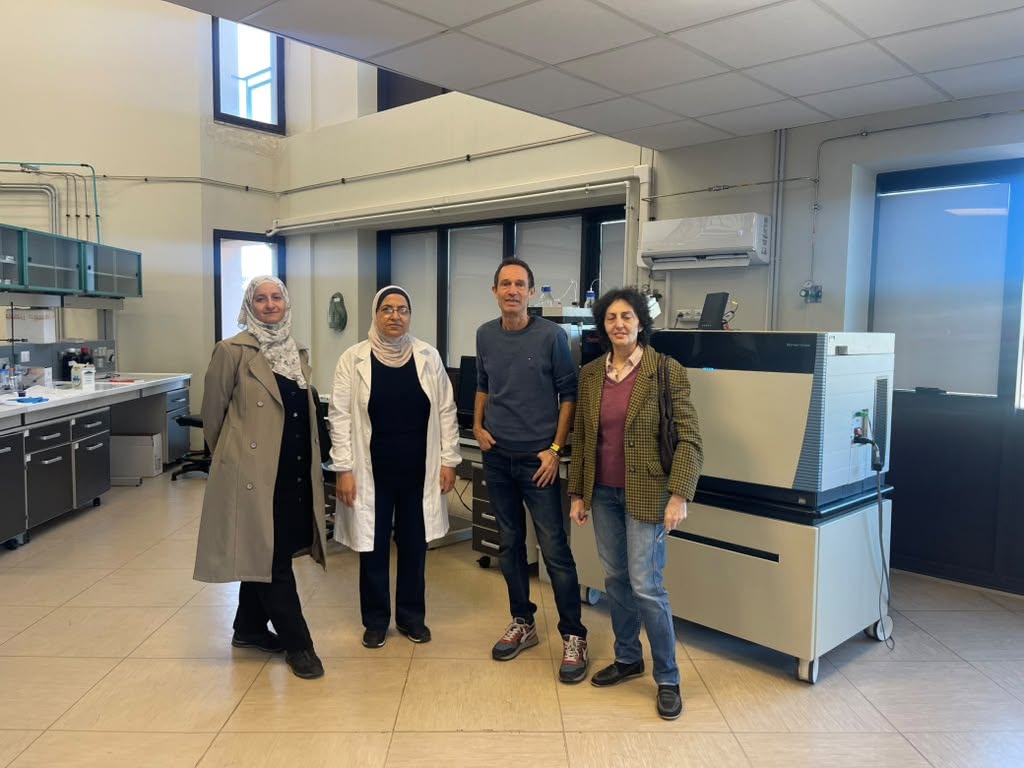
From 22 October to 5 November 2026, two researchers from the Biodiversity and Environmental Research Center (BERC), the project’s Lead Partner, joined colleagues at the Department of Chemical Sciences, University of Catania (UNICT), Italy, for hands-on joint research under the project’s Capacity Building Programme.
The BERC team, Dr. Rana Jamous, Project Manager, and Salam Abu-Zaitoun, PhD student and researcher at the Center, worked side by side with Prof. Serena Riela and her research team, sharing the laboratory bench to develop essential oil-based nanoformulations and characterise their properties together.
Over two weeks, the joint team worked with essential oils extracted from native Palestinian plants to prepare clay-based nanoformulations, including oil-loaded hectorite hydrogels, oil-loaded halloysite nanotubes, and hybrid clay-based systems. These formulations are a step towards developing nano-biopesticides to control fungal and bacterial pathogens and insect and mite pests affecting greenhouse tomatoes, helping reduce reliance on synthetic chemical pesticides.
Together, the researchers carried out the physicochemical characterisation of the formulations using FTIR and NMR spectroscopy, dynamic light scattering (DLS) for particle size, zeta potential measurements, and thermogravimetric analysis (TGA). Preliminary results showed that the halloysite nanotubes retained their structure after essential oil loading, with a loading percentage of approximately 15% in several samples.
The team also prepared protein samples for proteomic analysis using high-resolution LC–MS/MS. This analysis will help reveal how the plants respond to the nanoformulations at the molecular level, including effects on defence pathways and any signs of stress or phytotoxicity.
Work will continue at both sites in the next phase. The teams will run biological assays to test the formulations against bacteria, fungi, and insect pests, assess cytotoxicity and phytotoxicity, and conduct further physicochemical characterisation. Results will be shared through a common data platform as the teams work towards joint scientific outputs.
Beyond the results, this visit showed how EONANOBIOPS shortens the distance between partners: researchers from Palestine and Italy worked as one team, exchanged knowledge and skills face to face, and built working relationships that will carry the collaboration forward. By bringing together partners from Palestine, Italy, Greece, and Tunisia, the project turns geographic distance into shared research, combining complementary expertise to develop more sustainable crop protection solutions for the Mediterranean region.
As Lead Partner, BERC oversees the overall coordination and management of EONANOBIOPS under the leadership of Project Coordinator Prof. Mohammed Saleem Shtayeh, ensuring that activities across the partnership remain aligned with the project’s objectives and timeline. BERC also coordinates the project’s Capacity Building Programme, which is implemented through two integrated mechanisms: hands-on joint research (HOJR), such as the present visit, and complementary research participation (CRP). Together, these mechanisms combine the partners’ expertise and strengthen knowledge transfer across the consortium.
Our sincere thanks to Prof. Serena Riela and her research team at the Department of Chemical Sciences, University of Catania, for their scientific supervision, warm hospitality, and close collaboration.
 Next Med