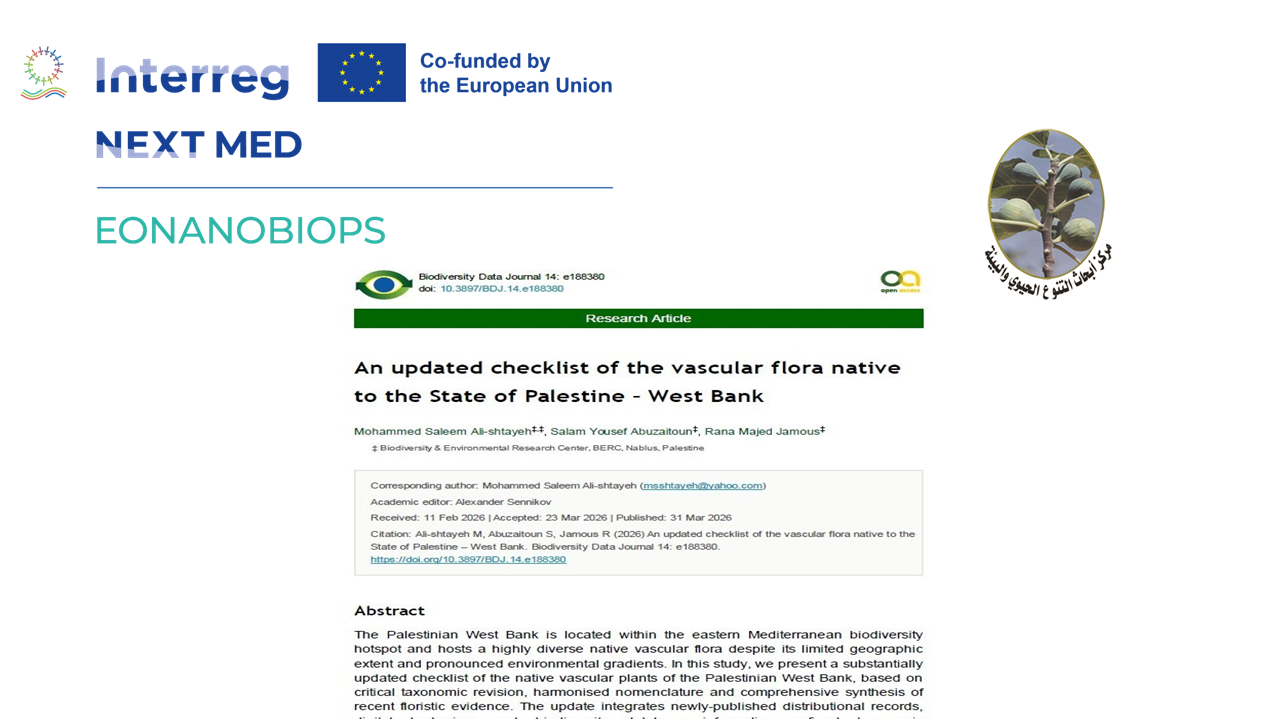
The Biodiversity & Environmental Research Center (BERC), Lead Partner of the EU-funded EONANOBIOPS project, contributed to a study published in the Biodiversity Data Journal, highlighting the richness of Palestine’s flora — including aromatic plant species with strong potential for agricultural innovation. The research team at BERC played a key role in this scientific contribution.
While these plants are an essential part of Palestine’s natural heritage, their value goes far beyond conservation. Researchers are exploring how their natural compounds, particularly essential oils, can be used to develop eco-friendly alternatives to chemical pesticides.
This approach responds to a growing need to reduce the environmental and health risks linked to conventional pesticides while maintaining effective crop protection.
Through the EONANOBIOPS project, these natural resources are being transformed into next-generation nano-biopesticides — innovative solutions designed to:
- Reduce reliance on harmful chemical pesticides
- Protect biodiversity and ecosystems
- Support safer and more sustainable farming practices
By combining traditional plant knowledge with advanced technologies, the EONANOBIOPS project helps farmers adopt environmentally friendly pest control solutions without compromising crop productivity. This work contributes to the broader goals of the Interreg NEXT MED Programme by promoting innovation and sustainability across the Mediterranean, supporting a transition toward greener agriculture that benefits farmers, communities, and the environment alike.
Explore the full scientific publication here: click here
 Next Med