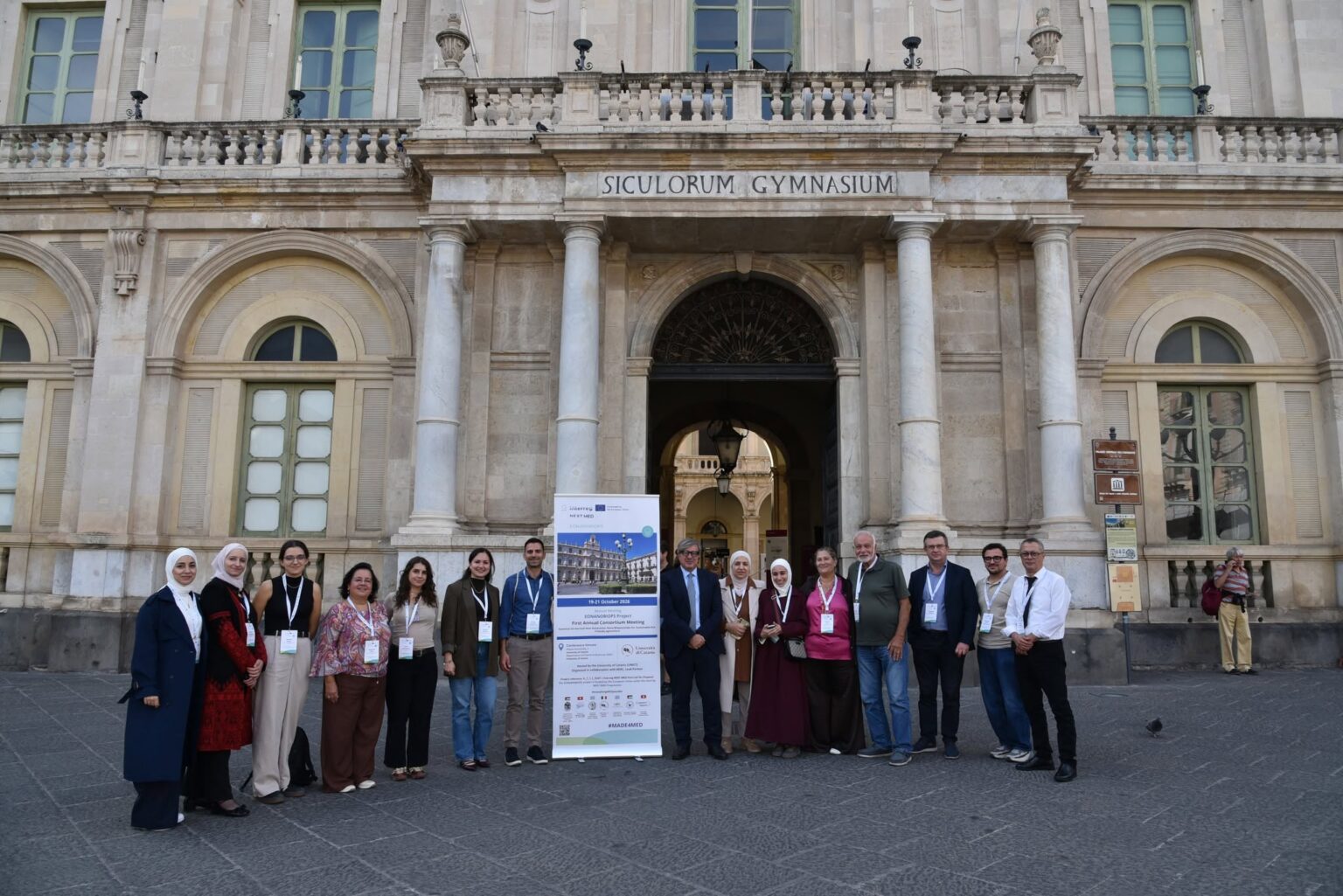
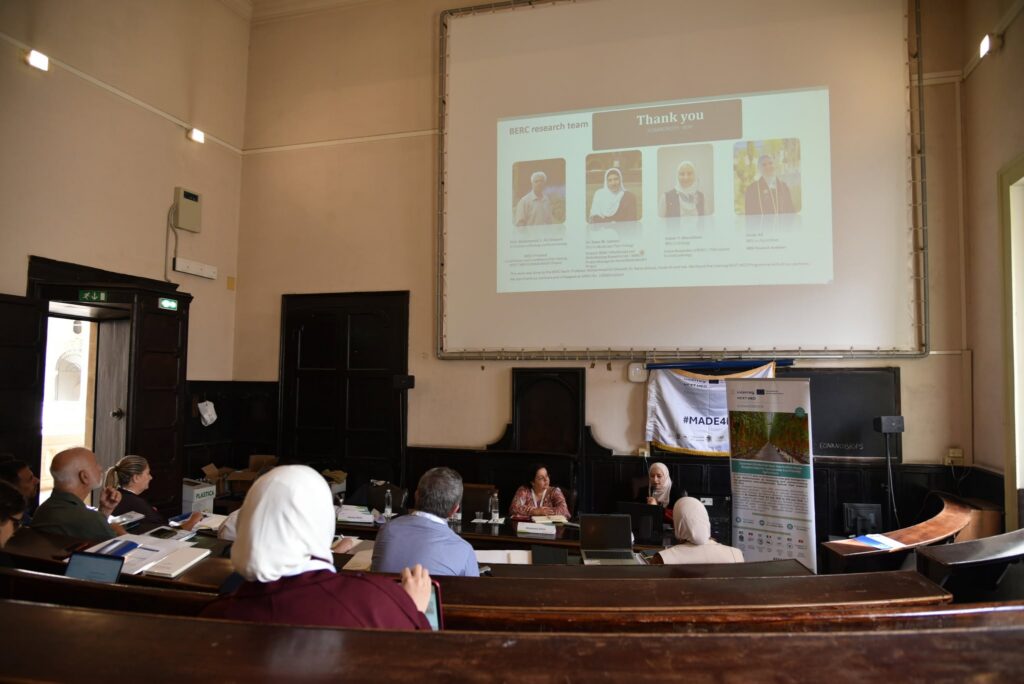
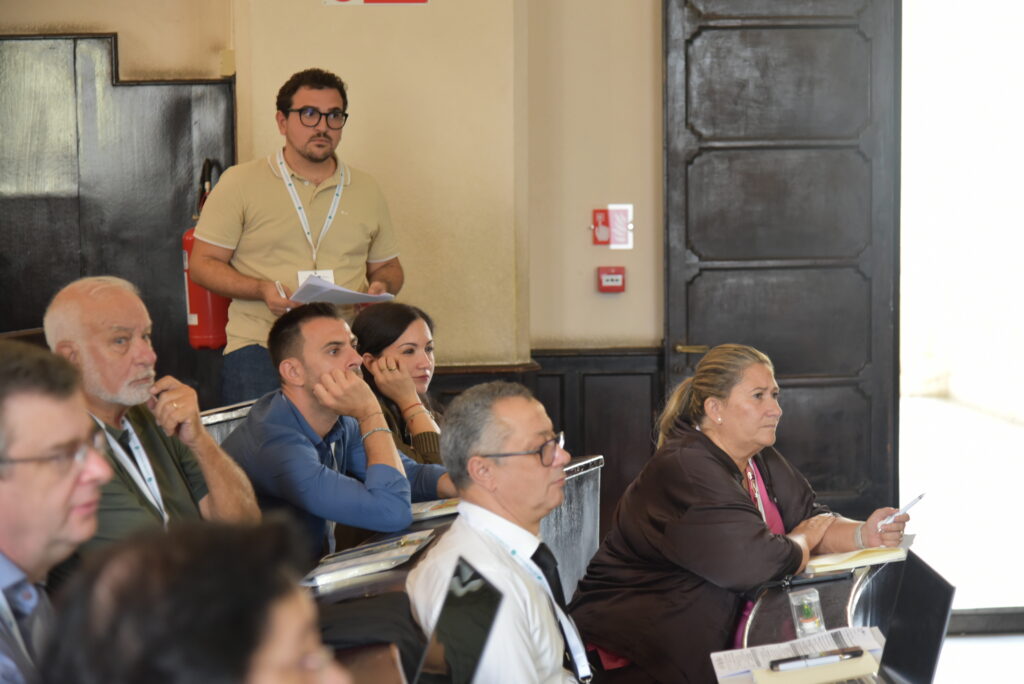
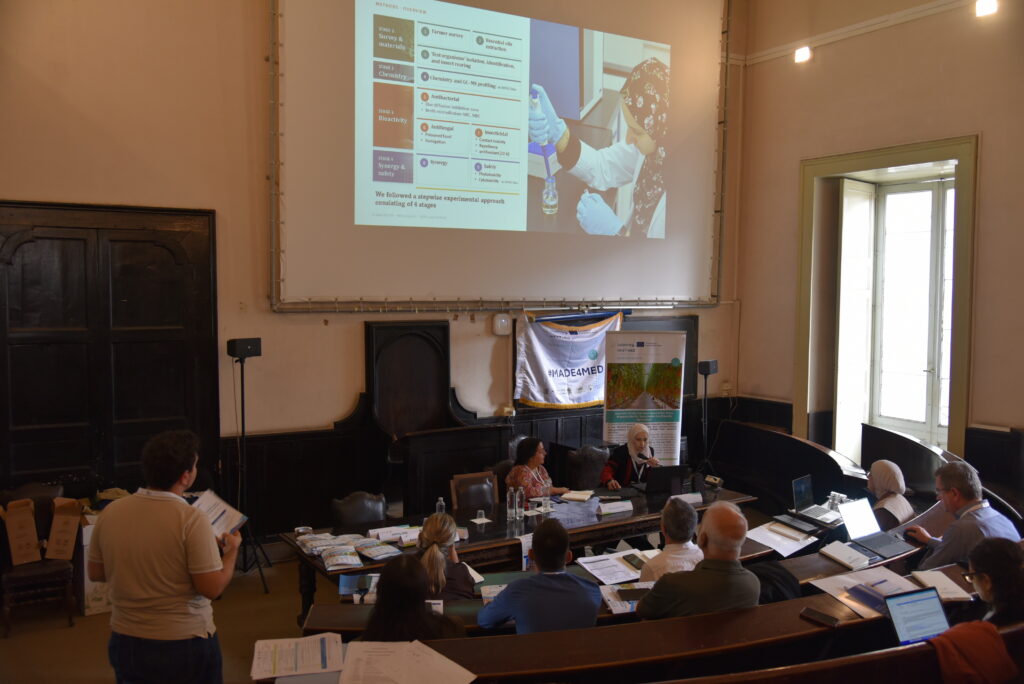
The first day of the EONANOBIOPS Annual Consortium Meeting brought together project partners to review first-year achievements, share scientific findings, and discuss priorities for developing innovative essential oil-based nano-biopesticides for sustainable tomato crop protection.
Opening and welcome
The meeting opened with welcoming remarks by Prof. Enrico Forti, Rector of the University of Catania (UNICT). Speaking on behalf of the host university, he warmly welcomed EONANOBIOPS project partners to Catania for three days of scientific exchange, collaboration, and joint planning.
Joining remotely from Palestine, Prof. Mohammed Saleem Ali-Shtayeh, EONANOBIOPS Project Coordinator, also welcomed partners on behalf of the Biodiversity and Environmental Research Center (BERC), the project’s Lead Partner. He expressed his gratitude to the University of Catania, particularly Prof. Serena Riela and her team, for hosting and co-organising the meeting and for their warm hospitality. He also highlighted the meeting’s role in turning first-year research findings into clear priorities for Year 2, stressing the importance of harmonising methods across partner laboratories and agreeing on coordinated next steps.
Together, their opening remarks highlighted the importance of Mediterranean scientific cooperation in advancing sustainable agricultural solutions.
Project implementation, finance and communication
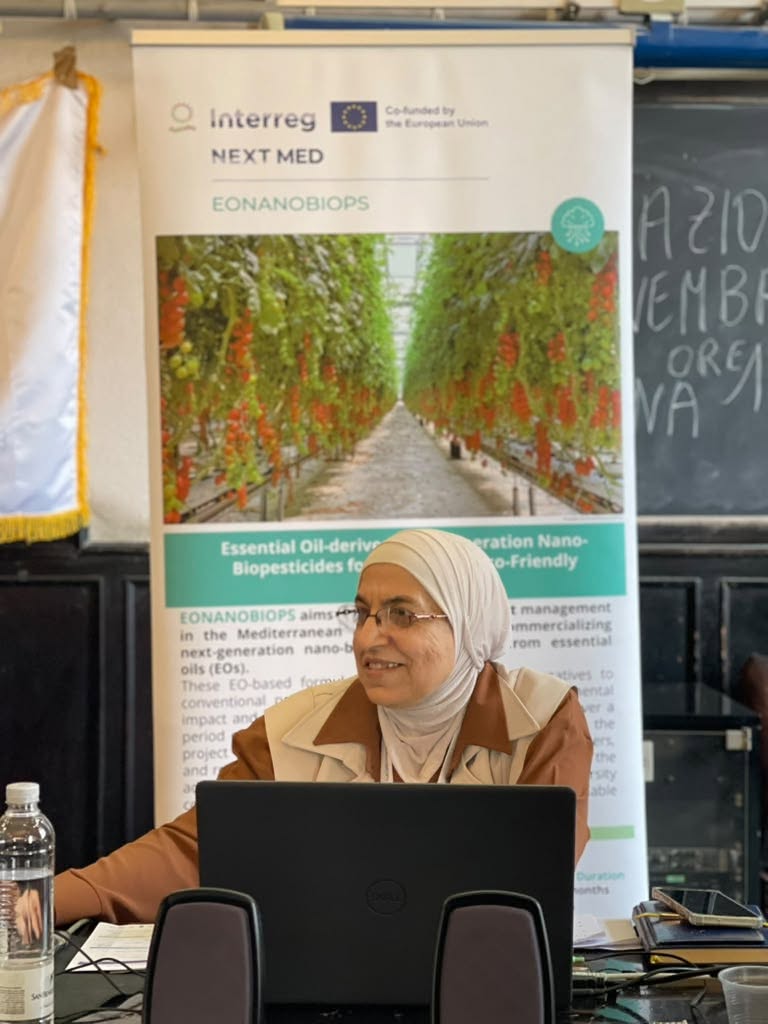
On behalf of Prof. Shtayeh, EONANOBIOPS Project Coordinator, Dr. Rana M. Jamous, EONANOBIOPS Project Manager at BERC, presented EONANOBIOPS financial implementation during the first two semesters, covering partner expenditure, budget utilisation and progress against the planned spending schedule. Rihab Habbab Aburaed, EONANOBIOPS Communication Manager, presented the project’s first-year communication and dissemination achievements, highlighting activities undertaken to enhance project visibility, engage stakeholders, and promote research outcomes, alongside communication priorities for the second year.
WP3: Essential oils and biological screening
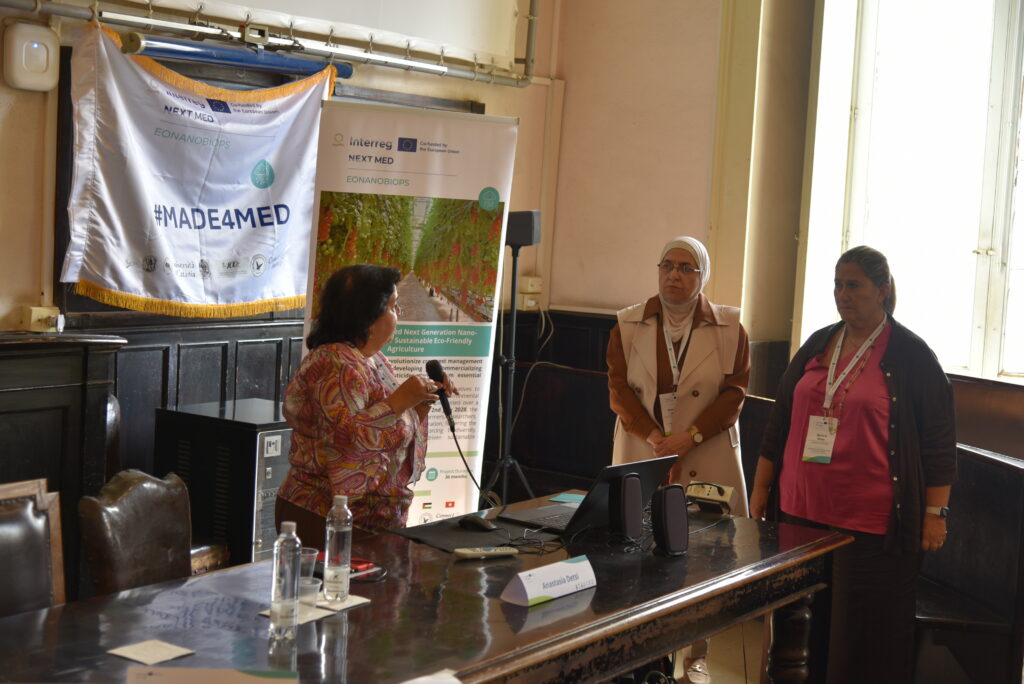
The scientific programme continued with Work Package 3 (WP3), chaired by Prof. Anastasia Detsi (NTUA) and co-chaired by Prof. Serena Riela (UNICT).
Salam Abu Zaitoun (BERC) introduced the project’s scientific and technical framework and presented BERC’s key achievements under WP3, covering field surveys, GC–MS chemical characterisation of essential oils, and biological screening against major tomato pests and pathogens. The findings highlighted antifungal, antibacterial, insecticidal, and repellent activities, alongside essential oil combinations and preliminary safety assessments, providing a scientific basis for selecting promising oils for nanoformulation development.
Prof. Slim Tounsi (CBS) presented essential oil screening for antifungal and antibacterial activity, chemical profiling, preliminary safety assessments, and studies of essential oil combinations, supporting the identification of promising candidates for nano-biopesticide development.
Prof. Anastasia Detsi (NTUA) presented essential oil extraction using Clevenger hydrodistillation and GC–MS chemical characterisation, highlighting the main constituents of selected oils, including basil, bergamot, marjoram and laurel, to support further selection and formulation development.
Dr. Claudia Sciacca and Dr. Nunzio Cardullo, from Prof. Serena Riela’s research team at UNICT, presented their work on the extraction and chemical characterisation of orange, lemon, oregano and rosemary essential oils, using GC–MS, FT-IR and NMR to identify and characterise their main constituents.
Prof. Dionysios Perdikis (AUA) presented insecticidal, acaricidal, and repellent activities against major tomato pests, including Tuta absoluta, Tetranychus urticae, and Aculops lycopersici, alongside evaluations of essential oil mixtures and beneficial natural enemies.
Safaa Abu Zeina, from Prof. Munqez Shtaya’s research team at (ANNU), presented the biological screening of selected Palestinian aromatic and medicinal plant oils, highlighting antimicrobial activity, insecticidal and behavioural effects against Tuta absoluta, and preliminary phytotoxicity and cytotoxicity assessments. The presentation highlighted Clinopodium serpyllifolium and Salvia fruticosa as promising oils for further investigation. investigation.
WP4: Innovative nanoformulations
The Work Package 4 (WP4) session, chaired by Prof. Slim Tounsi (CBS) and co-chaired by Prof. Dionysios Perdikis (AUA),
Prof. Anastasia Detsi (NTUA) presented essential oil encapsulation in β-cyclodextrin inclusion complexes, chitosan nanoparticles and yeast cells. The presentation highlighted preparation methods, encapsulation efficiency, particle size and zeta potential, alongside structural characterisation and release studies for selected formulations.
Dr. Giuseppe Cinà, from Prof. Serena Riela’s research team at UNICT, highlighted advances in halloysite nanotubes, hectorite/Laponite systems, and solid lipid nanoparticles, focusing on formulation development, characterisation, and stability.
Scientific exchange and next steps
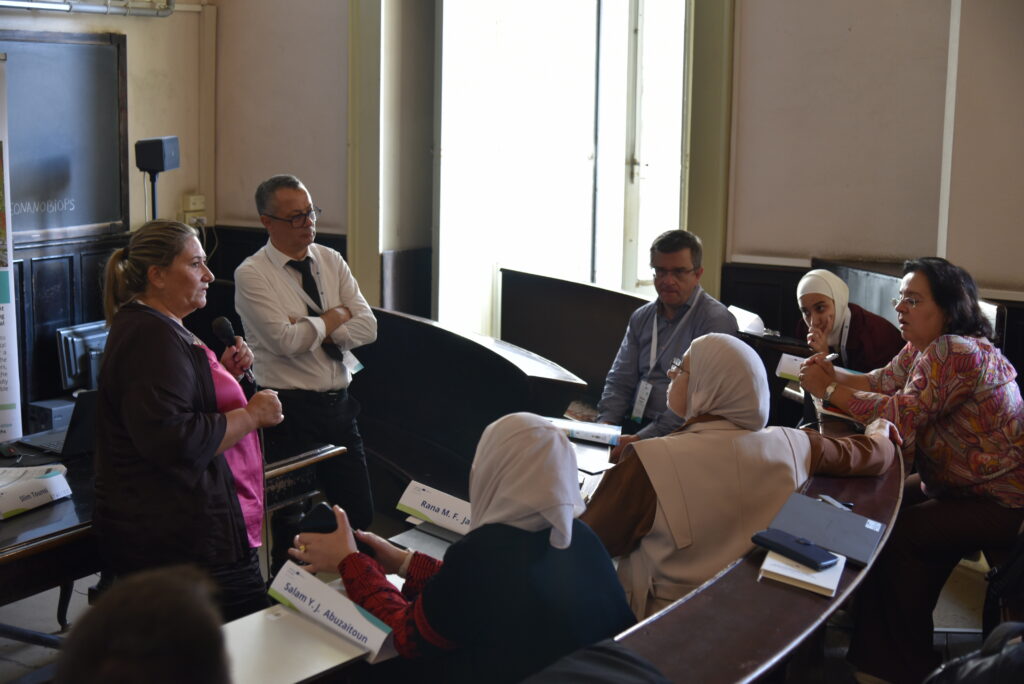
The discussions reinforced the importance of connecting chemical characterisation, biological efficacy, safety evaluation, and nanoformulation technologies. Partners identified shared priorities for translating promising laboratory findings into practical and environmentally responsible crop protection solutions.
The day’s presentations also highlighted BERC’s dual contribution as the project’s Lead Partner and a key scientific contributor, combining project coordination and management with research supporting the development of innovative nano-biopesticides.
Advancing Mediterranean scientific cooperation and innovation for more sustainable agriculture.
 Next Med