How can education and training keep pace with the evolving needs of the cultural heritage sector?
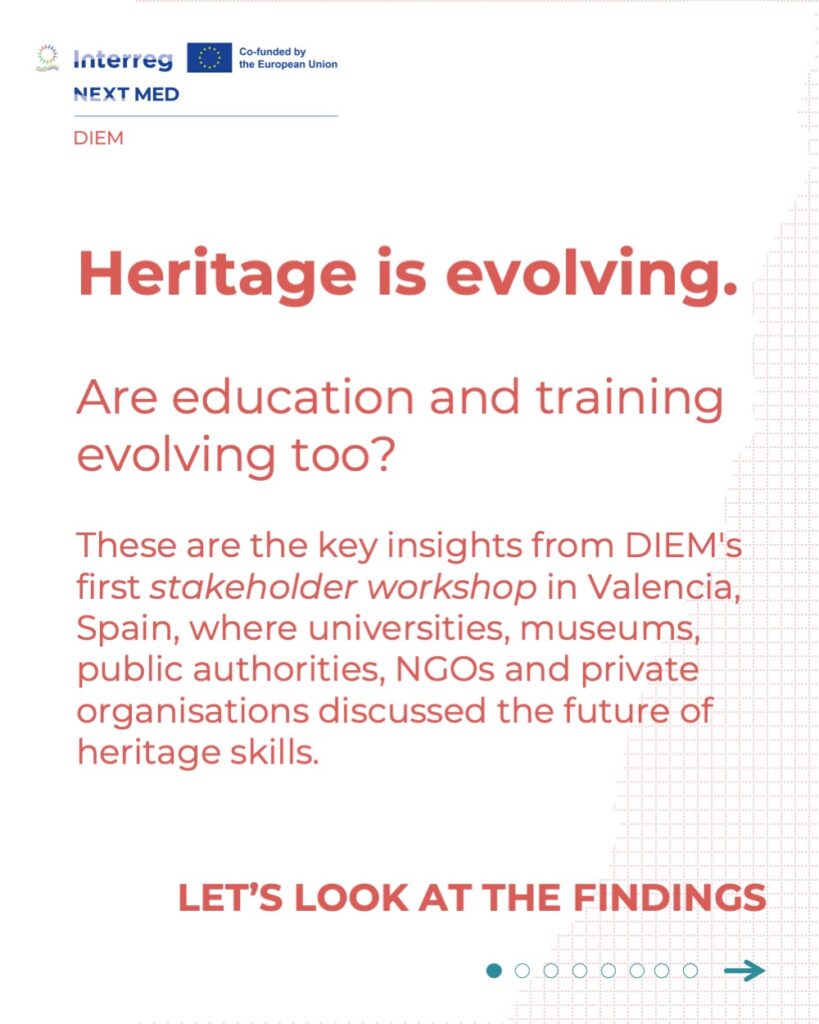
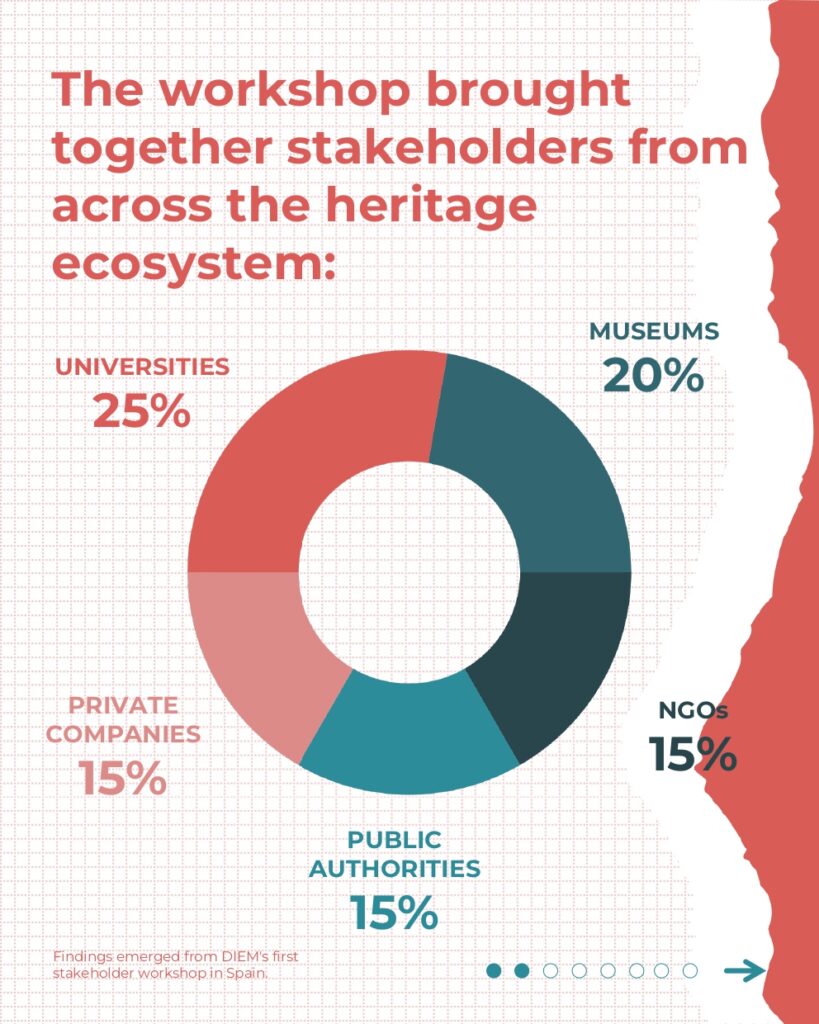
This was the central question discussed during DIEM’s first stakeholder workshop in Valencia, Spain, which brought together representatives from universities, museums, public authorities, NGOs and private organisations. The workshop represented an important milestone in the project, providing valuable insights into the skills, competences and learning pathways needed to strengthen the cultural heritage workforce across the Mediterranean.
By fostering dialogue among different actors, the event offered an opportunity to identify current challenges and explore how education can better respond to the realities of today’s heritage sector.
A sector that is constantly evolving
One of the main findings emerging from the workshop is that professionals entering the cultural heritage sector are generally considered to have a solid educational background. However, participants also agreed that the sector is changing rapidly and requires new competencies that go beyond traditional academic education.
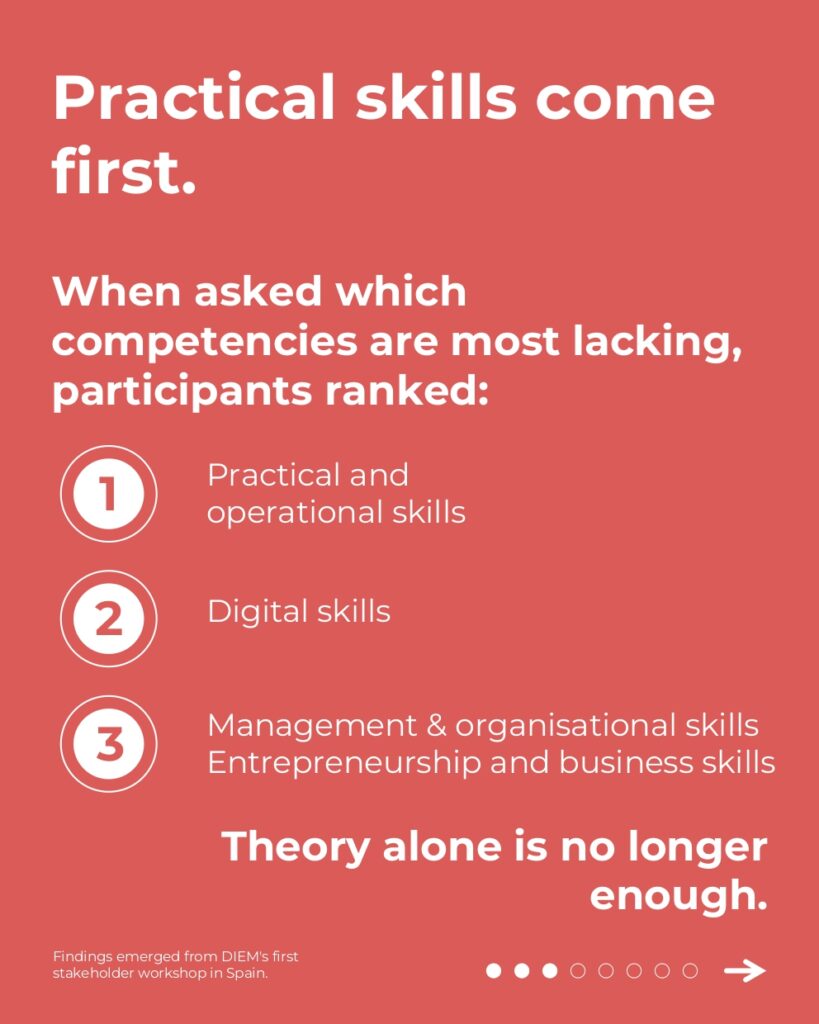
Among the skills most frequently identified as priorities were practical and operational abilities, followed by digital competencies, management and organisational skills, and entrepreneurship. These results highlight the growing need for professionals who can combine technical expertise with the ability to manage projects, collaborate across disciplines and engage with local communities.
Beyond technical knowledge
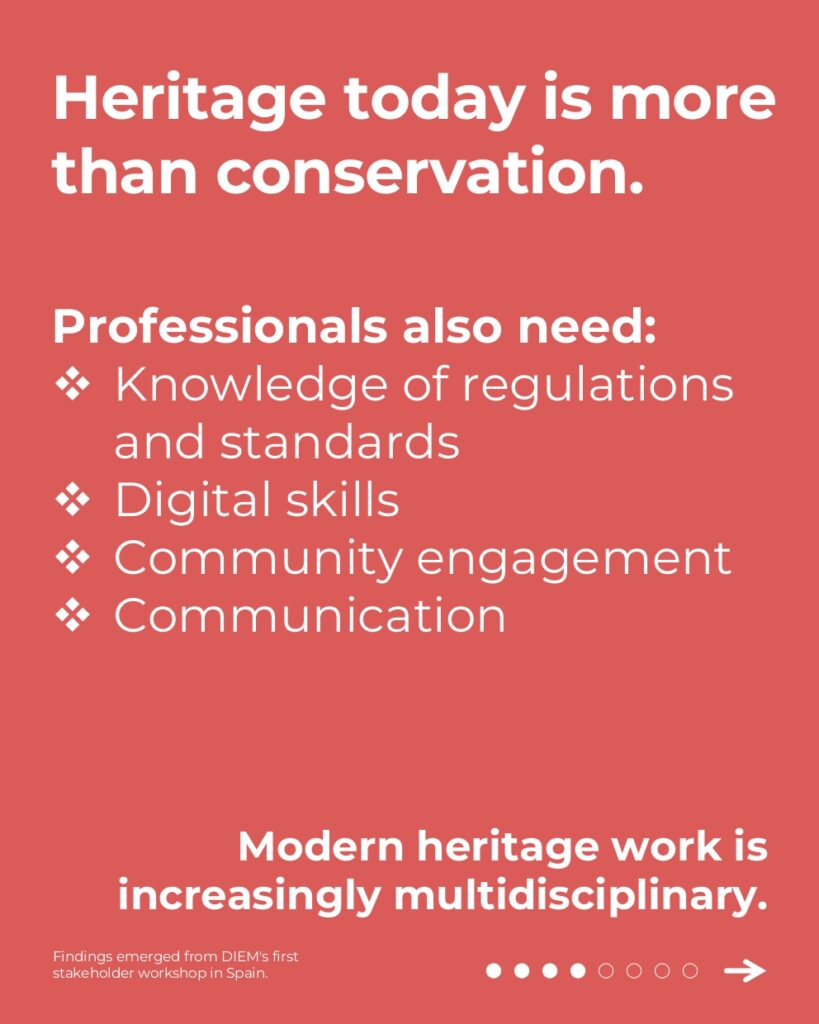
The discussion also showed that working in cultural heritage today involves much more than conservation alone. Stakeholders emphasised the importance of developing competences in areas such as digital technologies, communication, community engagement and knowledge of regulations and standards. As heritage management becomes increasingly multidisciplinary, education and training need to reflect this complexity by offering more practical, flexible and collaborative learning experiences.
Flexible learning for a changing sector
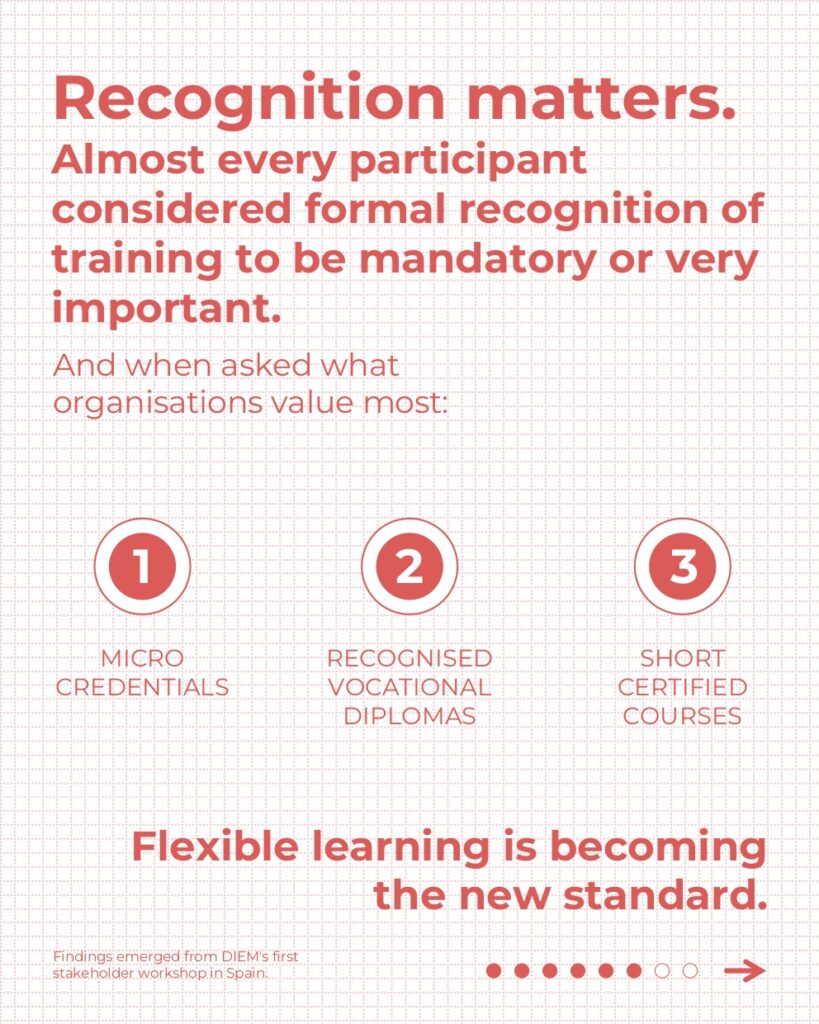
Another key topic addressed during the workshop was the recognition of learning.
Participants expressed strong interest in micro-credentials, recognised vocational qualifications and certified short courses as valuable ways to support continuous professional development. Rather than replacing traditional university education, these learning formats can complement existing qualifications by allowing professionals to acquire specific competences throughout their careers. This reflects a broader shift towards lifelong learning, where continuous upskilling is becoming essential to respond to new technologies, changing labour market needs and emerging professional roles.
Making training more accessible and inclusive
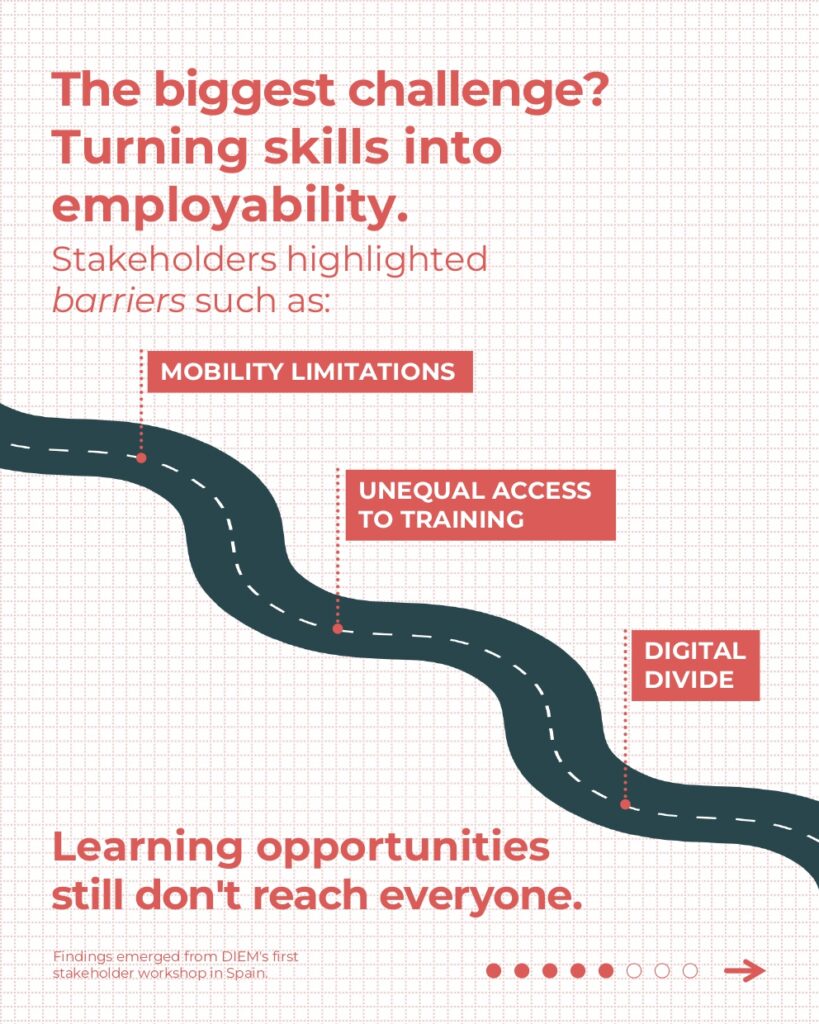
Accessibility also emerged as a crucial issue. Participants highlighted several barriers that still prevent people from accessing quality learning opportunities, including geographical constraints, mobility limitations, the digital divide and unequal access to training resources.
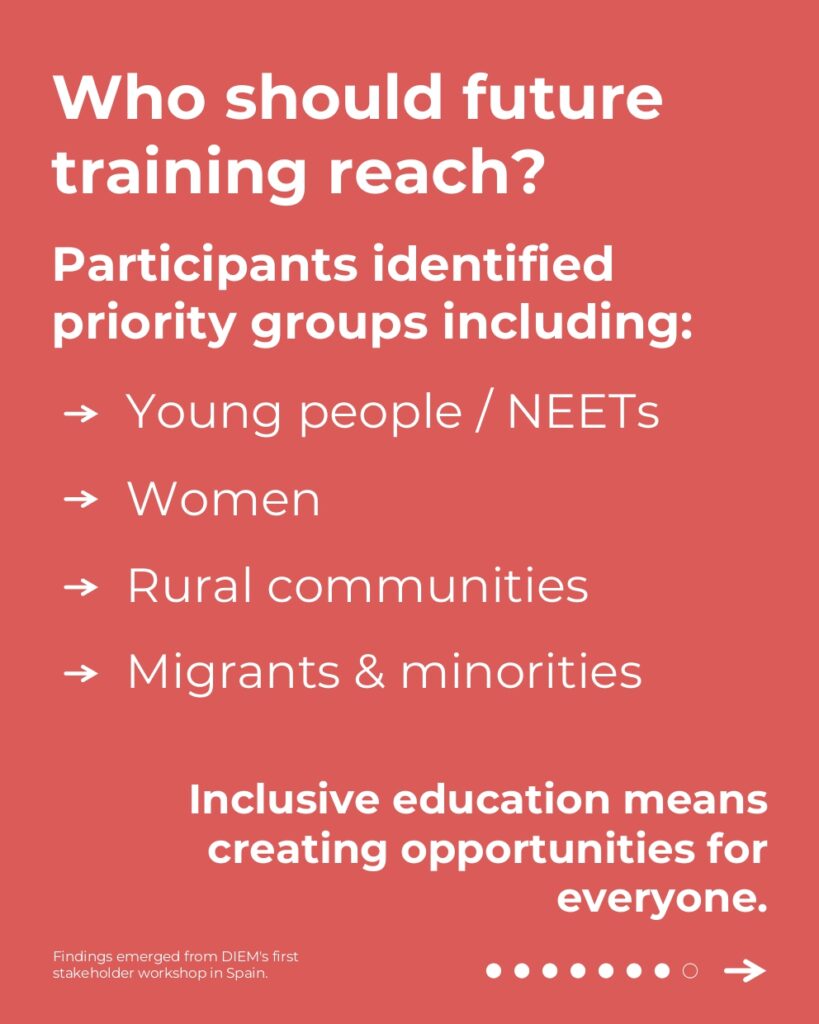
The discussion also stressed the importance of designing educational opportunities that reach a diverse audience, particularly young people, women, rural communities, migrants and minorities, ensuring that the cultural heritage sector becomes more inclusive and representative.
From stakeholder insights to DIEM’s next activities
The workshop findings do not aim to provide a comprehensive picture of the cultural heritage sector in Spain. Rather, they reflect the perspectives shared by the stakeholders who participated in the discussion and provide valuable evidence for the next phases of the DIEM project.
Together with the outcomes of the workshops organised in the other partner countries, these insights will contribute to the co-design of DIEM’s future learning pathways, pilot activities and capacity-building initiatives.
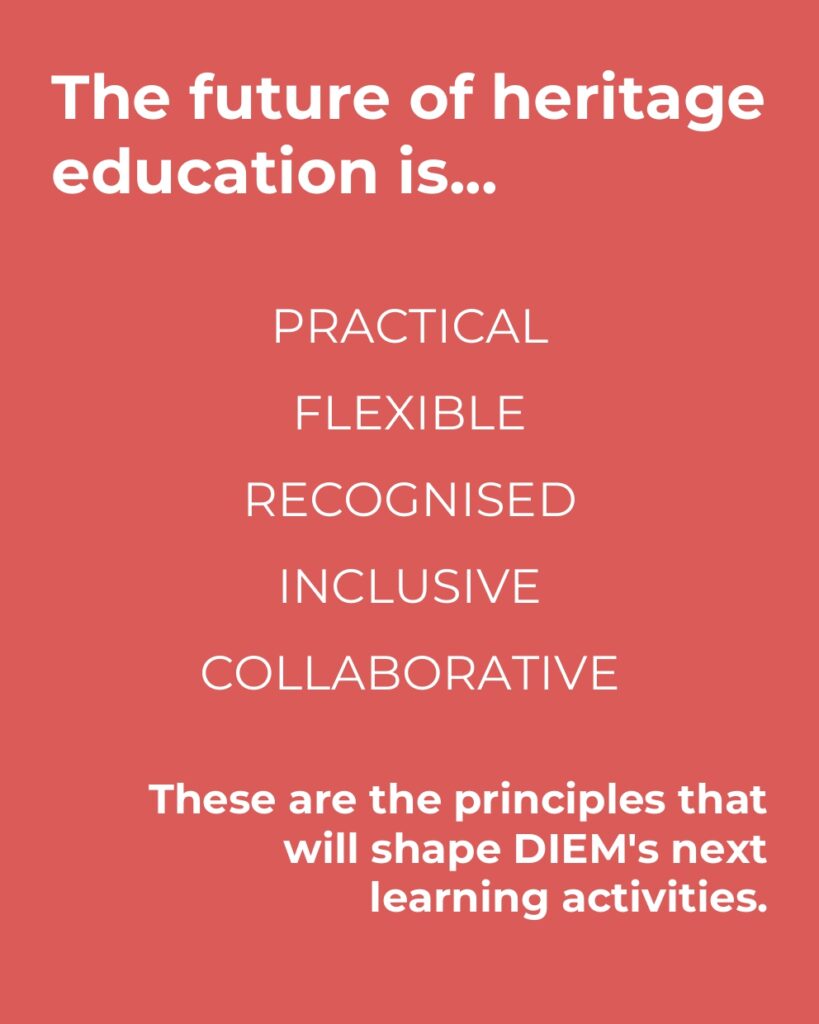
The shared vision that emerged from the workshop is clear: the future of heritage education should be practical, flexible, recognised, inclusive and collaborative. These principles will guide the development of DIEM’s training activities, helping create learning opportunities that are better aligned with the needs of cultural heritage professionals across the Mediterranean.
Download the workshop findings
Explore the full DIEM Spain Workshop Results, including key statistics and stakeholder insights.
 Next Med