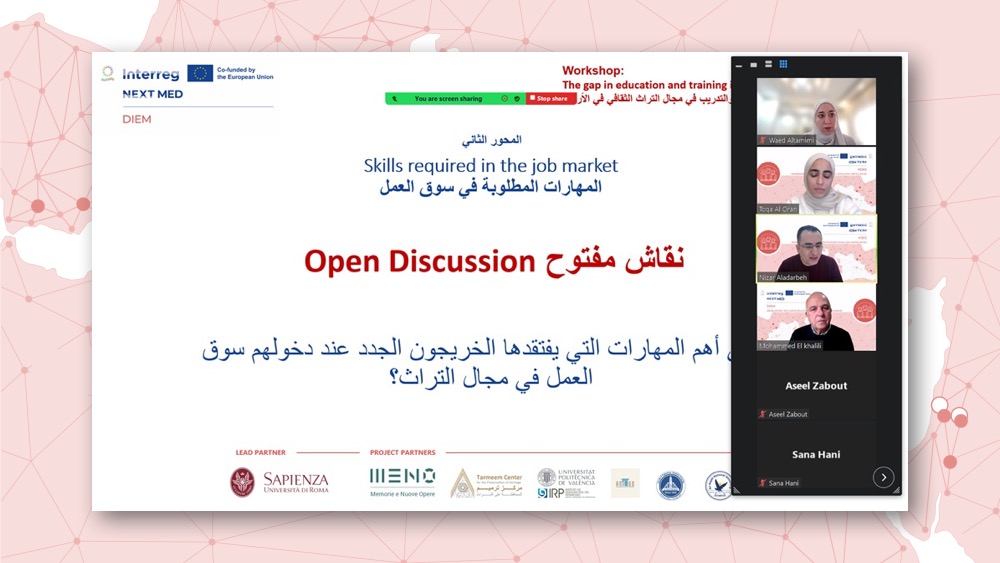
On 7 March 2026, the DIEM Jordan partner Tarmeem Center for the Training on the Preservation of Cultural and Natural Heritage (PP2) organised the online workshop “Defining Training Needs through National Gap Analysis in Cultural Heritage Education – Jordan”, bringing together representatives from public authorities, universities and the private sector to discuss the current skills needs in the Cultural Heritage field.
Hosted online from Amman, the workshop aimed to contribute to the national gap analysis that will guide the development of DIEM’s future training activities. The initiative forms part of the project’s broader effort to strengthen professional competences in cultural heritage management and align education programmes with the evolving needs of the labour market across the Mediterranean region.
The event gathered experts and institutional representatives from several key Jordanian organisations, including the Department of Antiquities of Jordan, the Ministry of Tourism and Antiquities of Jordan, the Ministry of Culture of Jordan, the Greater Amman Municipality, the Petra Development and Tourism Region Authority, and the Aqaba Special Economic Zone Authority. Academic institutions also played an important role in the discussion, with participation from universities such as the University of Jordan, Yarmouk University, Al Hussein Bin Talal University, Al-Hussein Technical University and the Hashemite University. Representatives from the Cultural Heritage and professional sectors contributed additional perspectives, including experts from the American Center of Research (ACOR), Petra National Trust, the Jordan Engineers Association, ICOMOS Jordan and the Jordan Museums Association.
The workshop opened with an overview of the DIEM project and the methodology behind the national gap analysis, followed by a series of structured working sessions focused on three key dimensions: academic gaps in Cultural Heritage education, technical and institutional capacity gaps and private sector and labour market needs. The activities concluded with a collective debate on the methodology of the future DIEM training system, focusing on how educational programmes can better respond to labour market demands and support the development of new professional profiles in Cultural Heritage management. The results of the discussion will contribute to the design of targeted training modules and educational pathways, ensuring that the DIEM capacity-building programme responds effectively to national priorities while maintaining alignment with international standards shared by the partnership.
 Next Med