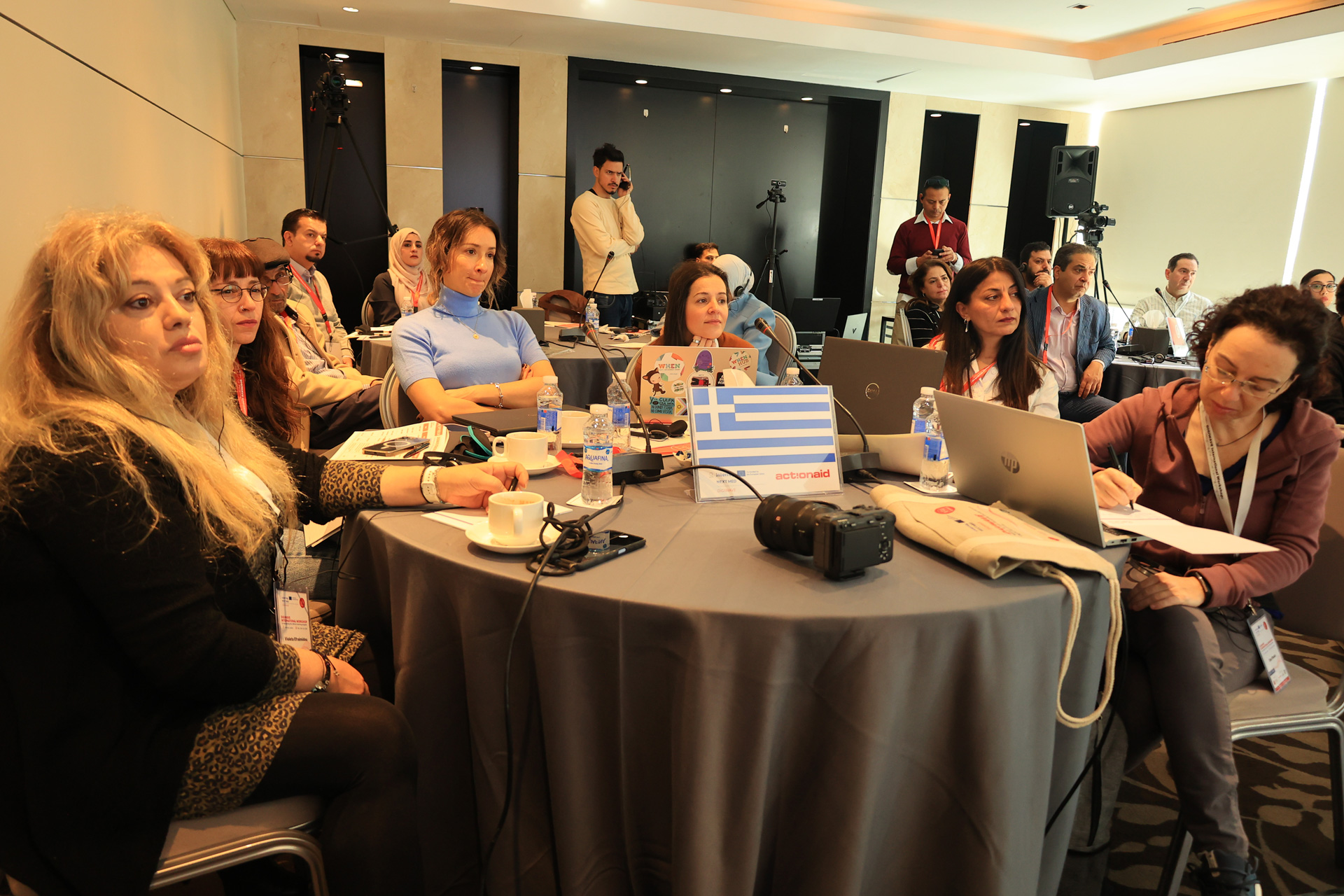
In February, the first international co-design workshop of the DIGIWAVE programme took place in Amman, Jordan, bringing together partners, experts and beneficiaries from across the Mediterranean to jointly shape the programme’s training model. Among the participants was Violeta, a beneficiary from the ActionAid Hellas Centre in Athens, whose presence ensured that the voices and experiences of women in Greece were directly represented in the development of the initiative.
The three-day workshop was hosted by Al-Balqa Applied University and coordinated by CAWTAR (Center of Arab Women for Training and Research). Around 40 experts and practitioners from Spain, Greece, Tunisia and Jordan worked collaboratively to design an innovative training framework that will support women in developing digital and entrepreneurial skills and accessing opportunities in the digital economy.
A key feature of the workshop was its participatory approach. Rather than designing the training model solely from an institutional perspective, the process actively involved the women who will ultimately benefit from the programme. Through group discussions, interactive sessions and collaborative design activities, participants explored the barriers that many women face when trying to enter the digital sector and identified practical solutions to make training more accessible, relevant and impactful.
Topics discussed during the workshop included the skills most in demand in the digital economy, the challenges women face when accessing digital education, and the type of support needed to help them transition from training to employment or entrepreneurship. The contribution of beneficiaries like Violeta was particularly valuable in grounding these discussions in real-life experiences and needs.
For Violeta, taking part in the workshop was both inspiring and empowering. Meeting participants from different countries who are all working toward the same goal: expanding women’s access to digital opportunities and offering a new perspective on what the future could hold.
“I was truly excited to see so many people from different countries and cultures working together to support us, women. It encouraged me to reflect and I hope it will open a door for me, perhaps a different one from the path I imagine now, and along the way help me discover opportunities I didn’t even know existed.”
Her words reflect the broader ambition of DIGIWAVE: not only to provide women with digital skills, but also to create new pathways for them to explore opportunities they may not have previously imagined.
DIGIWAVE is a three-year European initiative aiming to support 200 women across Spain, Greece, Tunisia and Jordan through tailored training, mentoring and continuous support to develop digital and entrepreneurial competencies. The programme focuses particularly on women who face greater barriers to accessing quality education and employment opportunities, including migrants, women with limited economic resources and those at risk of social exclusion.
By involving beneficiaries directly in the design of the training model, the programme seeks to ensure that the learning experience is practical, inclusive and closely connected to the real needs of the women it aims to support.
DIGIWAVE is led by a Mediterranean alliance of organizations with extensive experience in social innovation, training and international cooperation: Jovesólides (Spain), ActionAid Hellas (Greece),CAWTAR (Tunisia) and Al-Balqa Applied University (Jordan).
 Next Med