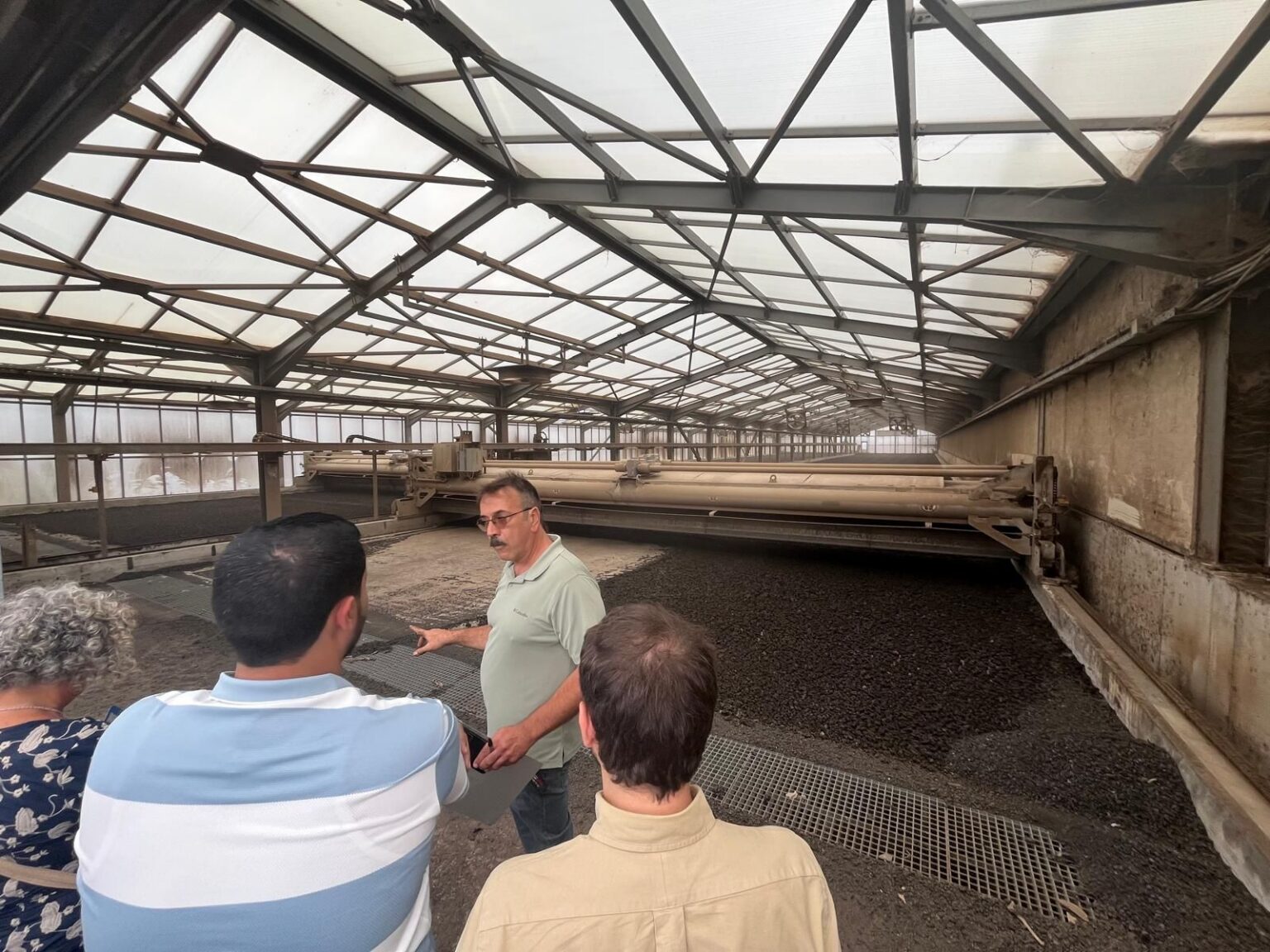
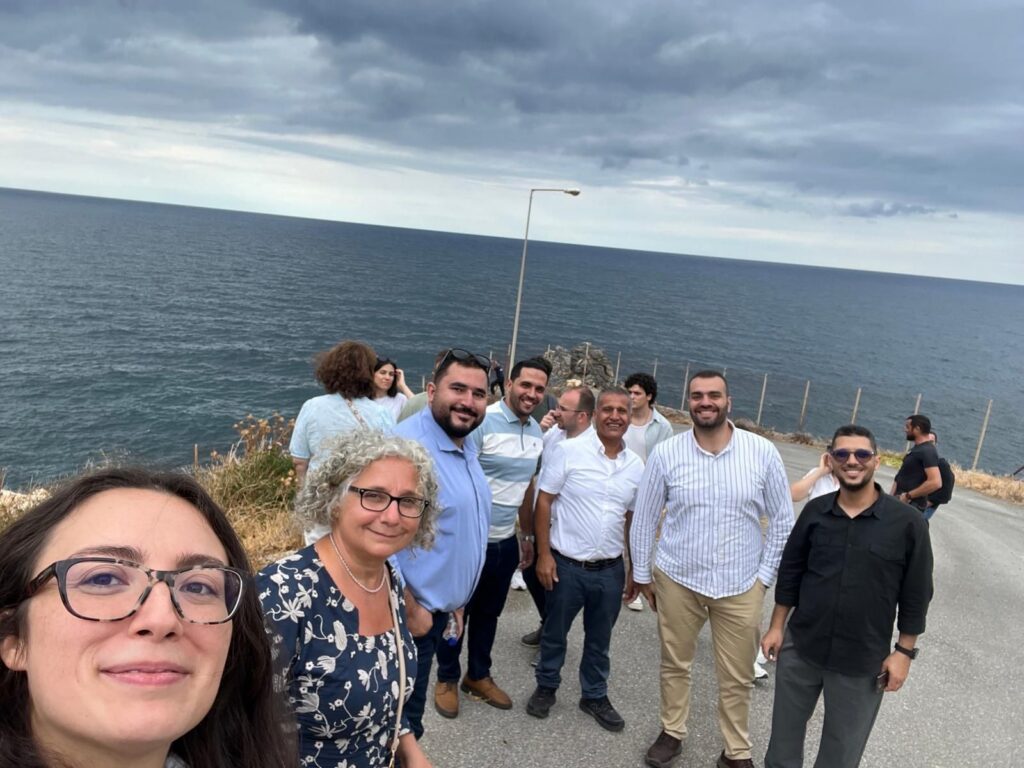
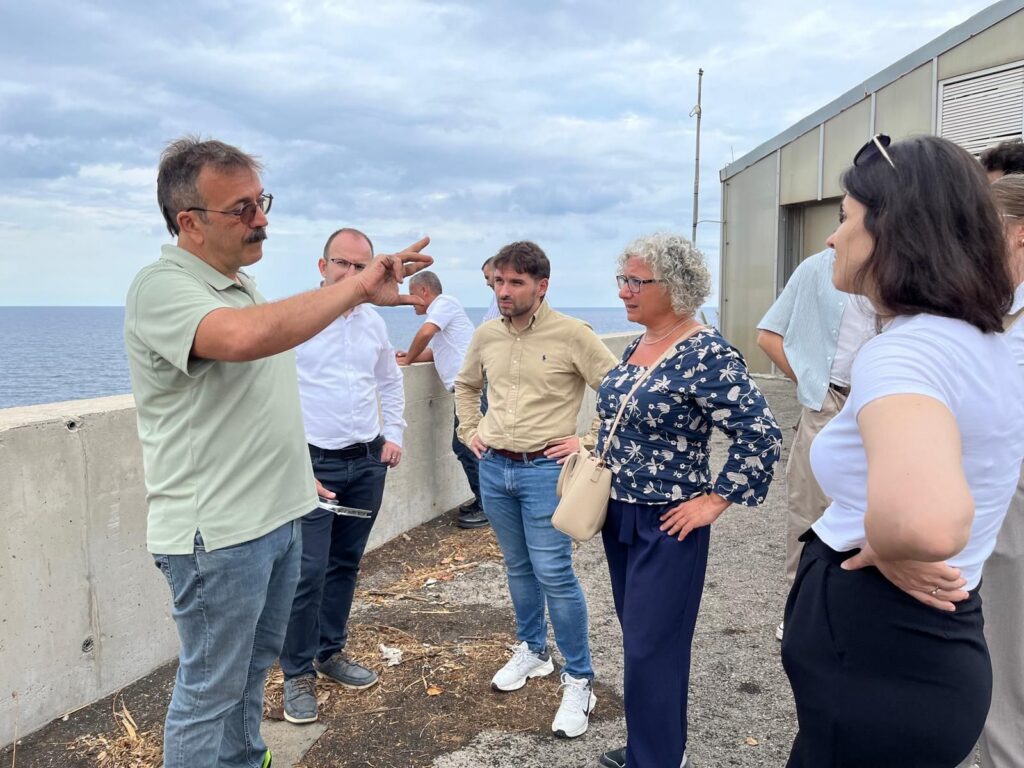
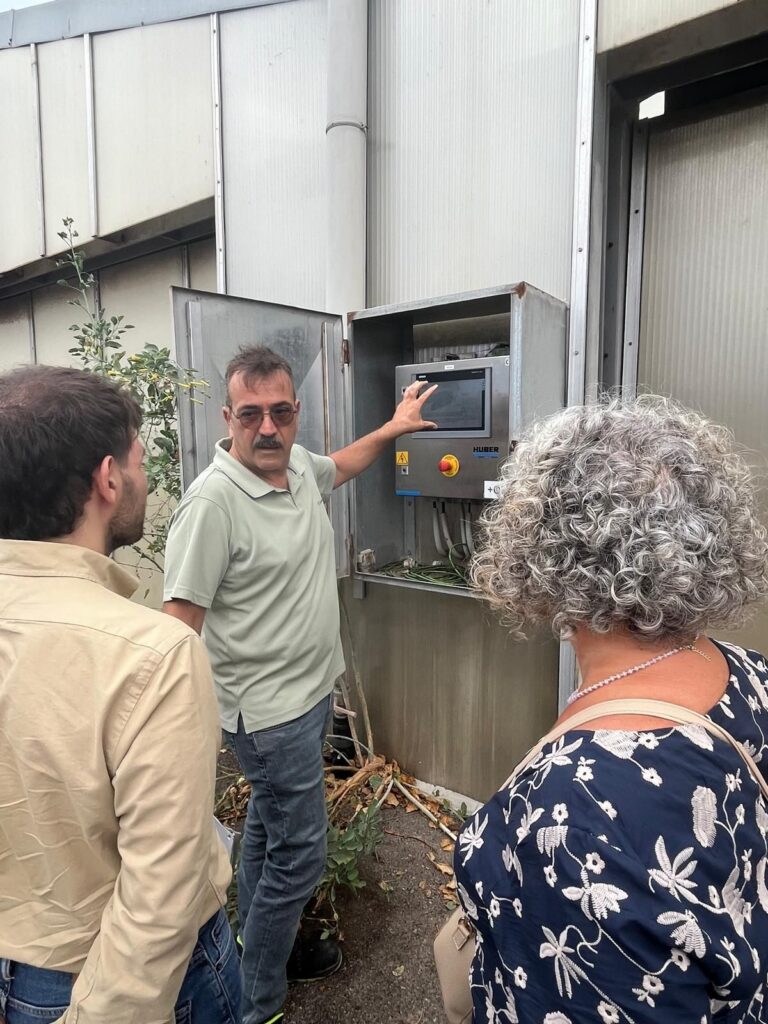
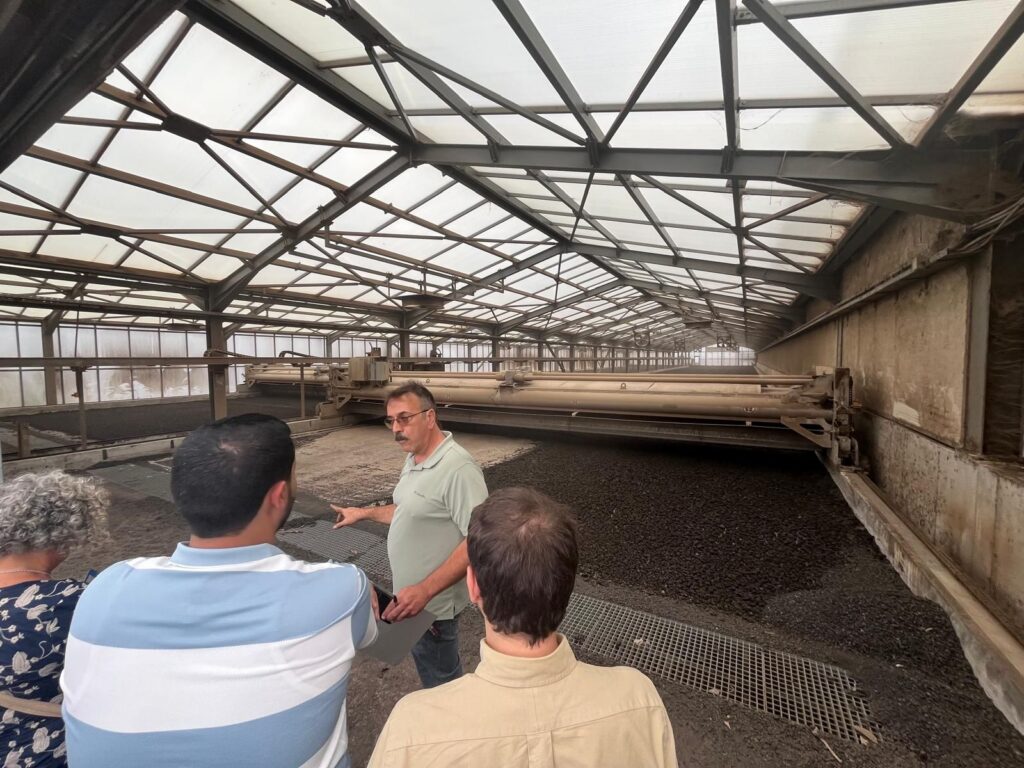
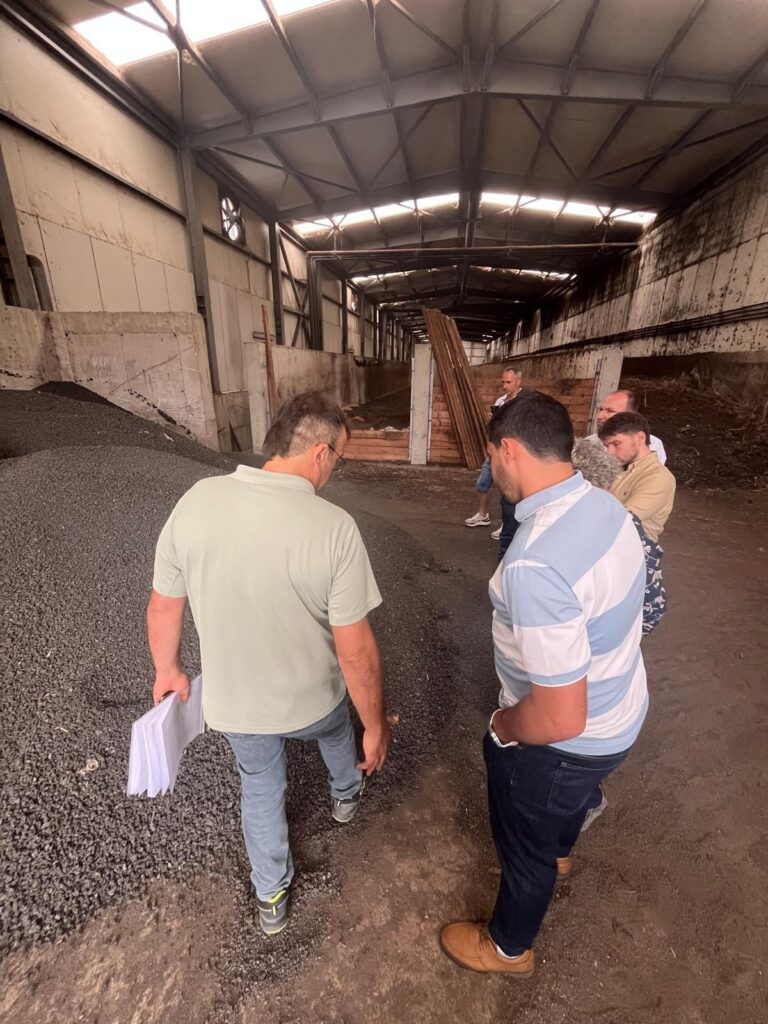
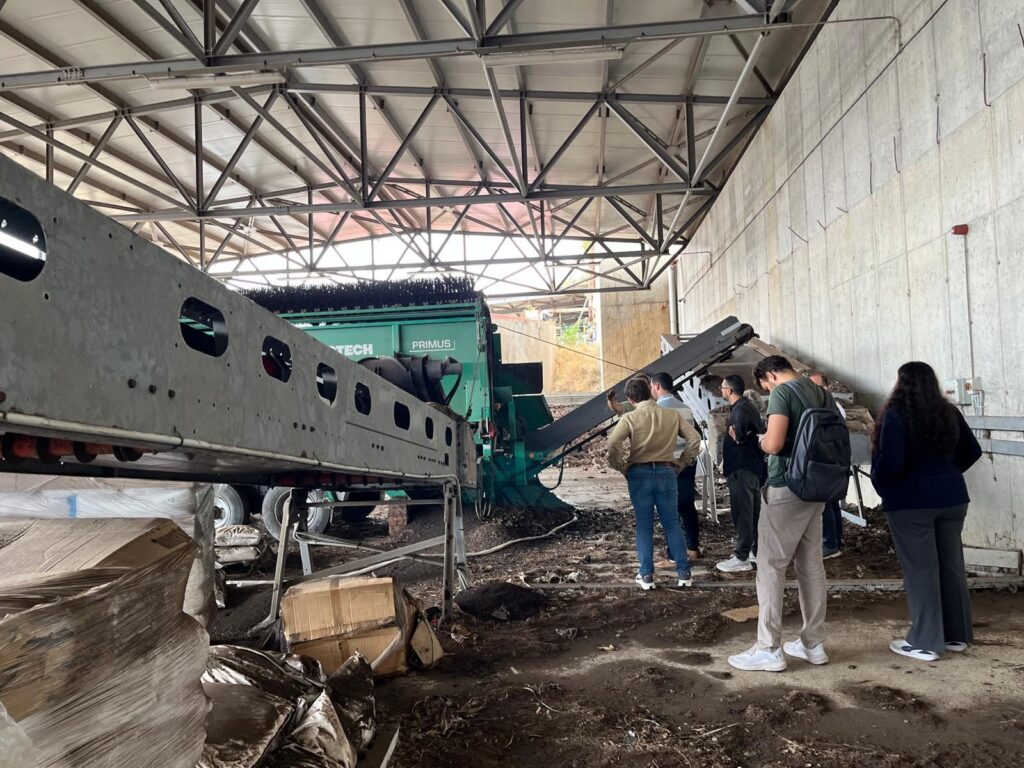
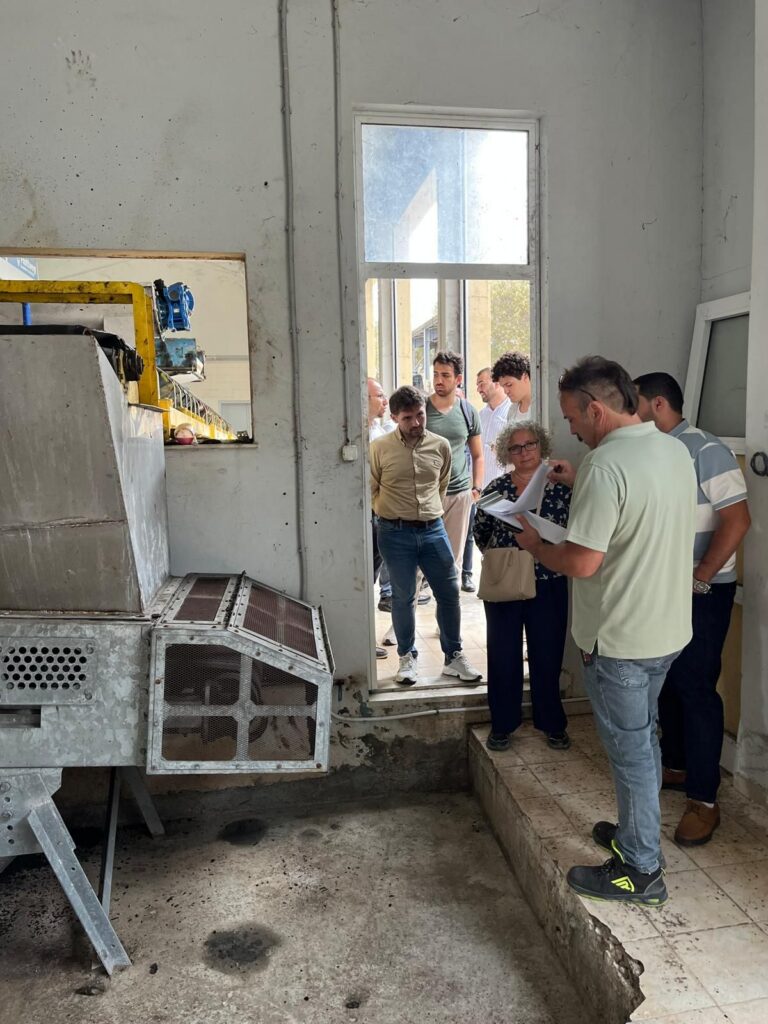
On 15 September 2026, during their 2nd project meeting in Crete, the Sludge2Energy partners visited the sewage sludge solar drying and composting facility in Rethymno, Greece. The guided tour was led by Michalis Velivasakis.
How solar drying works
Sewage sludge, the residue left after wastewater is treated, contains a large amount of water. Before it can be reused or converted into energy, most of that water has to be removed. In Rethymno this is done with solar drying: the sludge is spread inside greenhouse-like halls, where solar radiation and ventilation gradually evaporate the moisture. Compared with conventional thermal drying, which burns fuel or uses electricity to produce heat, this approach needs much less energy.
From drying to compost
The facility combines solar drying with composting, a biological process that turns organic material into a stable soil improver. Together, the two steps offer a sustainable way to manage sewage sludge and recover resources from it.
Why it matters for Sludge2Energy
Solar drying is the first step of the Sludge2Energy approach. The project combines it with pyrolysis, a process that heats dried sludge without oxygen to produce energy and biochar, a stable carbon-rich material. Seeing a full-scale solar drying plant in operation gave partners practical insight into a technology they will apply in their own pilot sites, and a chance to exchange knowledge on sustainable sludge management in Mediterranean regions.
The Sludge2Energy partnership thanks Michalis Velivasakis for guiding the visit, and the whole facility team for sharing their experience.
 Next Med