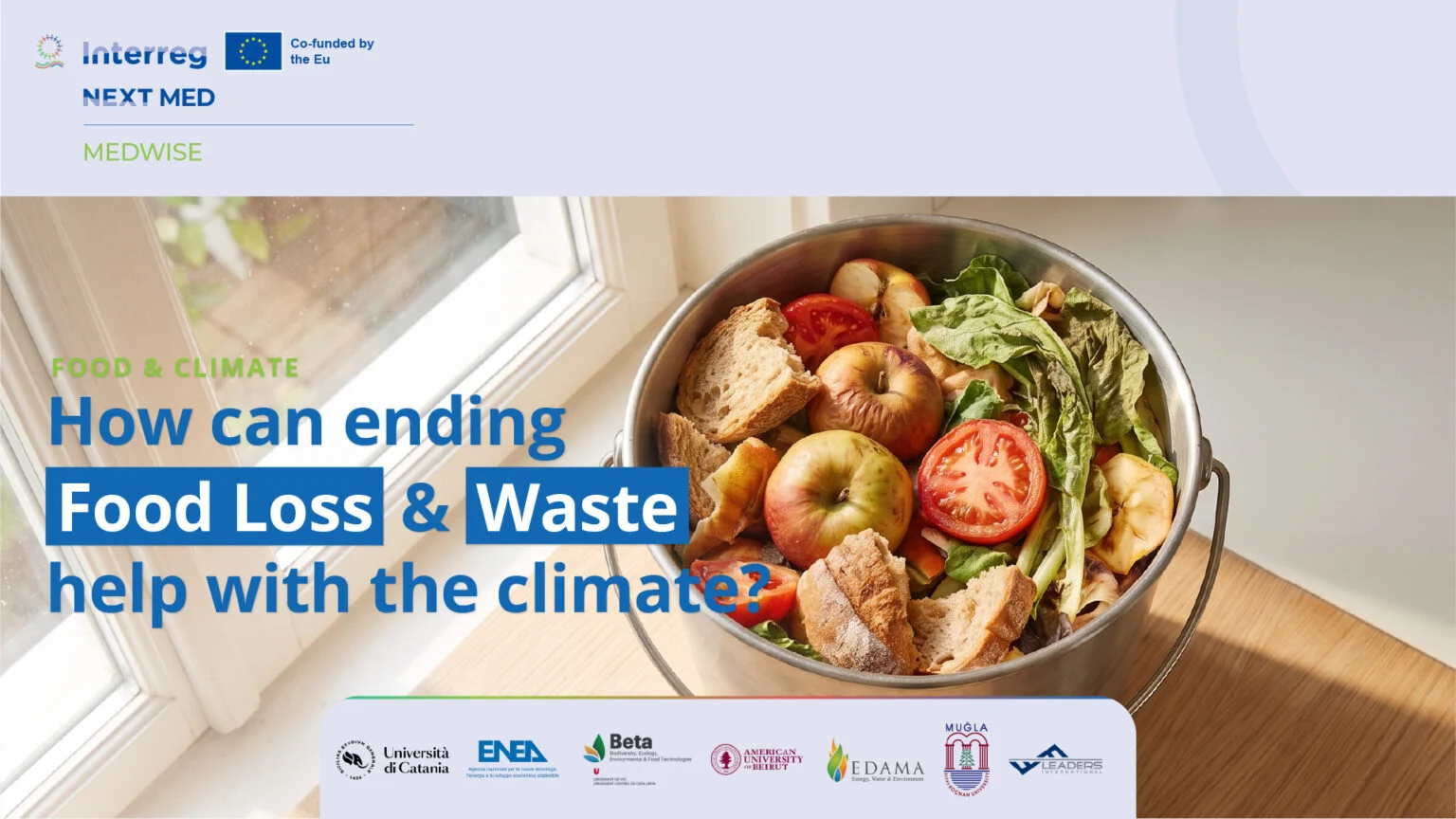
Food waste often receives less attention than it deserves in discussions on climate change and sustainability. However, discarding food means wasting far more than the food itself. It also represents a waste of resources such as water, land, energy, and labour invested in its production, while contributing to significant environmental pressures. Addressing this challenge requires understanding the scale of food loss and waste and its close connection to greenhouse gas (GHG) emissions. Every year, more than a billion tonnes of food are wasted worldwide, with the associated emissions contributing significantly to global greenhouse gas emissions. The link between wasted food and climate change shows how ordinary, everyday choices can have consequences far beyond our kitchens [1].
This article examines the relationship between food waste generation and GHG emissions, with a focus on its environmental impacts and wider implications for climate change and resource sustainability. It further explores how preventing and reducing food loss and waste can contribute to climate change mitigation.
When food waste decomposes in landfills, it releases methane, a potent greenhouse gas that traps significantly more heat than carbon dioxide over many years. [2]
- Globally, food loss and waste cost approximately US$1 trillion annually. However, the impact extends beyond economic losses, as reducing food loss and waste represents a major opportunity to mitigate climate change.
- Food loss and waste account for approximately 8–10% of global greenhouse gas emissions annually.
So, how can ending food loss and waste help with the climate? [2]
- Preventing food loss and waste reduces the need to use additional water, land, energy, and other resources to replace food that is unnecessarily discarded.
- Reducing food waste can lower household food expenditure by ensuring that purchased food is used more efficiently.
- Reducing the amount of food waste sent to disposal can help limit methane and overall emissions from landfills and contribute to climate change mitigation.
- Reducing food loss and waste can ease pressure on land and water resources and support more efficient use of natural resources.
- More efficient management of food resources can also contribute to more resilient and sustainable food systems.
- Preventing and reducing food loss and waste is therefore an important component of climate action and the transition towards more resource-efficient food systems.
MEDWISE Contributions
The MEDWISE project helps address food waste and support global climate action by promoting a transition to a circular, resource-efficient economy in the region. Through the adoption and testing of proven resource-efficiency solutions, the project aims to improve organic resource management while reducing resource waste and associated greenhouse gas emissions.
The project also promotes three key innovation solutions: industrial symbiosis, AI-powered source sorting, and decentralized composting, which together support more sustainable and efficient management of organic resources, contribute significantly to climate action, and help reduce greenhouse gas emissions.
References:
 Next Med