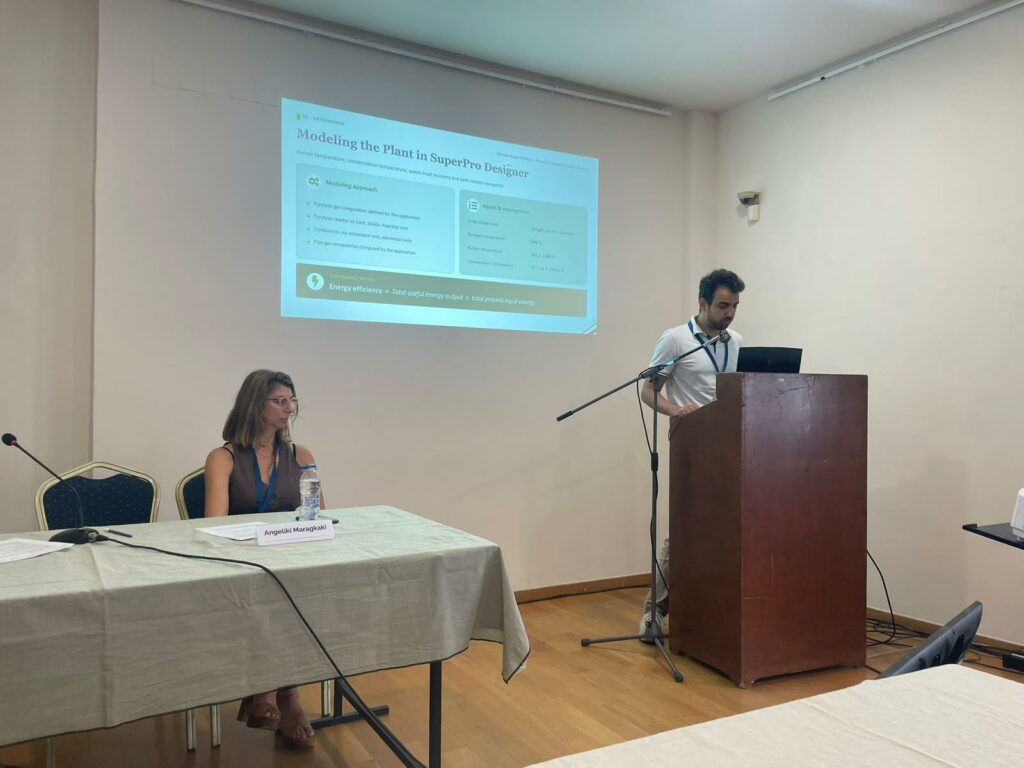
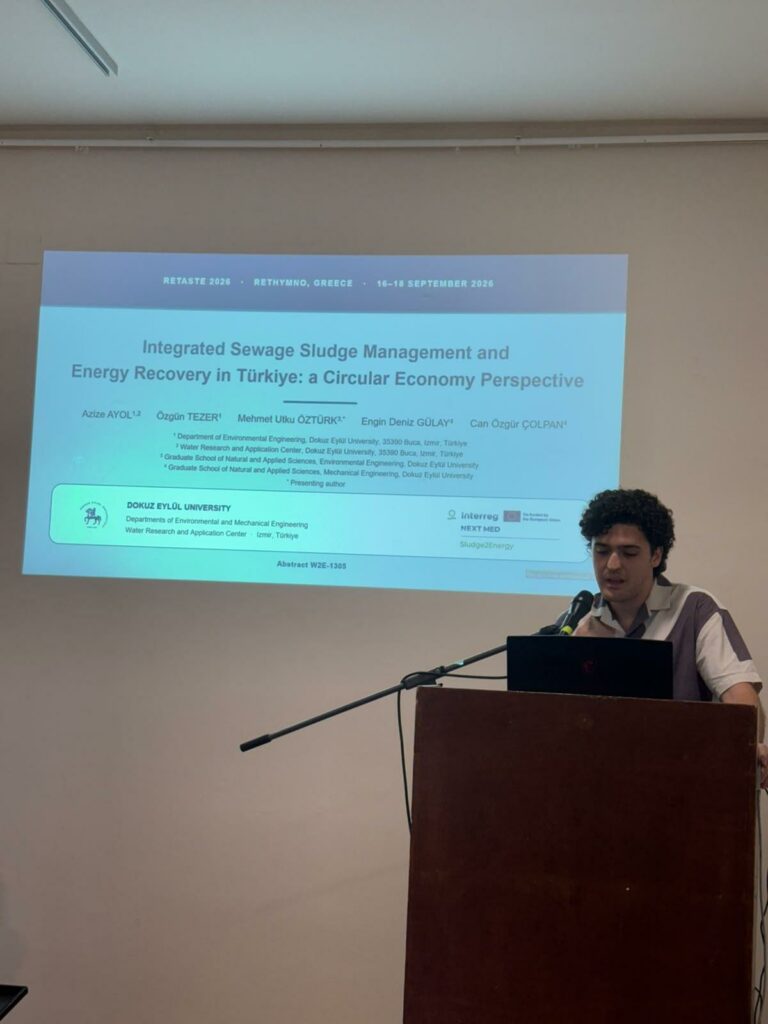
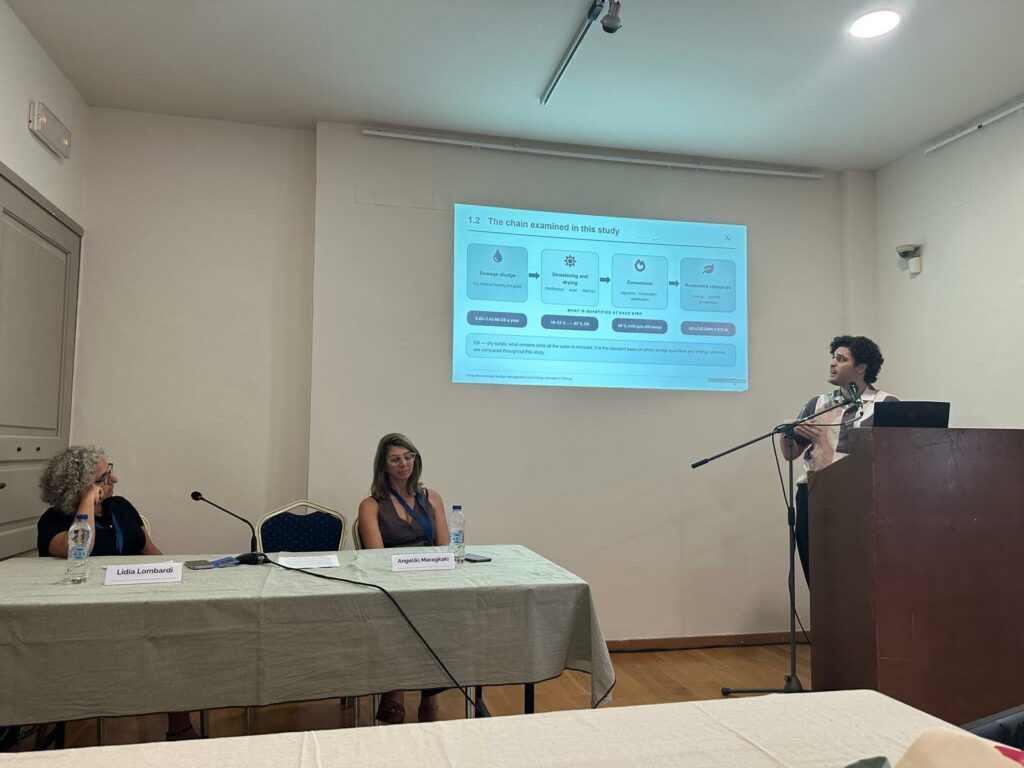
At RETASTE 2026 – Rethink Food Resources, Losses and Waste, held in Rethymno, Crete, the Sludge2Energy partnership led Session 5, “Sewage Sludge: Opportunities, Threats and Solutions”, on 16 September 2026. The session was chaired by Prof. Lidia Lombardi of Niccolò Cusano University (UNC), the project’s Lead Partner, and Dr. Angeliki Maragkaki of the Hellenic Mediterranean University (HMU).
A first article presented the evidence shared on contaminants and on the safety of fields that receive sludge. This second article looks at the solutions: how sludge can be turned into compost or energy, and what it takes to make these routes work in practice.
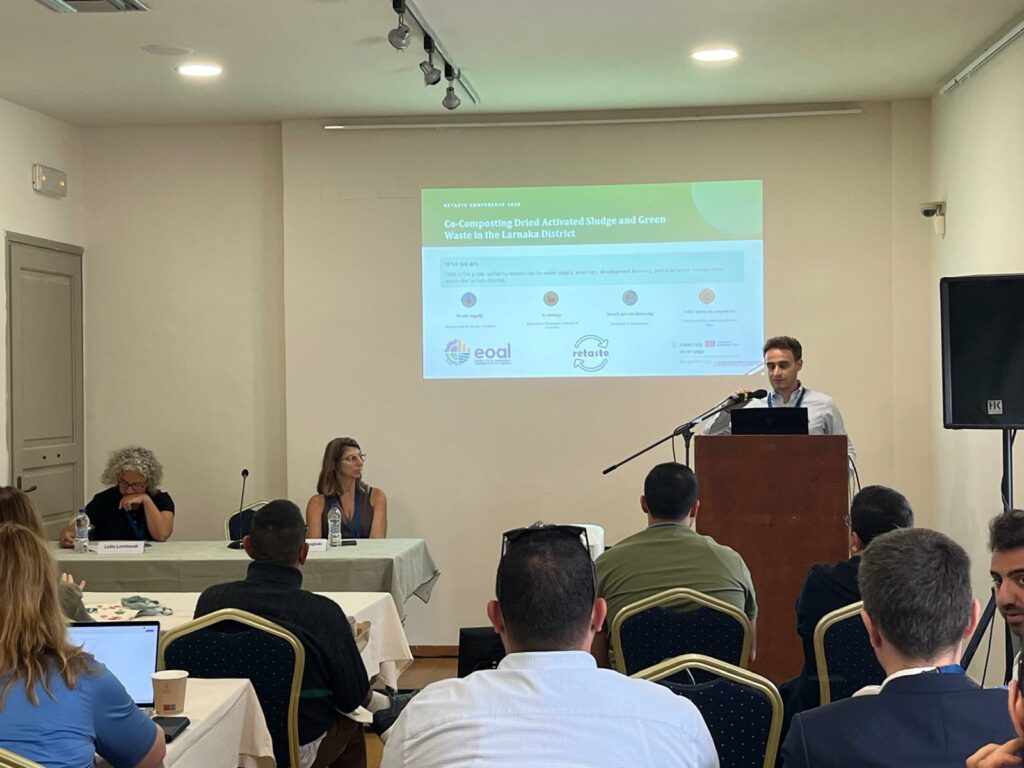
Co-composting sludge and green waste in Larnaka
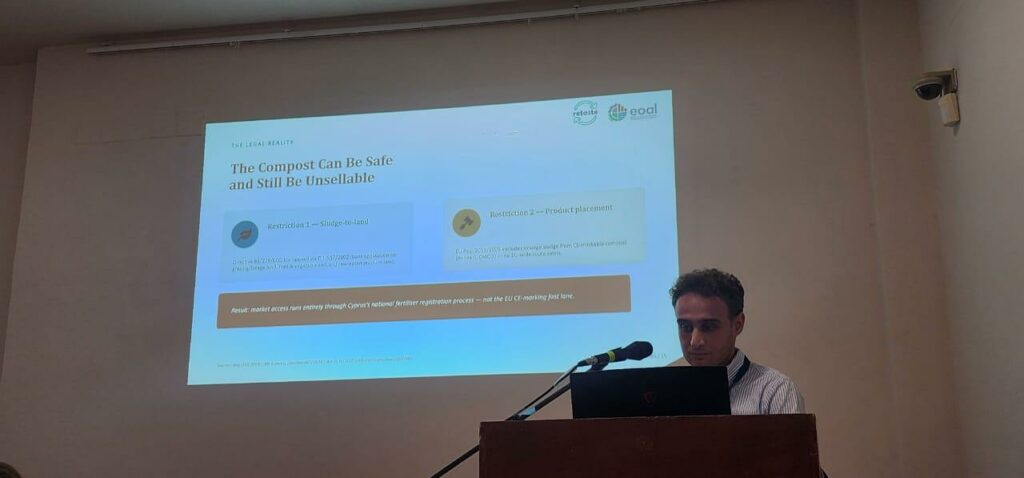
Charalampos Papanikolaou of the District Local Government Organization of Larnaka (EOAL, Cyprus) presented the challenges of producing a safe, compliant compost. Today, about 800 tonnes per year of dried sludge from the Larnaka wastewater treatment plant are given free of charge to farmers, while around 1,680 tonnes of municipal green waste go to landfill. Combining the two could create a useful product, but several conditions must be met:
- Process control: the right balance of carbon and nitrogen, good aeration and odour control.
- Safety: proper hygienisation and regular laboratory testing for heavy metals, micropollutants and microplastics.
- Rules: national legislation limits where the product can be applied.
- Market: farmers may hesitate to pay for compost made from sludge, although public support schemes could help adoption.
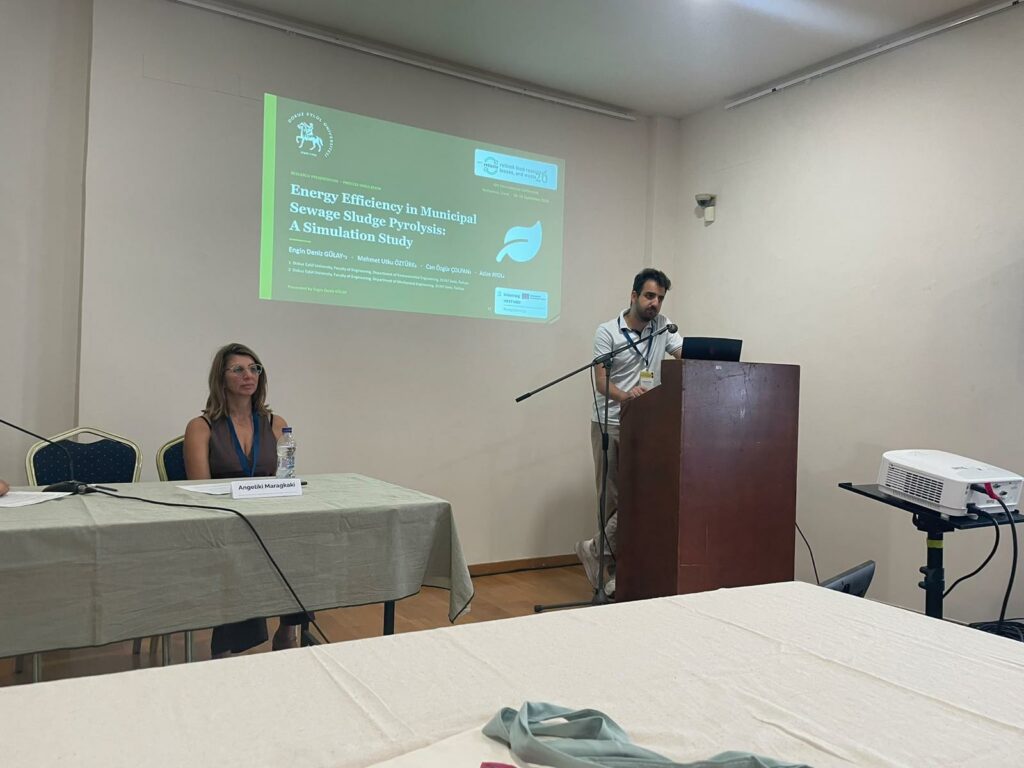
Can pyrolysis power itself?
Engin Deniz Gülay of Dokuz Eylül University (DEU, Türkiye) presented a computer simulation of a sludge pyrolysis plant. Pyrolysis heats dried sludge without oxygen, producing gas, oil and biochar. The study’s goal is a plant that runs without external fuel, using the energy in the gas and oil it produces to cover the heat needed to dry and process the sludge. The model shows which operating conditions, such as the moisture left after drying, make this self-sufficiency possible, offering useful guidance for scaling up pilot plants.
A roadmap for Türkiye
Mehmet Utku Öztürk of DEU outlined the state of sewage sludge management in Türkiye, where expanding treatment plants are producing growing volumes of sludge. Technologies such as anaerobic digestion, incineration and gasification can reduce sludge volumes and support national renewable energy targets. However, high investment costs, technical limits and the lack of a national integrated strategy remain barriers. The study proposes a roadmap based on regional planning, policy alignment and investment in innovative energy recovery.
Why it matters
These contributions show that sludge management is not only a technical choice: it depends on regulation, costs and public acceptance. Sludge2Energy is testing these ideas in practice through pilot pyrolysis units in Cyprus, Jordan and Türkiye, turning sludge into renewable energy and biochar.
The abstracts of all presentations are available on the RETASTE 2026 conference website (https://retaste.gr/program-2026/).
 Next Med