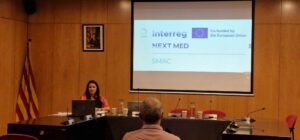
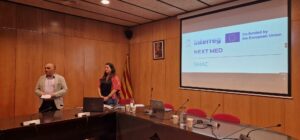
The Sustainability Model for Accommodation MSMEs (SMAC) project, in which ASCAME is a strategic partner, was represented on the 29th of September at the Ripollès Sustainable Tourism Forum, organized by the Consell Comarcal del Ripollès in Ripoll, Catalonia (Spain). Held annually as a collaborative platform bringing together public authorities, organizations, and tourism stakeholders, the forum aims to identify priorities and promote initiatives that support sustainable development in the region.
This year’s edition hosted the First Stakeholders’ Meetingof the project, bringing together tourism stakeholders, organizations, and local representatives to discuss priorities for a more sustainable and resilient tourism model.The project, led by the Drama Chamber of Commerce and Industry, tackles the urgent need for sustainability in the tourism sector by supporting accommodation MSMEs, many of which lack the digital tools and expertise needed to adopt greener practices.
Representing the SMAC Project, Ms. Estela Delgado, ASCAME’s Projects Area Manager, talked about the project’s main mission -making sustainable tourism tangible, pragmatic, and inclusive, ensuring no small accommodation business is left behind in the green transition-. In addition, she highlighted the two key tools to support this mission: the Simplified Sustainability Model for Accommodation (SSMA) and an Artificial Intelligence Recommendation Tool (AIRET). These tools, combined with tailored training for Mediterranean MSMEs, aim to turn sustainability into a competitive advantage.
The session also created a valuable space for dialogue with tourism stakeholders, organizations, and local representatives, who exchanged views on the challenges, needs, and opportunities associated with fostering a more sustainable and resilient tourism model.The contributions collected will support the identification of strategic priorities and help shape the project’s forthcoming actions, ensuring they effectively respond to local realities and territorial needs.
Partners exchanged valuable insights on how the project will support the urgent transition of micro and small accommodation enterprises toward sustainable practices. All of them stressed that a sustainable tourism model is essential for accommodation SMEs in the Mediterranean, a region facing a unique combination of environmental pressures – including water scarcity, coastal erosion, and seasonal peaks in waste generation – together with a strong economic dependence on tourism, which makes it highly vulnerable to seasonality, climate shocks, and sudden drops in demand.
They also highlighted that today travellers increasingly choose accommodation that demonstrates environmental responsibility, offers authentic local experiences, and respects social and cultural values. In this context, sustainable tourism practices not only help SMEs attract visitors, improve their online reputation, and access new market segments such as eco tourism, but also contribute to national economies by supporting GDP growth and generating new jobs.
Apart from ASCAME, the project counts on the participation of the Alexandria Chamber of Commerce, the Chamber of Commerce and Industry of Tunis, and the Confederation of Egyptian European Business Associations (CEEBA), as partners and members of ASCAME, as well as the Chamber of Commerce and Industry of Serbia as an associated partner of the project and ASCAME’s member.
Special thanks to all participants for their valuable engagement, and particularly to the Consell Comarcal del Ripollès and the Laura Basagaña Illa Culture and Tourism Department Ajuntament de Campdevànol for their commitment to building a more sustainable, resilient, and future-ready tourism sector.
 Next Med
