Joint wildfire training helps Mediterranean responders act as one – SIMMER Info Day Panel 2
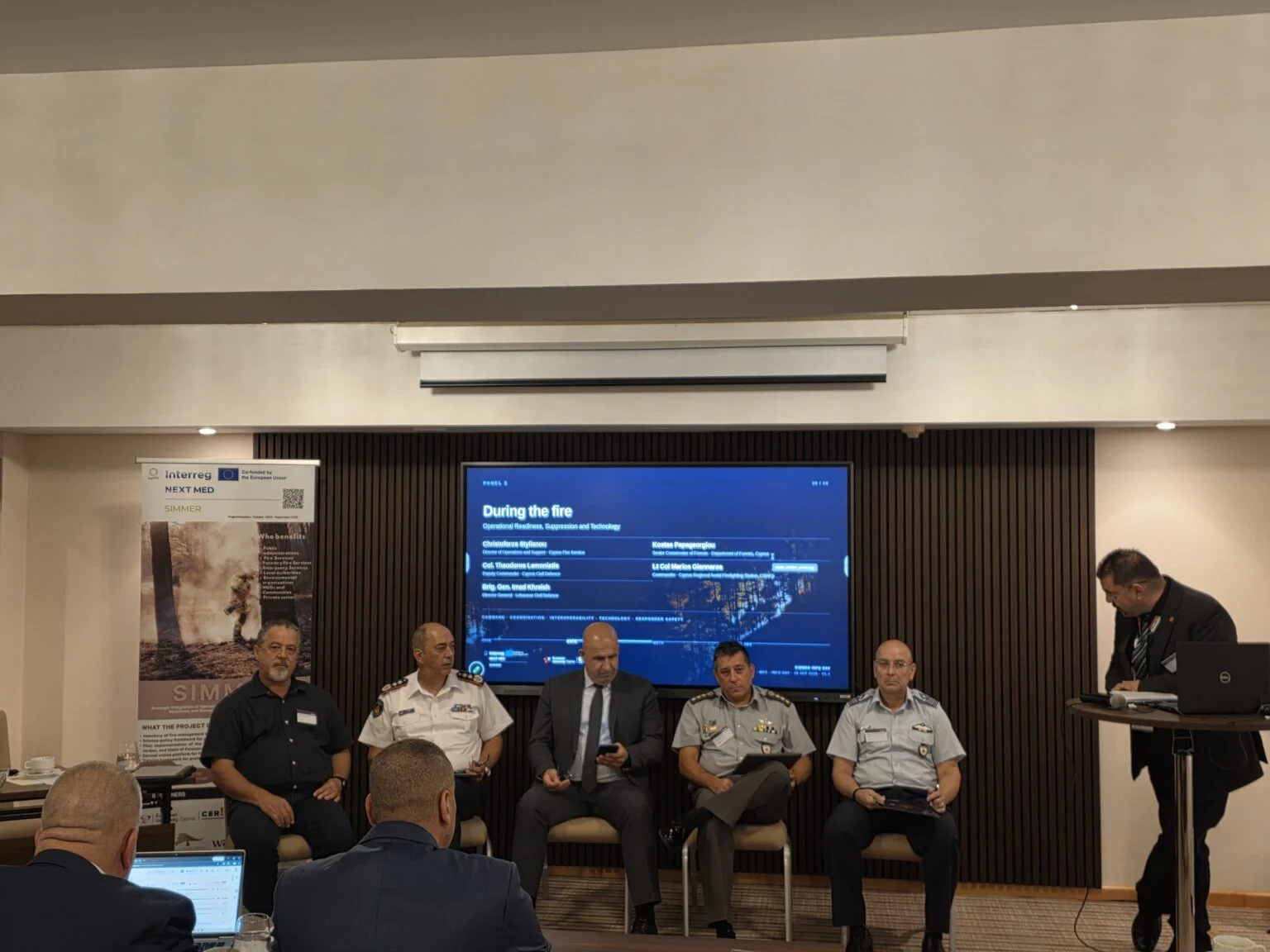
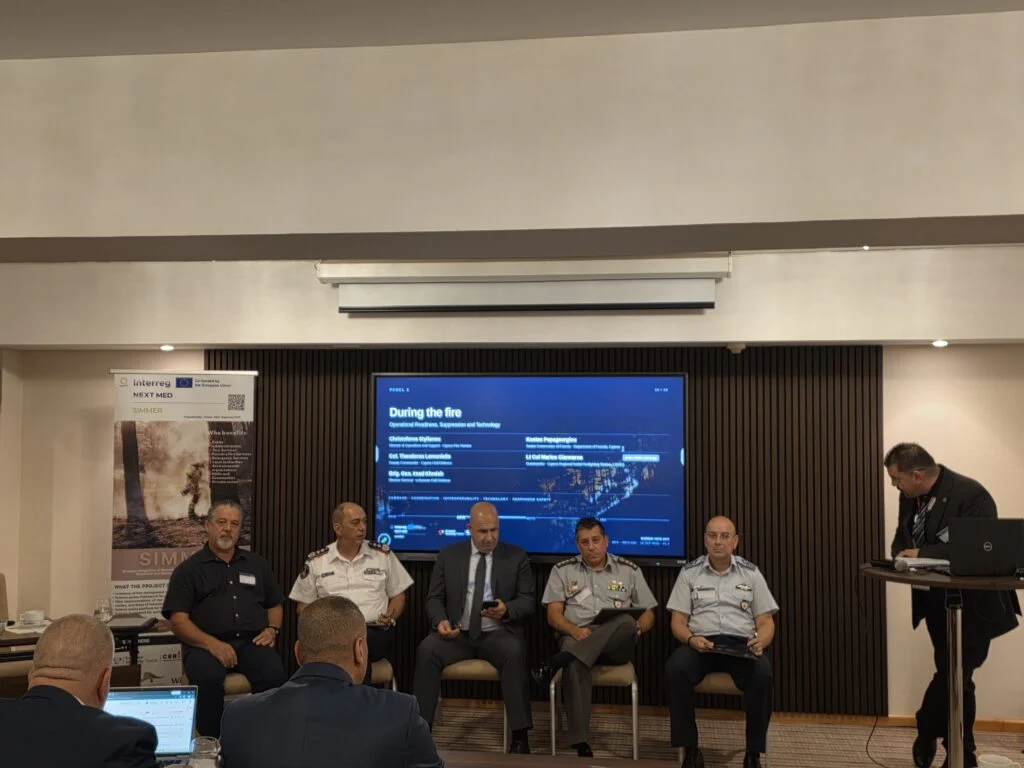
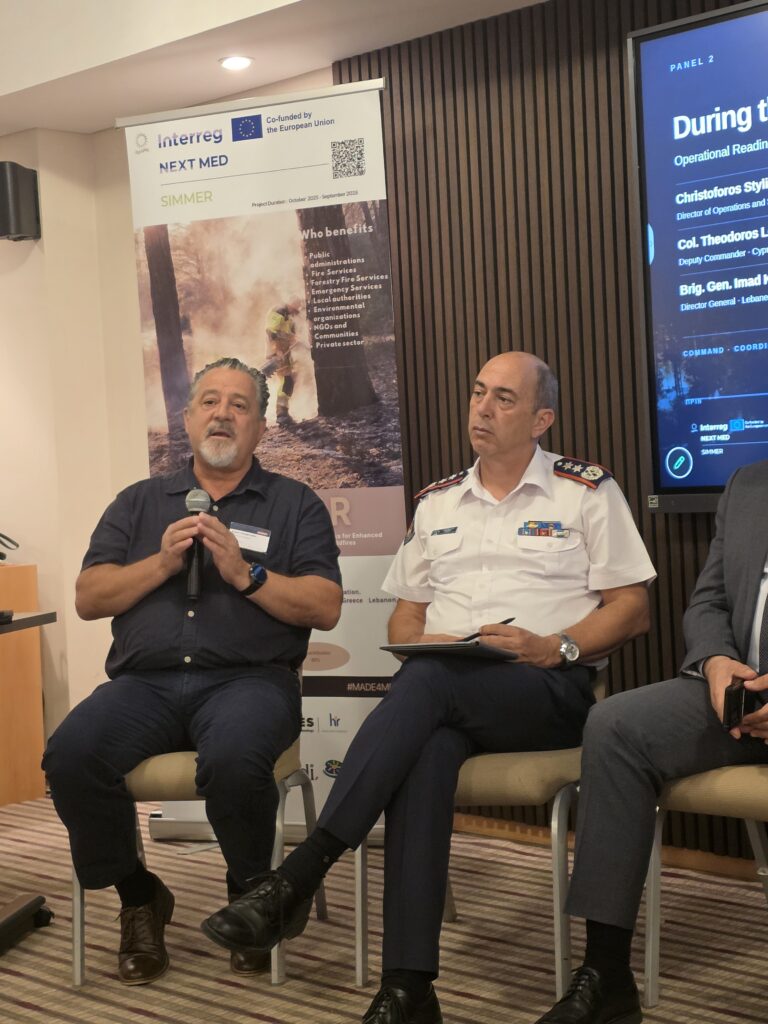
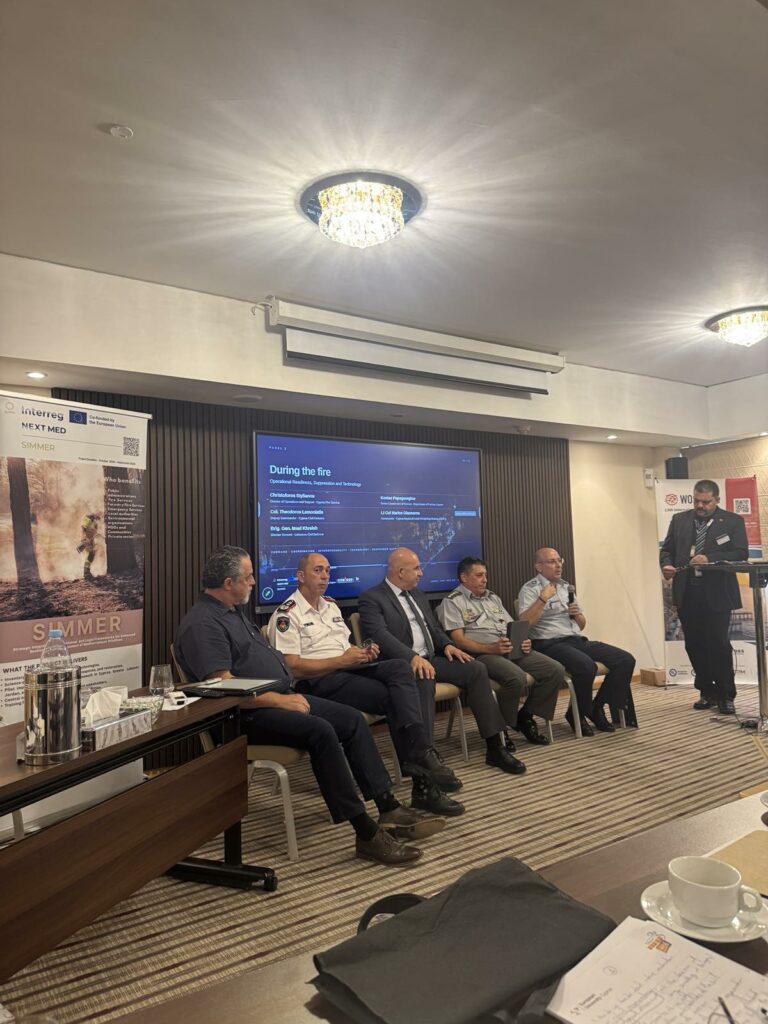
Fire, forest, civil defence and aerial response leaders met during the second SIMMER Info Day panel in Limassol. They explained why joint training, trusted information and clear roles are essential during major wildfires.
Publication Date 22/09/2026
Reading Time 2minutes
A major wildfire can bring several emergency services to the same incident. However, those services may use different systems, procedures and levels of preparation. Without joint readiness, coordination slows down when every minute matters.
Shared preparation builds trust
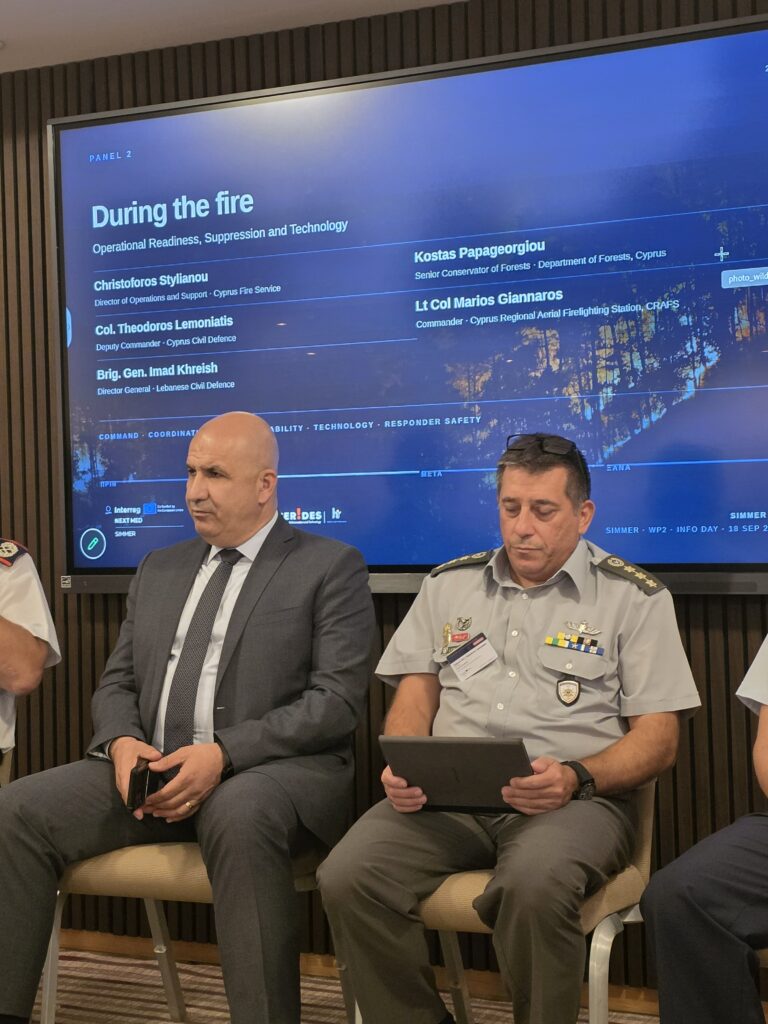
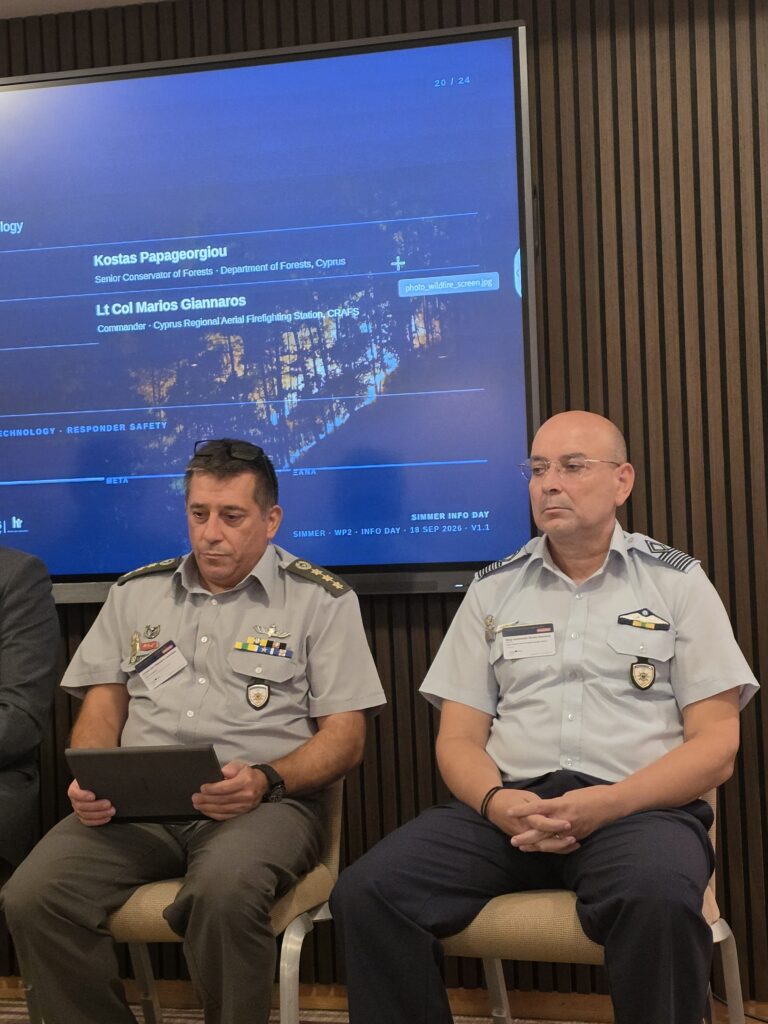
This was the central message of the second SIMMER Info Day panel in Limassol, Cyprus. Kostas Papageorgiou represented the Department of Forests. Colonel Theodoros Lemoniatis represented Cyprus Civil Defence. Air Commodore Marios Giannaros brought the perspective of aerial firefighting.
Christoforos Stylianou represented the Cyprus Fire Service, while Brigadier General Imad Khreish joined from the Lebanese Civil Defence. Together, they examined how different services can prepare and operate as one.
The speakers stressed that joint wildfire training cannot take place only occasionally. Services that train together build trust and develop a shared operational language. In addition, they understand one another’s roles, abilities and limits. As a result, they spend less time solving basic coordination problems during an active emergency.
Cooperation must begin before assistance is needed
The same principle applies across national borders. Mediterranean countries face similar wildfire conditions, while a major incident can quickly exceed national capacity. Therefore, international assistance works best when relationships and procedures already exist.
Shared preparation also helps countries understand what support their partners can provide. Moreover, it reduces confusion over command, communication and the use of incoming resources. These arrangements must be tested before an emergency, rather than designed during one.
Technology must support decisions
Technology can strengthen cooperation between air and ground operations. For example, shared maps and live information can create a common view of the incident. This allows different services to make decisions using the same operational picture.
However, a tool is not valuable simply because it is advanced. Responders must be able to understand its information and use it under pressure. Systems must also connect across services and support clear communication. Otherwise, technology may create delay, confusion or false confidence.
Responder safety depends on coordination
The discussion returned repeatedly to the people behind the systems. Responders enter dangerous conditions on behalf of the wider community. Therefore, protecting them requires more than equipment.
Joint preparation, clear roles and trusted information support safer decisions. Above all, institutions must be able to work together when conditions change rapidly. Strong coordination protects both the people responding to the wildfire and the communities depending on them.
The Interreg NEXT MED website uses technical, analytics and third-party cookies. By continuing to browse, you accept the use of cookies. Privacy Policy
 Next Med