Wildfire risk does not begin when the first flame appears. This was the central message from two days of SIMMER activities in Limassol on 17 and 18 September 2026. Experts, public authorities and emergency services joined representatives from six Mediterranean countries. Together, they examined wildfire resilience across prevention, emergency response and post-fire recovery.
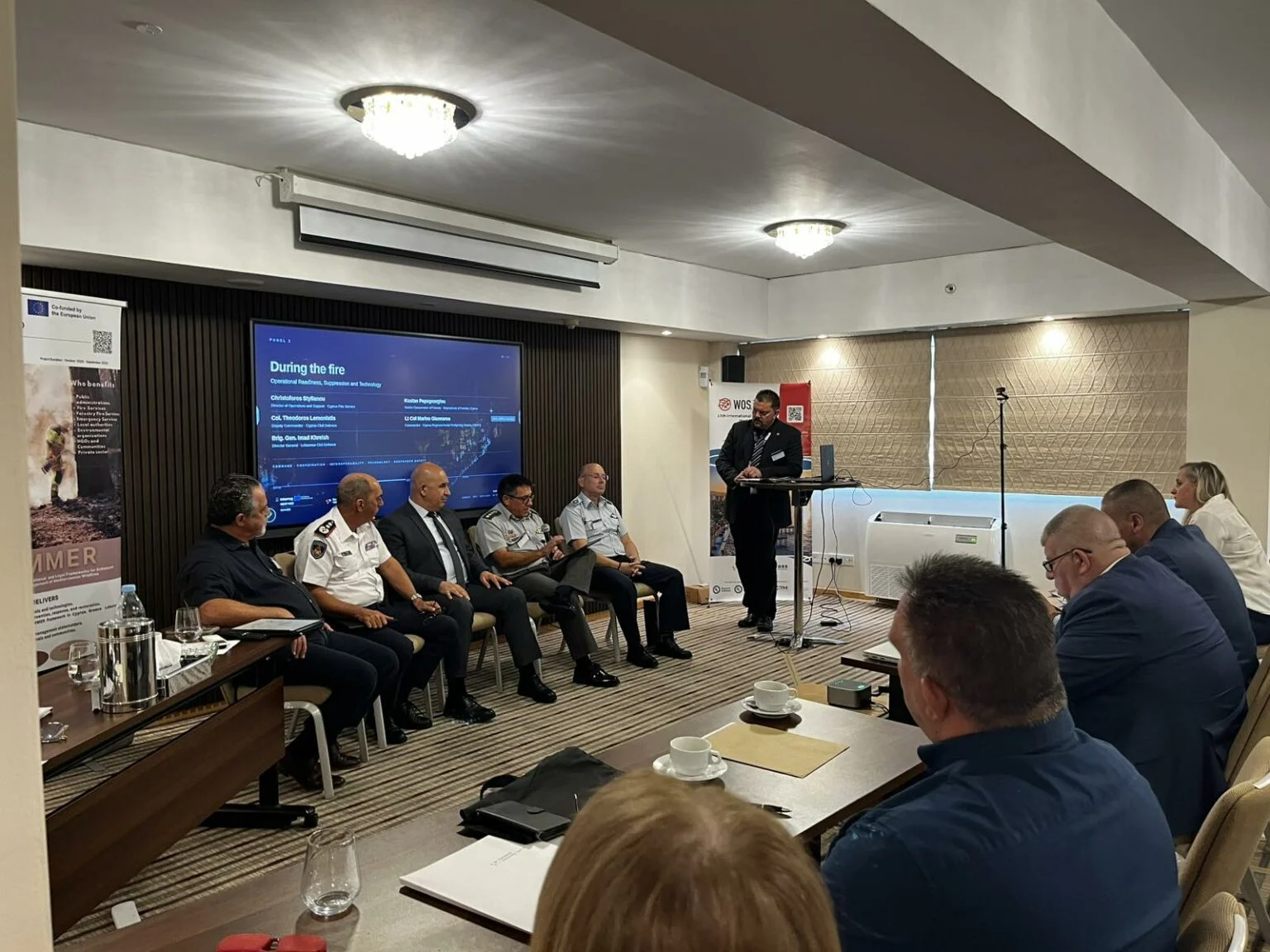
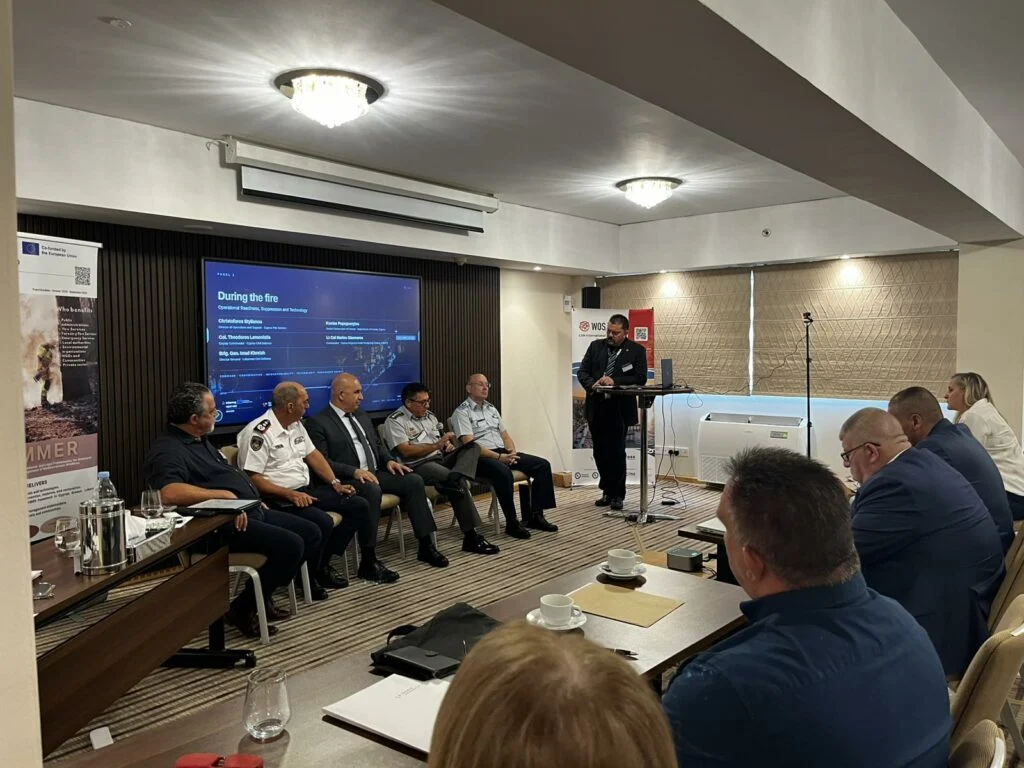
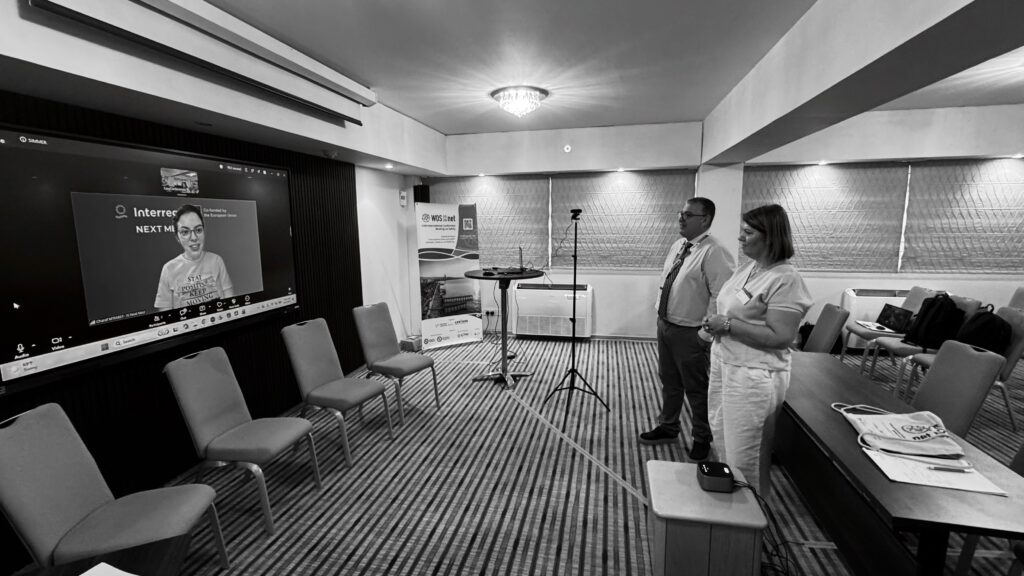
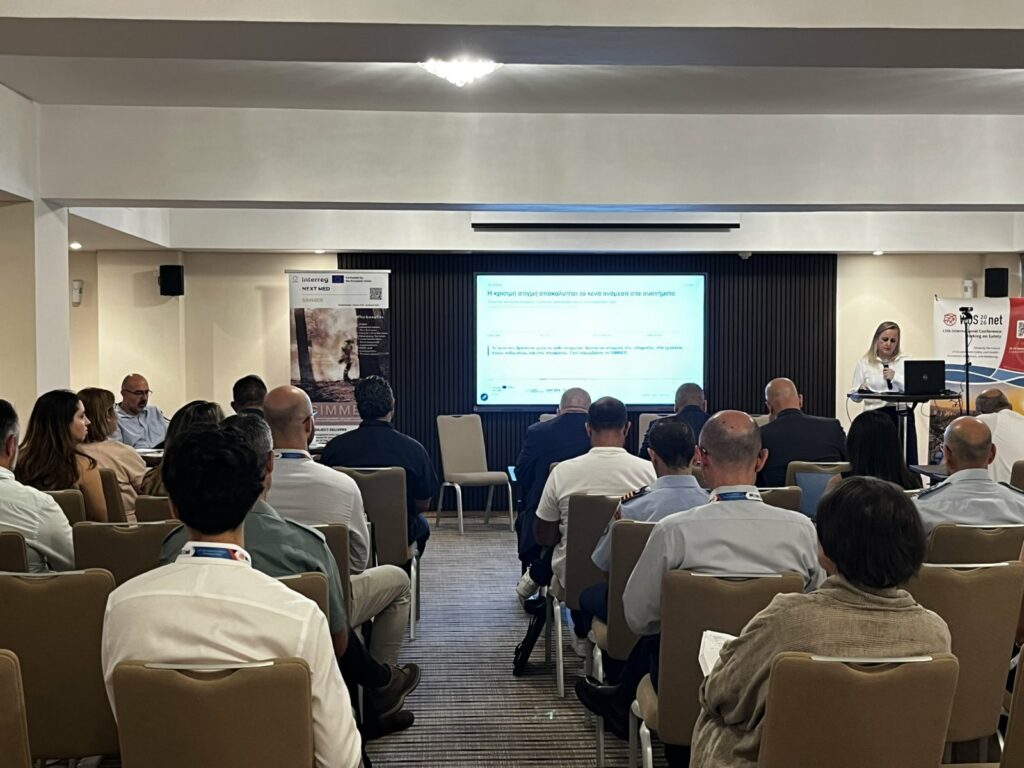
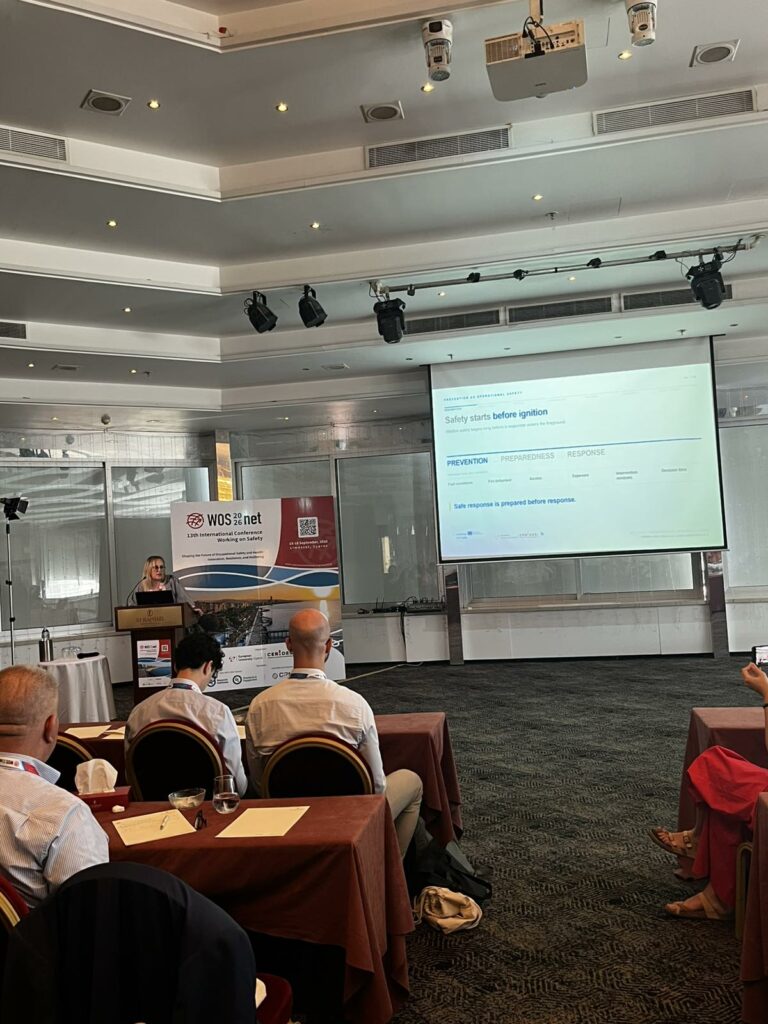
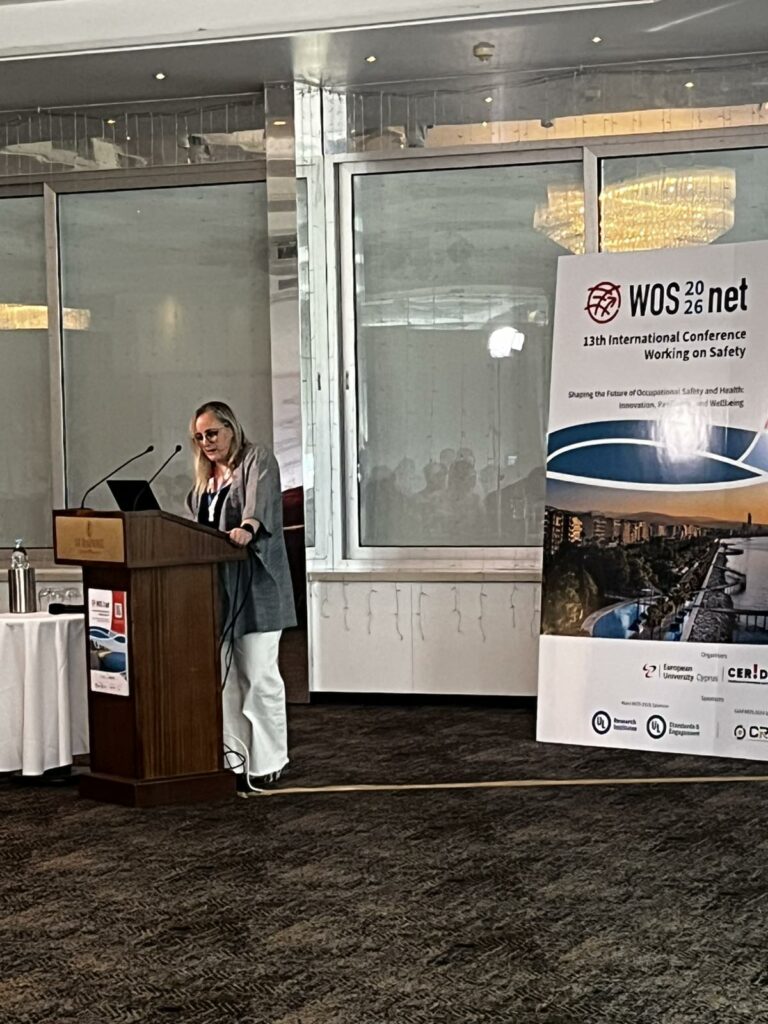
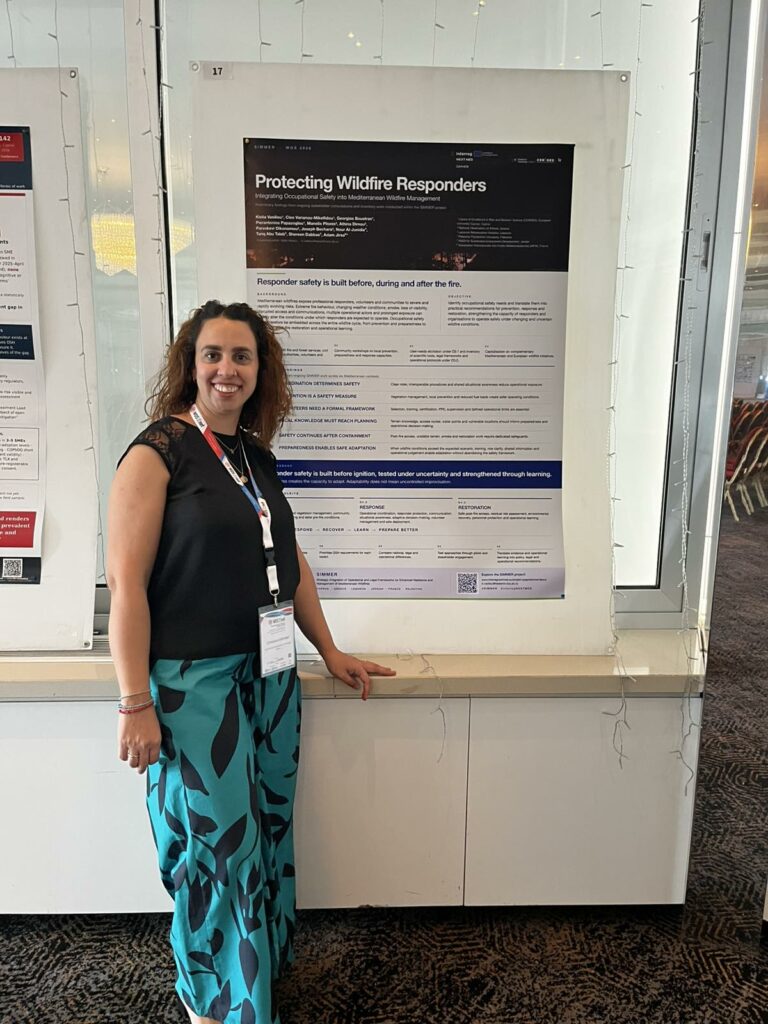
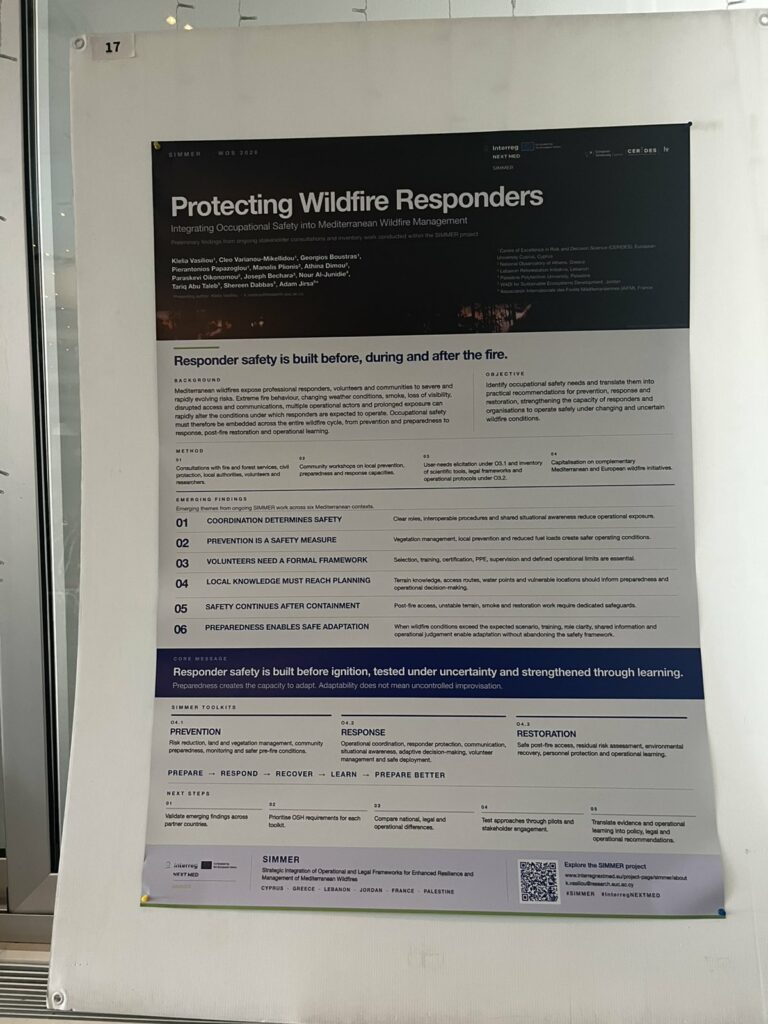
First, SIMMER took part in the 13th International Conference Working on Safety. The project delivered a scientific presentation, displayed a poster and held a workshop on safety and health in wildfire management. The following day, the SIMMER Info Day hosted three public panels. These focused on prevention, emergency readiness and technology, as well as recovery and ecosystem protection.
The Info Day was held under the auspices of the Minister of Agriculture, Rural Development and Environment, Christos Senekkis. Kostas Papageorgiou, Senior Conservator of Forests, delivered the Minister’s address. In his message, he stressed that wildfires and the climate crisis cross national borders. Therefore, Mediterranean countries need shared solutions.
Across the discussions, one conclusion became clear. For example, land abandonment allows vegetation and dry fuel to build up. It also removes the traditional pattern of cultivated and grazed land. As a result, communities, ecosystems and responders face greater danger. At the same time, climate change and longer droughts increase the existing risk.
Supporting the people who cultivate, graze and manage rural land is not separate from wildfire prevention. In fact, it is part of prevention itself. This is why cooperation across the Mediterranean matters. Although countries bring different experience, the region needs knowledge that can travel. Finally, it needs public services that work together and practical solutions that remain effective under real conditions.
 Next Med