A new scientific contribution from the project
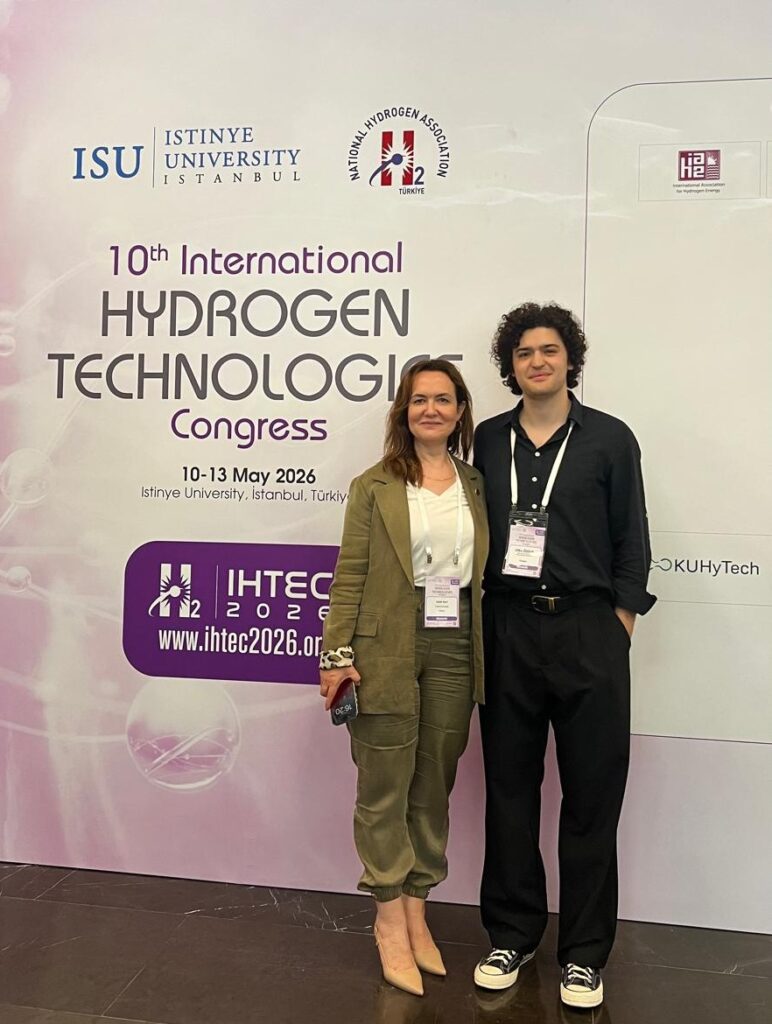
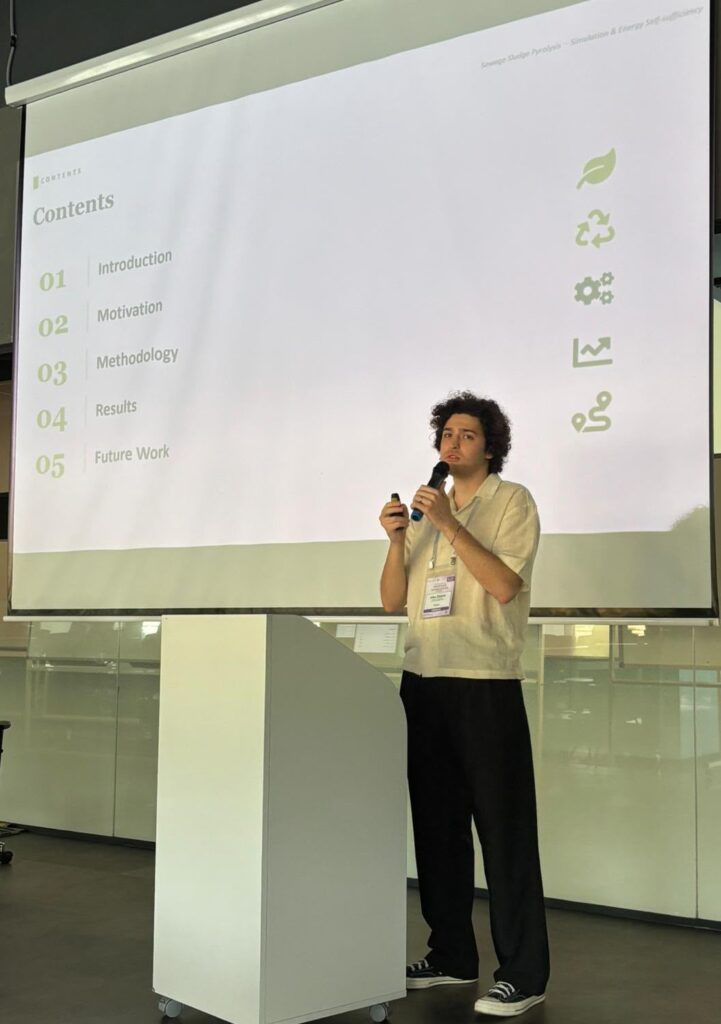
A new study from the Sludge2Energy project has been published in the proceedings of the 10th International Hydrogen Technologies Congress (IHTEC-2026). The congress took place in İstanbul, Türkiye, on 10–13 May 2026. The paper is titled “Simulation and Energy Self-Sufficiency Analysis of Municipal Sewage Sludge Pyrolysis”. Its authors are Mehmet Utku Öztürk, Engin Deniz Gülay, Can Özgür Çolpan and Azize Ayol of Dokuz Eylül University (DEU), one of the project’s Turkish partners.
Why sewage sludge needs a new treatment route
Municipal sewage sludge is one of the fastest-growing waste streams in the Mediterranean region. Traditional options are landfilling, spreading on farmland and direct incineration. All three are increasingly limited by:
- a lack of available land;
- pathogens, heavy metals and persistent pollutants in the sludge;
- stricter emission rules.
Pyrolysis offers an alternative. It breaks down organic matter with heat, in the absence of oxygen. The process reduces the volume of the sludge and destroys pathogens. It turns the organic fraction into an energy-rich gas and into biochar. Biochar is a stable, carbon-rich solid that can be used to improve soil, to absorb pollutants or as a solid fuel.
What the study did
The research team modelled a complete pyrolysis-based sludge treatment plant in SuperPro Designer, a process simulation software. The simulated plant covers all the main stages of treatment:
- a dryer that removes water from the incoming sludge;
- a pyrolysis reactor;
- a gas cyclone that separates the biochar from the gas;
- a burner that burns the pyrolysis gas to heat the process;
- a heat exchanger that recovers heat from the hot flue gas.
The incoming flow was fixed at 5,000 kilograms of wet sludge per hour. The team simulated nine operating scenarios, combining three pyrolysis temperatures (400, 450 and 500 °C) with three initial moisture levels in the sludge (60, 70 and 80 per cent by weight).
The results: a 60% moisture threshold for self-sufficiency
Across the nine scenarios, the plant’s overall energy efficiency ranged from 57.68 to 97.56 per cent. Biochar production ranged from 520.85 to 1,202.29 kilograms per hour.
The best energy performance, 97.56 per cent, came at 500 °C with an initial moisture of 60 per cent by weight. More importantly for plant operators, efficiency stayed above 90 per cent whenever initial moisture was at or below 60 per cent. The study treats this value as a practical threshold. Below it, burning the pyrolysis gas releases enough energy to run the whole process, drying included, with no extra fuel. Above it, more and more of the available heat goes into evaporating water.
Biochar production follows the opposite trend. The highest output, 1,202.29 kilograms per hour, came at the lowest temperature tested (400 °C) with 60 per cent moisture. Lower temperatures favour solid carbon rather than gas.
What it means for Sludge2Energy
The process has two goals: recovering energy and producing biochar. They respond in opposite ways to temperature, so the best operating window depends on each plant’s priority. This matters directly for the project’s demonstration activities. Sludge2Energy aims to turn sewage sludge from a disposal burden into a local source of energy and useful materials across the Mediterranean. Knowing where the self-sufficiency threshold lies gives the partnership a concrete design reference for the units it is installing and testing.
The authors plan four next steps:
- refine the models of the individual units;
- validate them against pilot-scale data;
- develop an automated control system linking dryer, reactor and burner;
- add an exergy analysis to show where energy is lost within the plant.
The research was carried out with the financial assistance of the European Union under the Interreg NEXT MED Programme, through the Sludge2Energy project (Project ID: A_T_2.1_0522).
 Next Med