The next step of the MedRESOURCE initiative, financed by the Interreg NEXT MED Programme, is under way. We are now moving toward a “bottom-up” approach through the ongoing progress of the Living Labs, serving as an open platform for environmental innovation and stakeholder engagement. The Living Labs, rooted in the Mediterranean communities involved in the project, are designed to meet specific local needs and to address the critical issues of each context.
For example, implementing Nitrogen recovery through ammonia stripping in Arborea, producing compost in Jericho and Nabeul, and experimenting with biochar from sewage sludge in Al Ramtha, are among the expected results of the project’s Living Labs.
By the way, it is important to be aware that these are not isolated technical demonstrations. They are complementary case studies designed to assess whether and how different types of waste (water in particular) can be transformed into useful products, which operational and quality standards must be met, and which utilisation, monitoring and support pathways are needed for responsible transfer and uptake. Logical? Yes.
This is where the Living Labs move beyond technical experimentation: the evidence they generate can feed into governance, regulatory dialogue, capacity building and the transfer of solutions across different Mediterranean contexts.
Alongside the assessment of how nutrient recovery solutions can support environmental objectives, the governance dimension of the project should be underlined not only as a simple added value but as the heart of international cooperation, collaboration and relations among the project partners. Each territory becomes part of a Mediterranean network, focused on sharing experiences, addressing and solving common problems.
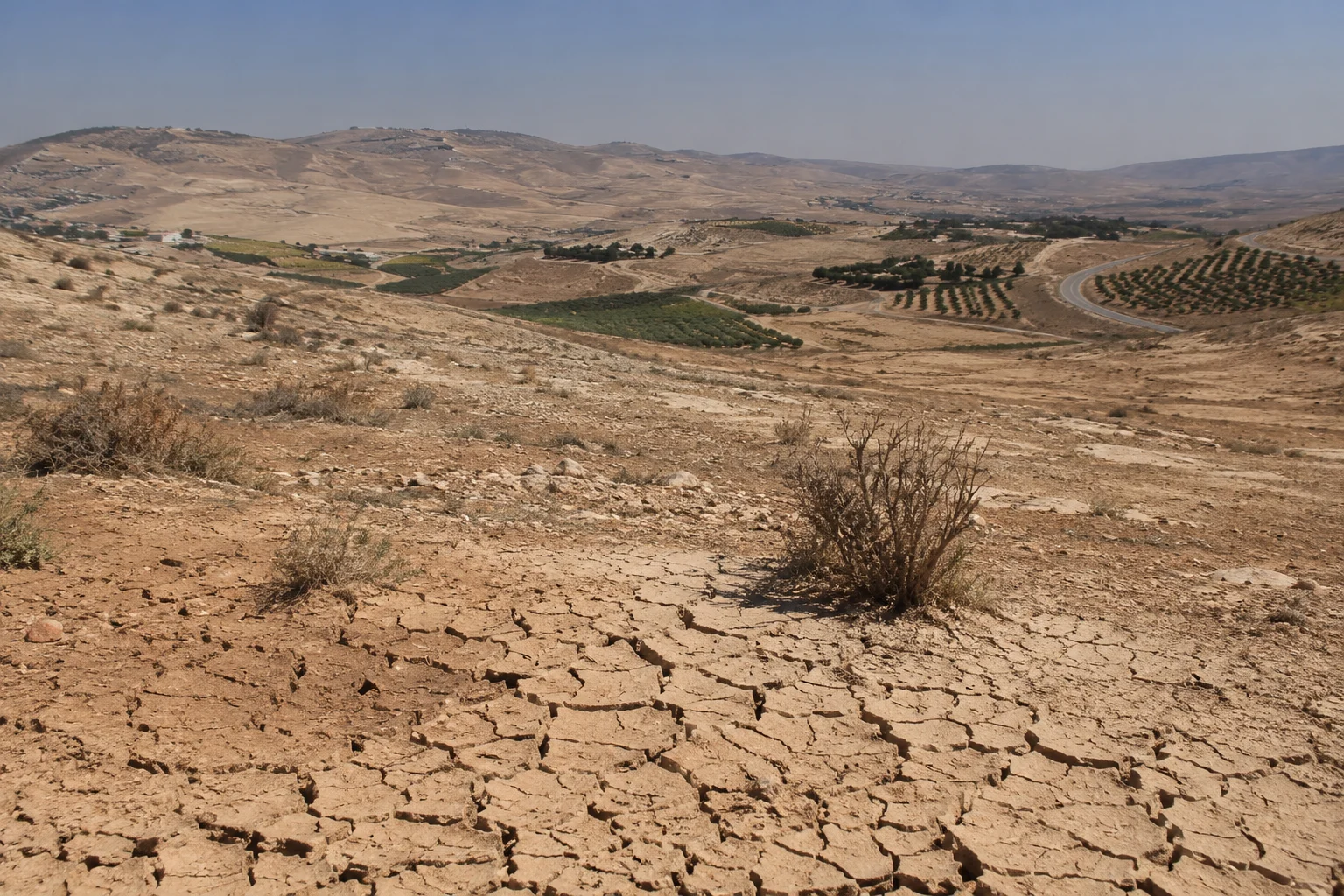
Like in Palestine, where even though a climate environment strategy is in place the resilience in water management is recognised as a priority. Moreover, implementation depends heavily on international funds, in addition suffers from Israeli restrictions and infrastructure constraints. The Palestinian context encompasses a geographically diverse and vulnerable landscape. Water availability and quality are continuously under pressure, also because of restrictions or negation on access over water resources under Israeli occupation.
Since 2021, the Palestinian NDC (Nationally Determined Contribution) has clearly identified water scarcity as one of the central climate risks, “shaped by structural and governance challenges”. In this scenario, the outlook for climate adaptation in Palestine is worrying. Projects addressing water management, agriculture and the needs of farmers such as MedRESOURCE, are urgently needed.
Cooperation and synergy are essential in this context, just like the one promoted by the Palestinian Wastewater Engineers Group (PWEG), MedRESOURCE’s Lead Partner, which introduced the project’s objectives and activities to the Water Sector Regulatory Council (WSRC), opening a discussion on synergies between technical institutions, regulators and stakeholders.
In this case the discussion focused on the necessity of ensuring that sustainable sludge management is supported by transparency, accountability, institutional cooperation and evidence-based decision-making, in line with the WSRC’s role in monitoring and regulating water and wastewater treatment services.
A similar approach is being pursued by the sardinian project partners CRENoS and ENAS: creating a collaboration with the Province of Oristano – institution with responsibilities in environmental monitoring and control activities related to water protection and the implementation of measures within the Nitrate Vulnerable Zone (NVZ).
This collaboration is particularly relevant in the Arborea area, supporting the objective of improving nutrient management while reducing environmental pressures on a vulnerable agricultural area.
Another example comes from the Jordanian National Agricultural Research Center (NARC), which has developed a dialogue with the University of Duisburg–Essen and the German Jordanian University, as part of ongoing efforts to strengthen international scientific and research cooperation on circular economy applications in agriculture. This exchange is particularly relevant to MedRESOURCE, as it can support knowledge sharing and the exploration of innovative solutions connected to the Al Ramtha Living Lab and its experimentation with biochar from sewage sludge.
These examples show that stakeholder engagement around the Living Labs is not separate from technical experimentation. On the contrary, it can help create the conditions for the evidence produced by the project to be understood and used by the actors involved in implementation. It can also strengthen the link between the results generated by the Living Labs and the skills required to assess, adopt and transfer the tested solutions.
In summary, the technical results generated by the Living Labs can become useful tools for governance and for the informed adoption of sustainable solutions for wastewater sludge management, nutrient recovery and resource valorization.
Eng. Mohammad Taweel is Project Coordinator of the Palestinian Wastewater Engineers Group (PWEG)
 Next Med