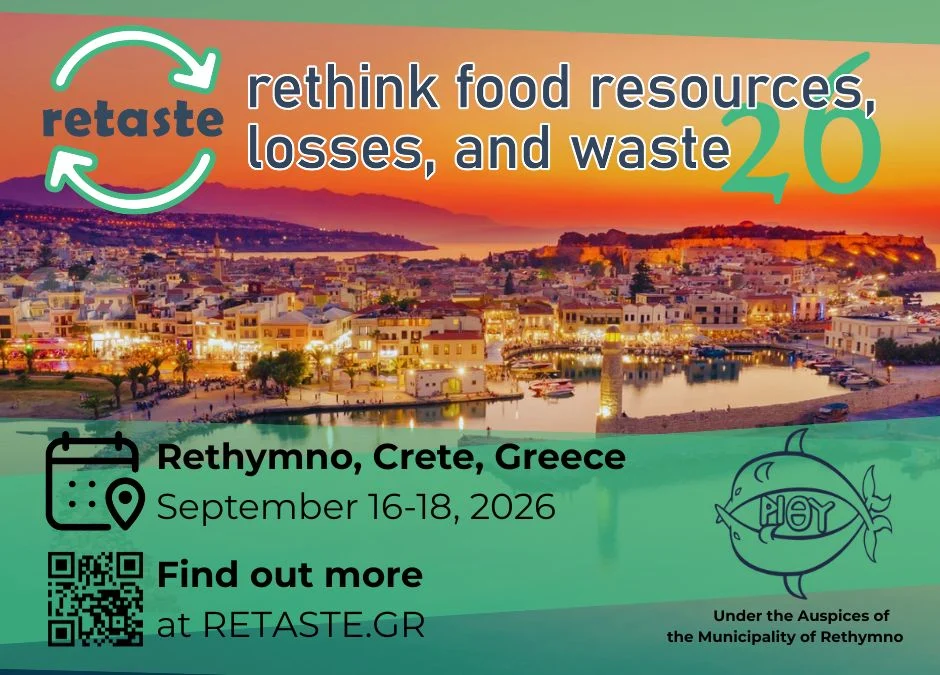
Sludge2Energy will take part in RETASTE — Rethink Food Resources, Losses and Waste, the 6th International Conference, held in Rethymno, on the island of Crete (Greece), from 16 to 18 September 2026. The event brings together researchers and professionals from around the world to discuss how to reduce waste and give resources a second life — a mission the project shares.
The question behind the research
The project’s scientific contribution carries a deliberately provocative title: “Is There Really a Threat? The Sampling Campaign and Its Results”. Sewage sludge — the semi-solid residue left after wastewater is treated — is rich in nutrients that plants need, which makes it an attractive material for use on agricultural land. But it can also carry contaminants. Before sludge can be reused safely, we need to know exactly what it contains and what happens when it reaches the soil and the crops grown on it.
A wide-ranging sampling campaign
To answer that question, the project carried out an extensive sampling campaign, collecting and analysing three types of material: soil, plant tissue and sewage sludge. Studying them together makes it possible to build a complete picture — from the sludge itself, to the ground where it might be applied, to the plants that would ultimately grow there. The analyses focus on the presence of contaminants, on the recovery of valuable nutrients, and on the conditions for a safe and sustainable reuse of sludge in agriculture.
Turning waste into a resource
This work sits at the heart of the project’s ambition: applying the principles of the circular economy to sludge management, so that a waste stream many Mediterranean countries struggle to handle can become a genuine resource — without transferring risks from water to soil.
At RETASTE 2026, the project team looks forward to sharing these findings, exchanging ideas with the international scientific community, and contributing to the wider discussion on sustainable sludge management and resource recovery.
 Next Med