WISEMED Promotes Innovative Water-Saving Solutions for Jordanian Agriculture

WISEMED is testing innovative technologies and nature-based approaches in Jordan to optimise irrigation, improve water-use efficiency, and strengthen agricultural resilience to water scarcity and climate change.

Publication Date
05/08/2026
Reading Time
2 minutes

The National Agricultural Research Center (NARC), Jordan’s Pilot Partner in the WISEMED project – “MEDiterranean joint Water management and conservatIon SustainablE solutions” funded by the European Union under the Interreg NEXT MED Programme, made significant progress in July 2026 in implementing innovative solutions for more efficient and sustainable agricultural water management.

These activities represent an important step towards establishing the Jordanian WISEMED Living Lab, where digital technologies, precision irrigation practices and nature-based solutions will be demonstrated under real farming conditions.

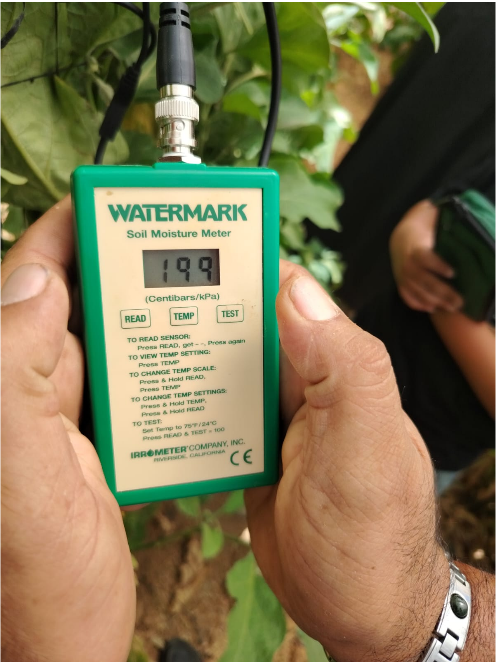
A major achievement was the launch of four procurement processes for technologies that will form the core infrastructure of the Jordanian pilot actions. These include a Decision Support System for managing the mixing of conventional and non-conventional irrigation water, low-cost digital sensors for monitoring soil moisture and temperature, superabsorbent hydrogel polymers to improve soil-water retention, and ultrasonic water-treatment units to control algae and biofilm in irrigation systems.

The Decision Support System will serve as a central digital platform, collecting and analysing real-time information from field sensors and supporting irrigation decisions based on water quality and actual crop conditions. At the same time, the soil-monitoring network will provide continuous information on moisture dynamics, crop water consumption and early signs of water stress, allowing irrigation schedules to be based on field data rather than fixed calendars.

Advancing water-saving solutions through field testing

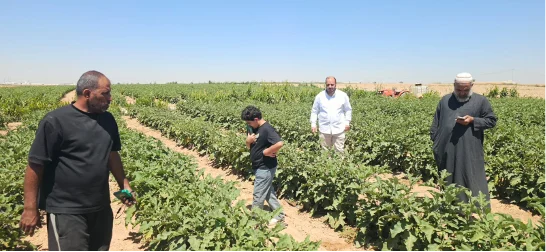
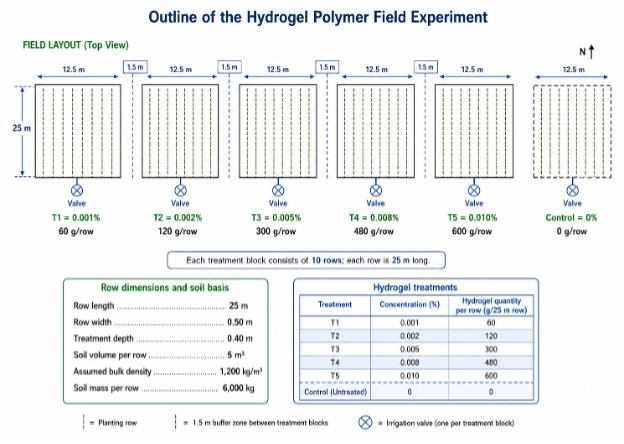
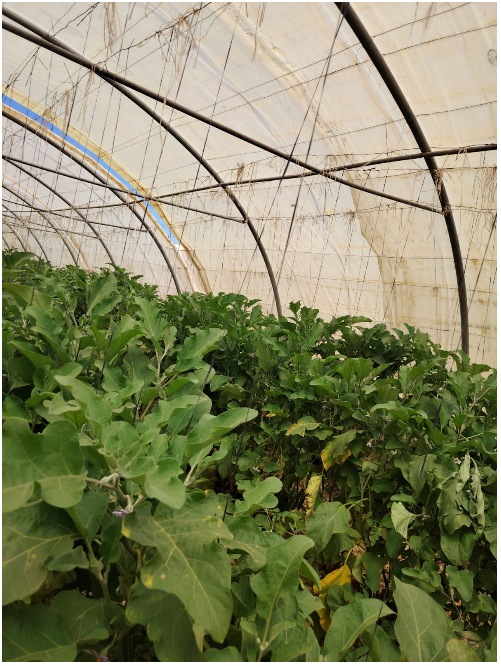
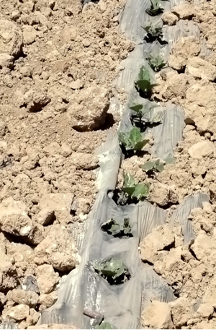
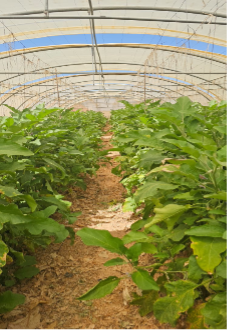
The hydrogel field experiment is currently one of the most advanced pilot activities. Different polymer application rates are being tested on eggplant to assess their effects on soil-moisture retention, irrigation requirements, crop growth, yield and water-use efficiency.

The experiment is supported by regular field visits, soil sampling, plant measurements and irrigation-performance monitoring. Preliminary observations indicate that the T2 treatment, 0.002% hydrogel, equivalent to 120 grams per 25-metre planting row, has shown the most promising performance. It maintained more favourable soil-moisture conditions and supported better plant growth and crop-quality characteristics compared with the untreated control and other application rates.

These results remain preliminary and will be further assessed and confirmed through final yield measurements and statistical analysis.

The ultrasonic treatment units will complement these activities by helping to prevent algae growth, reduce biofilm formation and minimise emitter clogging without the use of additional chemicals.

Towards an integrated digital ecosystem

Once fully installed, all technologies will operate as an integrated digital ecosystem designed to improve water-use efficiency, support the safe reuse of non-conventional water resources and strengthen the climate resilience of Jordanian agriculture.

Through these pilot actions, NARC and the WISEMED partners are contributing to the development and testing of practical solutions that can support more efficient, sustainable and climate-resilient water management across the Mediterranean region.

Gallery

Last Update

05/08/2026