Recent years have added a new layer of vulnerability. Recurrent conflicts—especially in southern Lebanon—have damaged water and sanitation infrastructure, disrupted services and created serious environmental risks.
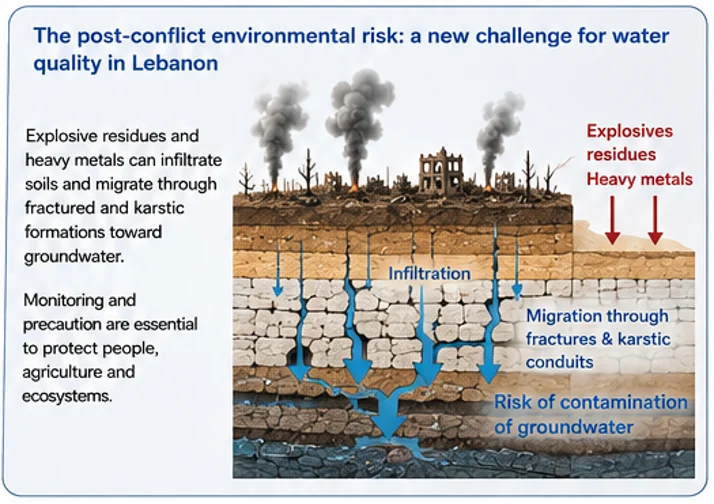
Recent scientific analysis warns that residues from explosives and munitions (nitrates, heavy metals such as Pb, Cd, Cu, Zn, Hg, as well as other chemical compounds) can infiltrate soils and migrate through karstic and fractured geological formations toward groundwater.⁴ These contaminants may threaten the quality of water resources that communities, agriculture and ecosystems depend on in the long term.
In response, the Lebanese Ministries of Agriculture and Environment announced in February 2026 a joint monitoring plan following chemical spraying in several areas of the South, including systematic sampling of soil, water and vegetation.⁵ This initiative underlines the importance of evidence-based management, continuous monitoring and precautionary approaches in water and environmental protection.
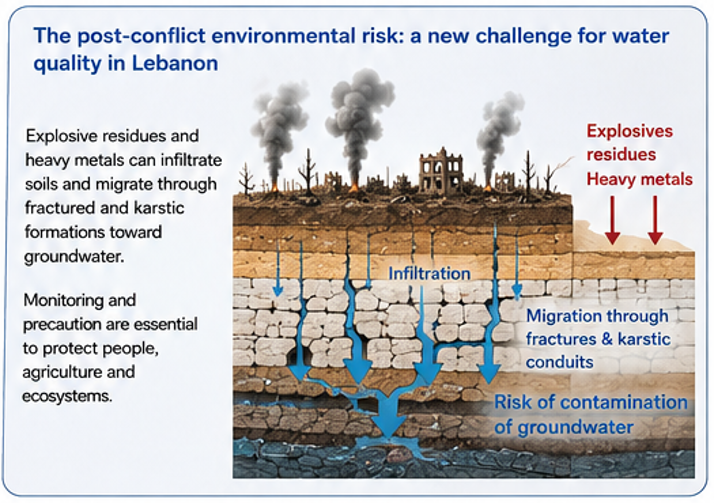
Figure 1. Post-conflict environmental risk: a new challenge for water quality in Lebanon. Based on El-Hajj [4].
 Next Med