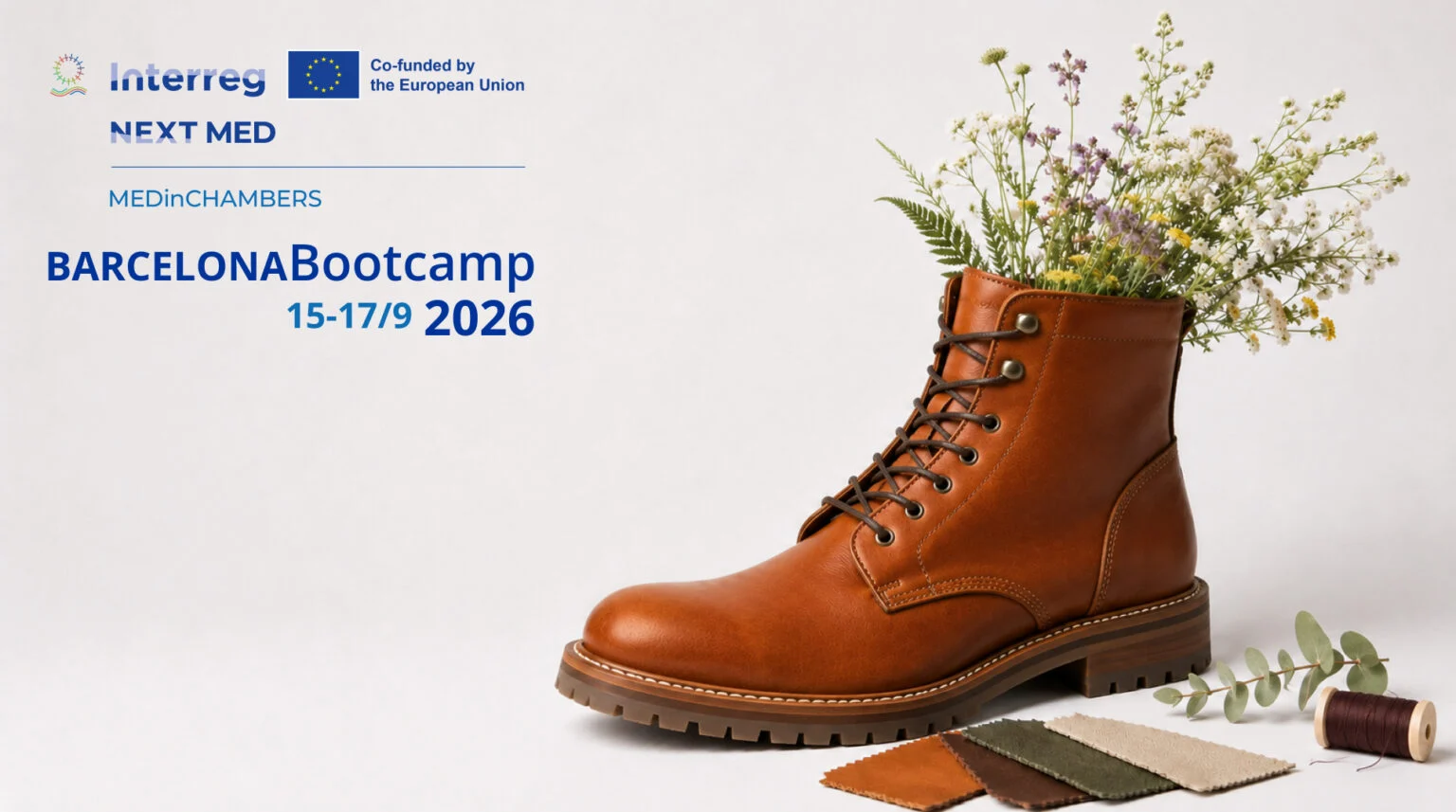
MEDinCHAMBERS Bootcamp builds green and digital skills for the textile sector

Three days of practical training, industrial visits and Mediterranean networking will help textile and leather stakeholders turn sustainability into action.

Publication Date
03/08/2026
Reading Time
3 minutes

From 15 to 17 September 2026, Barcelona will welcome participants from Spain, Italy, Greece, Tunisia, Egypt and Türkiye for the MEDinCHAMBERS Bootcamp and Study Visits.

The three-day programme will strengthen green and digital competences across the textile, clothing, leather and footwear (TCLF) sector. It will combine practical training, collaborative workshops, industrial visits and cross-border networking.

The event will begin with a networking dinner on 14 September, giving participants, trainers and project partners an informal opportunity to meet, build connections and prepare for the following days.

Through this initiative, MEDinCHAMBERS supports the exchange of knowledge and good practices between Mediterranean organisations. The programme will also help participants translate sustainability principles into practical actions for more innovative, competitive and environmentally responsible value chains.

Day 1: understanding sustainability and measuring impact

The first day will take place at AMBIT HUB in Barcelona and will focus on sustainability in the fashion industry.

Participants will explore the main environmental challenges affecting the textile, clothing, leather and footwear ecosystem. They will also examine the strategies companies are adopting to move towards more sustainable production models.

Collaborative learning on sustainability

Interactive sessions will combine theoretical insights with practical group activities. Participants will take part in:

  • sustainability mapping exercises;
  • group discussions;
  • collaborative presentations;
  • exchanges of experiences and good practices.

This approach will encourage participants from different countries and organisations to compare challenges and develop a shared understanding of the sector’s green transition.

Carbon footprint assessment and production impacts

Practical workshops will introduce participants to carbon footprint assessment methods. Working with real product examples, they will learn how to calculate environmental impacts and understand how data can support more informed and sustainable business decisions.

The day will conclude with a case-based session focused on identifying practical measures to reduce production impacts across the textile, clothing, leather and footwear value chain.

Day 2: discovering the Igualada leather ecosystem

The second day will take participants to the Igualada Leather Cluster, one of Europe’s most established leather industrial ecosystems. The study visit will provide first-hand exposure to innovative production practices and demonstrate how sustainability, technological development and industrial competitiveness can work together.

From leather heritage to sustainable production

The programme will begin with an introduction to the Spanish leather sector and the Igualada industrial ecosystem.

Participants will then visit one of the area’s leading tanning companies and the Igualada Leather Museum. These activities will offer insight into both the historical development of the local leather industry and its transformation through new technologies and more sustainable production models.

A networking lunch at Adoberia Bella, the headquarters of Leather Cluster Barcelona, will create further opportunities for participants to exchange experiences and explore potential collaborations.

Applied research, digitalisation and circular water management

In the afternoon, participants will visit the A3 Leather Innovation Centre to learn about applied research, digitalisation initiatives and technology-transfer activities supporting the sector. They will also explore the wastewater treatment facilities managed by Igualadina de Recuperació i Depuració.

The visit will provide practical insight into:

  • industrial water management;
  • resource recovery;
  • circular economy solutions;
  • environmental compliance;
  • the reduction of production impacts.

Day 3: turning sustainability into business action

The final day will return to AMBIT HUB for a series of practical workshops. Participants will work in multidisciplinary teams to design measures that can reduce the environmental impact of textile, clothing, leather and footwear production processes.

Circular design and waste reduction

Dedicated sessions on the circular economy will explore product life-cycle thinking, design for circularity and innovative approaches to waste reduction. The activities will help participants understand how sustainability principles can be integrated into products, processes and business decisions.

Green legislation and sustainability compliance

The programme will conclude with an interactive session on emerging European green legislation and sustainability compliance. This session will help participants better understand the regulatory framework that is increasingly shaping the future of the fashion and leather industries. A final group discussion and closing session will provide an opportunity to reflect on the knowledge acquired, share experiences and strengthen future cooperation between participants and organisations.

Supporting a greener and more connected Mediterranean sector

The MEDinCHAMBERS Bootcamp and Study Visits contribute directly to the project’s objective of strengthening cooperation, skills and sustainable innovation across Mediterranean business ecosystems.

By combining training, peer learning, industrial visits and networking, the programme will help participants:

  • improve their green and digital competences;
  • identify practical solutions for reducing environmental impacts;
  • transfer knowledge to their local organisations and networks;
  • develop new cross-border partnerships;
  • support more resilient and competitive value chains.

The Barcelona programme represents an important step in MEDinCHAMBERS’ work to accelerate the green transition and strengthen cooperation across the Mediterranean textile, clothing, leather and footwear sector.

Last Update