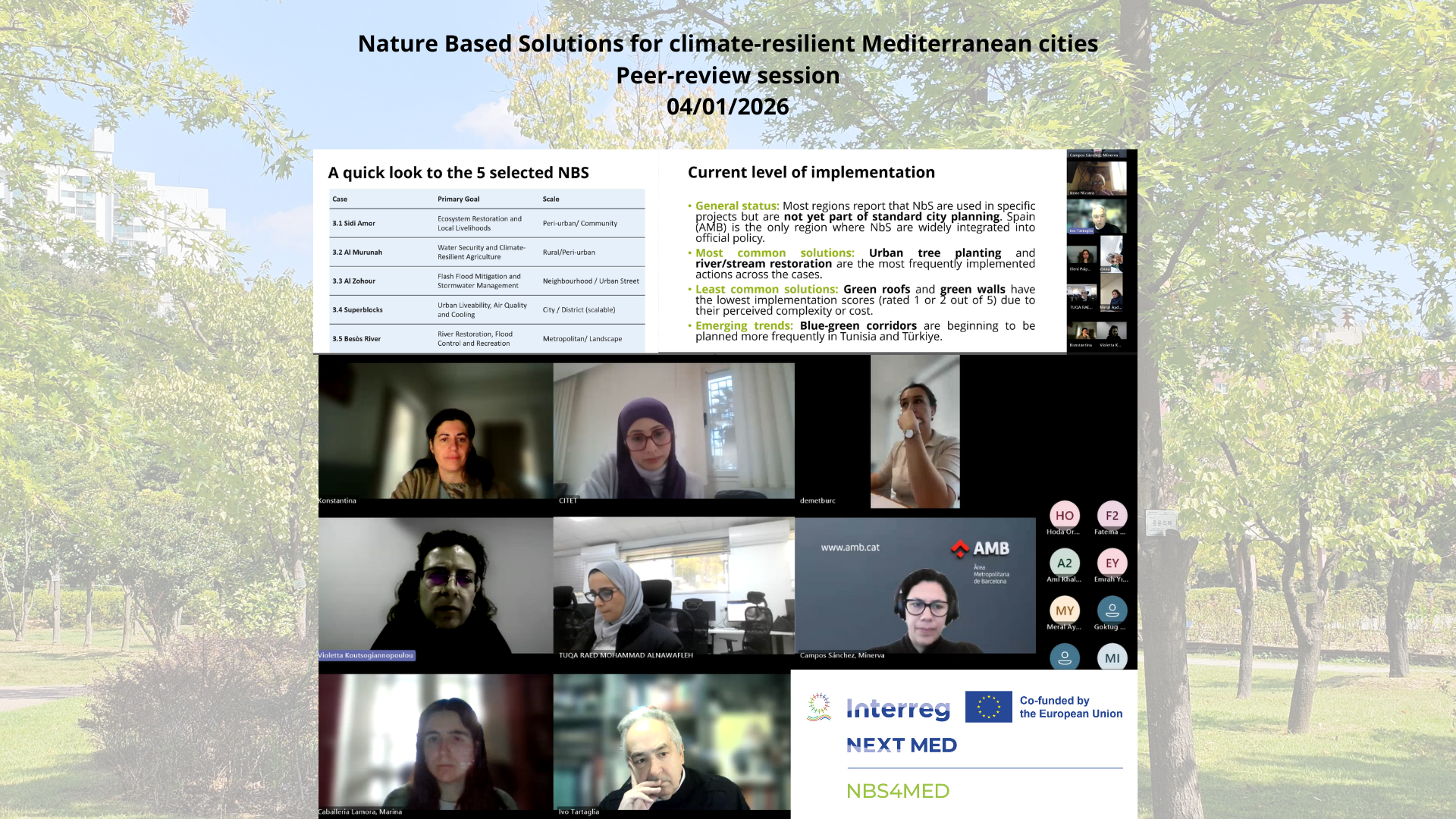
The NBS4MED partnership recently held an online peer review session (on April 1st, 2026), marking the final step of a broader survey process aimed at identifying how Nature-Based Solutions (NBS) can strengthen climate resilience across Mediterranean territories.
Project partners exchanged knowledge and reflected on the current state of NBS planning and implementation in their respective contexts. The peer review process, offered partners the opportunity to share insights on local challenges, planning priorities, implementation barriers, and existing examples of NBS already delivering benefits on the ground.
Across the 22 cases that were reviewed, two climate-related challenges emerged consistently across territories: heatwaves and water scarcity. At the same time, partners identified several common barriers affecting the implementation of NBS, as follows:
- Financial barriers, including limited funding availability and high upfront investment costs
- Legal and administrative barriers, such as complex regulatory frameworks and permitting procedures
- Spatial barriers, especially the lack of available space in dense urban environments
As part of the process, five cases were selected for further discussion during the peer review session, based on their demonstrated effectiveness and strong transferability potential to other Mediterranean contexts:
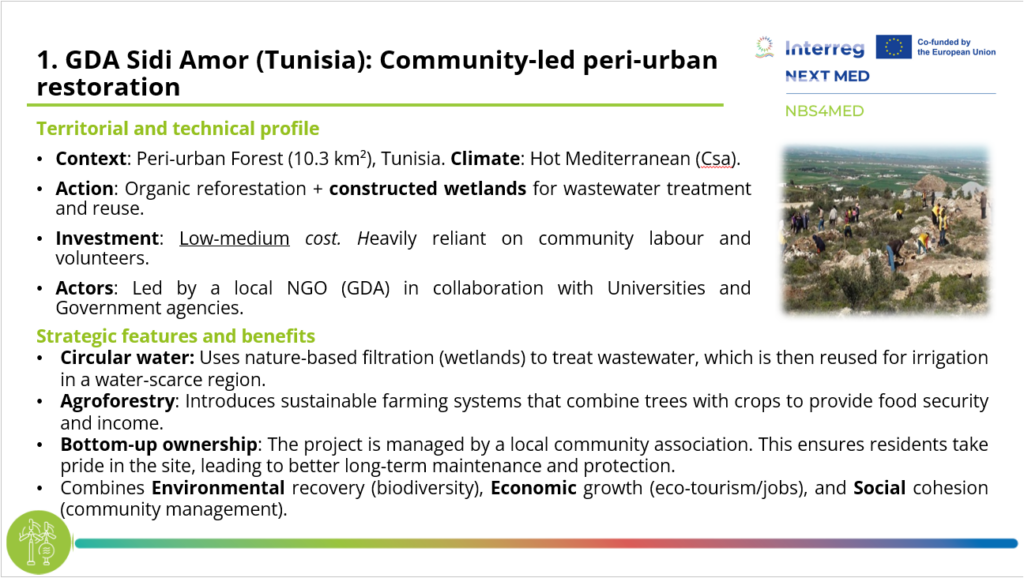
- Sidi Amor, Tunisia – ecosystem restoration and support to local livelihoods
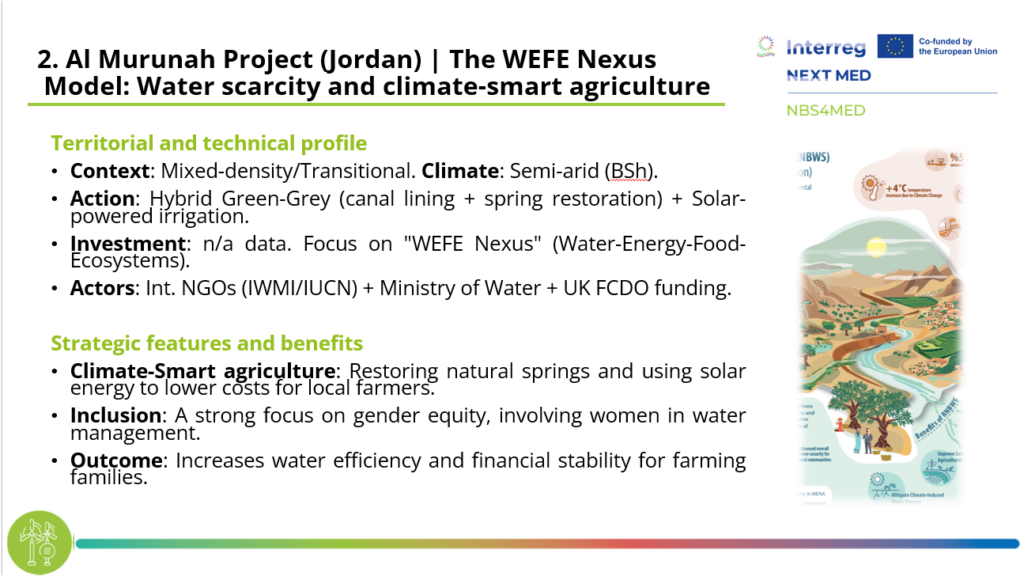
- Al Murunah, Jordan – water security and climate-resilient agriculture
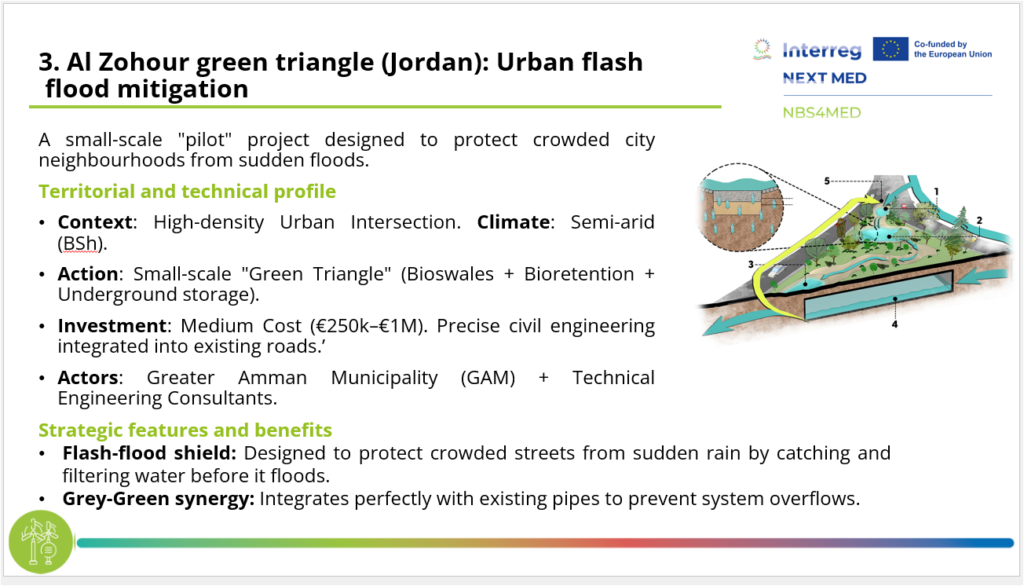
- Al Zohour, Jordan – flash flood mitigation and stormwater management
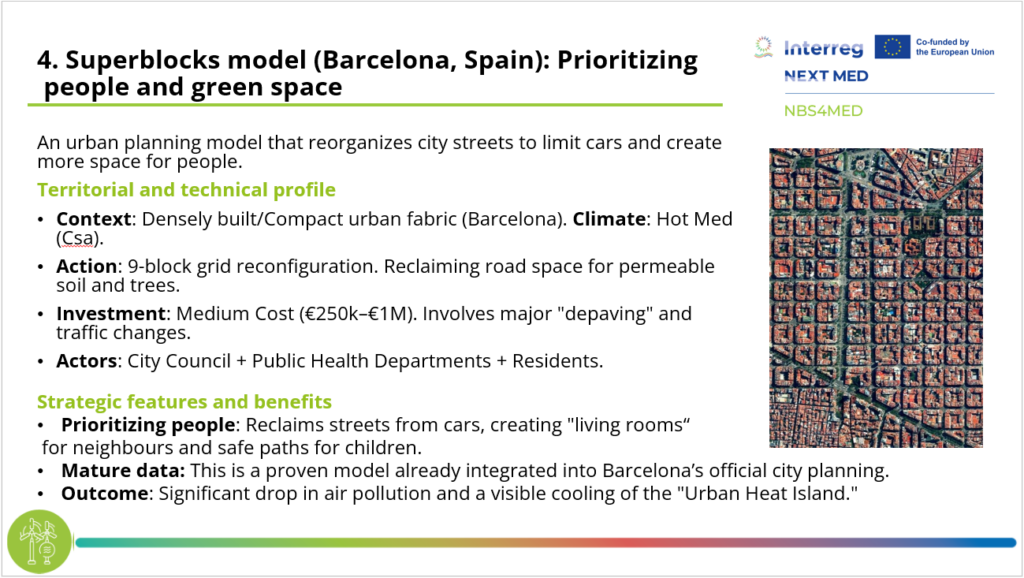
- Superblocks, Barcelona, Spain – urban liveability, air quality improvement and cooling
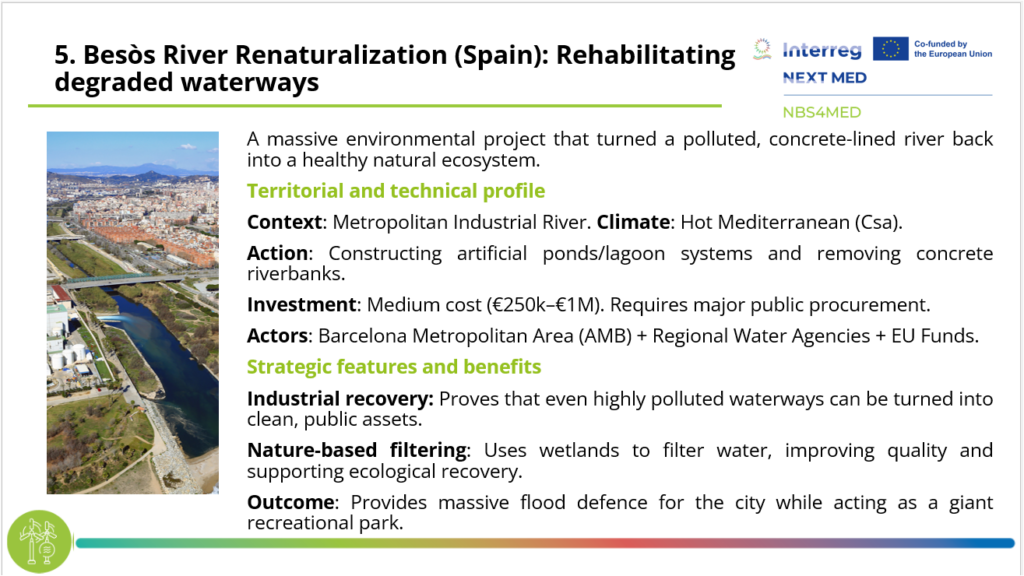
- Besòs River, Spain – river restoration, flood control and recreational value
The selected examples enabled a focused exchange on NBS operating at different territorial scales, from neighbourhood and community-based interventions to city-wide and metropolitan approaches.
Beyond the exchange of good practices, the session contributed directly to the project’s wider capacity-building objectives. It supported partners in identifying fit-for-purpose NBS for their territories, while also helping to clarify the planning, governance and implementation conditions necessary for successful replication.
The insights gathered through this process will feed into the next steps of the project, including the development of the NBS repository and the common Mediterranean decision-making framework, which will guide partners in selecting, adapting and deploying NBS in their local contexts.
 Next Med