We all know that the textile industry is among the most polluting sectors. In the Mediterranean region, this it is translated by high waste volume, a very low recycling rate, a strong reliance on disposal and an increasing pressure on marine and coastal ecosystems. According to the European Parliament, only 1 % of clothes are recycled.
The need to reduce waste in the textile sector in the Mediterranean region is obvious. The question is how can SMEs in the region contribute to it? This is where a project like MATRIX, funded by Interreg NEXT MED comes in.
Focus on the design phase
Did you know that over 80% of a product’s environmental footprint is determined during the design phase? Decisions made at this phase dictate the material selection, production methods, and the item’s potential for reuse or recycling, according to the European Commission.
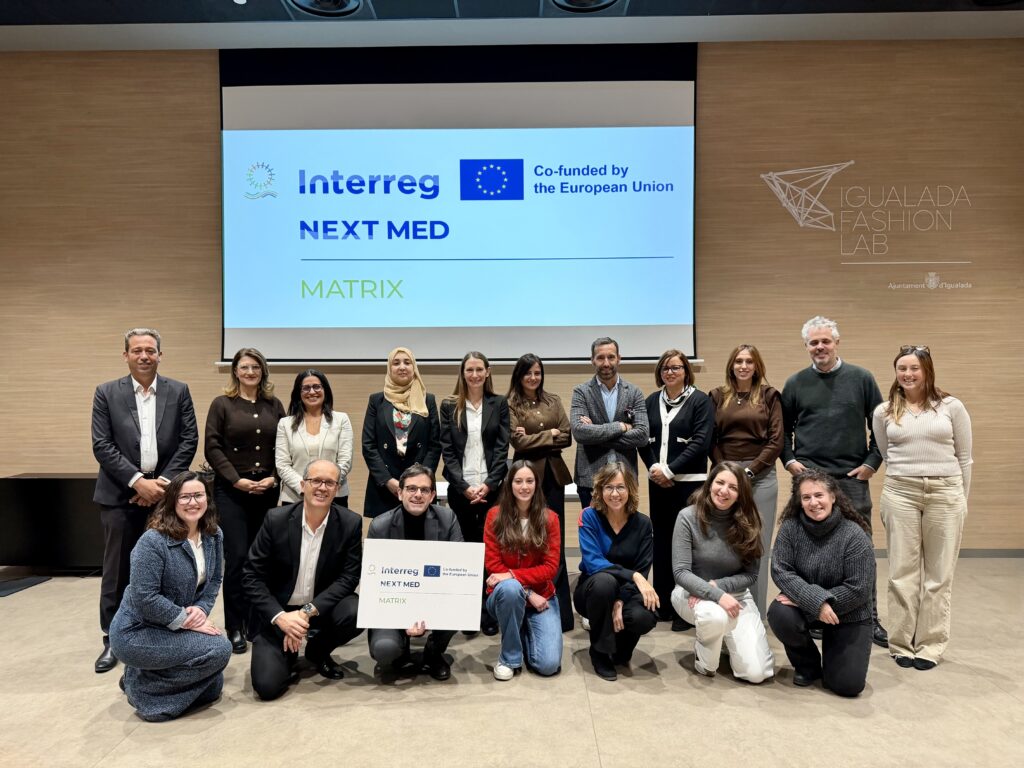
MATRIX project (Mediterranean Pathway for Circular Textiles) gathers partners from the private sector from Egypt, Italy, Palestine, Spain, Tunisia and Türkiye. Led by the Catalan Fashion Cluster (MODACC), they decided to work together to change habits at SMEs level in order to reduce waste all along the value chain.
As today is the international day for zero waste, Interreg NEXT MED interviewed Lidia Morcillo Jordana, project coordinator of MATRIX at MODACC, to know more about the project and its contribution to reduce waste in the textile sector at Mediterranean level focusing on SMEs.
Create a database of circular materials
The project is called MATRIX as the first step is to create a matrix containing a database that lists materials and fibres that are of low environmental impact and a toolbox offering a set of solutions to reduce the environmental footprint of SMEs.
Then, the project will use already existing platforms, and some trainings are foreseen as well.
Once the matrix is defined, the idea is to connect providers of such solutions with SMEs so that they can test the solutions through some pilots.
Study visits between Spain and Tunisia
These visits should bring a real added value so that SMEs can exchange and learn from each other’s. This part will also include the implementation of the pilots to test the solutions in order to implement digital eco-design, impact measurement, ecolabelling.
Mediterranean Pact for Circular Fashion
Towards the end of the project, the idea is that SMEs from all shores of the Mediterranean come together with an agreement to improve the value chain by using new technologies to enhance processes.
Adding to that, knowing that 70% of the textile consumption is imported and 80% of its environmental impact takes place outside Europe, the gas emissions during transport represent a big percentage. Therefore, it becomes strategic to develop a proximity Mediterranean value chain.
Main challenges when tackling circular economy in the textile sector
While initiative like MATRIX focusing on SMEs´ role is very positive, we should not forget the bigger picture.
According to Euratex, between 20-40% of textiles remain unsold. This refers to textiles in general, not just fashion garments. While SMEs work on smaller scale, they can hardly allow themselves to waste their production. It is important to highlight that most of the “unsold” products comes from large fashion corporations.
Regulation: necessary but reluctance is on the air
While the European Union has advanced a lot in the field, especially with the Sustainable and Circular Textiles Strategy and Waste Framework Directive and these measures are needed to structure the way to introduce circular economy in the textile industry, there are more and more reluctancy towards implementing them. This implies higher financial and administrative burdens, the fear to lose competitiveness especially in the fast fashion, lack of recycling infrastructure just to mention some of the reasons.
Consumers´ desire
While SMEs can be convinced by the importance of introducing measures to reduce the environmental footprint, by the end of the day, it is the consumer´s need and desire that set the tone in the market.
Current geopolitical situation
Let´s not forget that the current global context does impact the sector. While countries such as the USA exit the pact for the climate, this reflects on the competitiveness. While instability becomes the rule in many areas of the world, buying new clothes and the latest fashion outfit is not a priority. There is a trend showing the reduction to clothing consumption during the last year.
MATRIX project will be a success if …
When asked Lidia, the project coordinator of MATRIX, in which sense she would consider MATRIX successful when finished in March 2028, she shared her following expectations:
- If the database that we have developed and that will be accessible to all companies will be used to select more sustainable materials and fibers
- If at the end of the project, there are a certain number of companies that will have integrated solutions that make the design management process and production more efficient
- If some SMEs integrate an AI system that captures consumer needs, enabling the design team to develop a collection that aligns with consumer desires and maximizes sales and by the end of the season, nearly 100% of the collection will be sold.
Then, I will consider MATRIX a success!
Like many things in life, it is about small steps that make the difference so good luck to MATRIX partners and we hope you will achieve these little but so important improvements to make the textile industry, a sector with less waste!
 Next Med